
3-thread fleece (molton)
The heavy knit for cold seasons: three yarns, a warm brushed inside, or diagonal and unbrushed. Combed cotton with polyester.

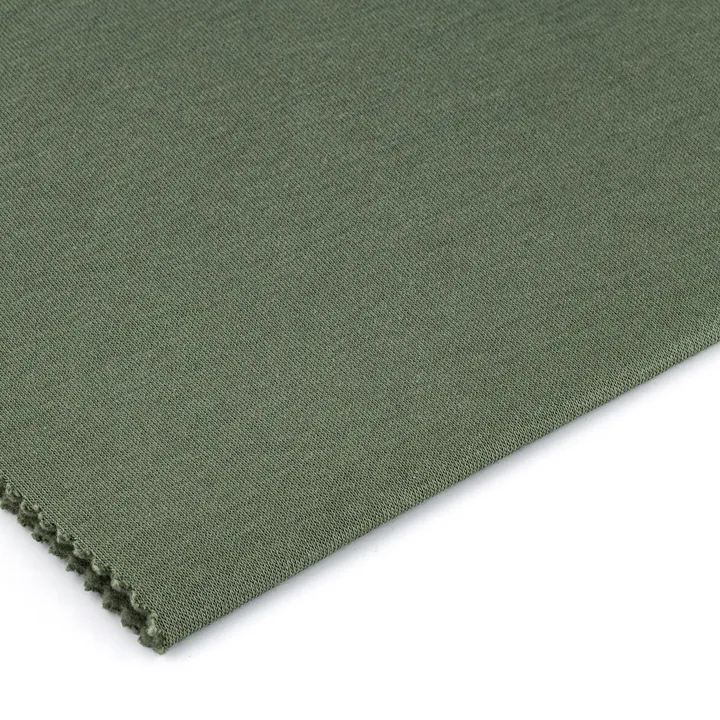


The third, thicker yarn sits on the back of the fabric and gives it body. Brushed, the inside turns soft and warm — the classic fabric for winter hoodies and tracksuits.
The diagonal version has an unbrushed back with a diagonal pattern; it resists pilling better and is preferred for premium and streetwear collections.
- Winter hoodies
- Tracksuits and heavy joggers
- Pyjamas and loungewear
- Oversized streetwear
- Kidswear
- Winter uniforms
Articles in the 2026 offer
| Ref. | Article | Code | Yarn | Finish | Form |
|---|---|---|---|---|---|
| AT-032 | 3-thread brushed or diagonal — white / grey melange / dyed | 371COPA · 371COPG · 371COPC | 30/70/10 combed | Enzyme + silicone + brushed | Open width |
Range from the 2026 offer. Colours are dyed to the code you pick from the card: minimum 150 kg per article per colour. Stock items are sold with no minimum.
Questions about 3-thread
What is 3-thread fleece?
3-thread fleece is a knit with a smooth face, a binding yarn in the middle and a thicker yarn on the back that is brushed to create the fluffy pile. The three yarns give the fabric thickness, warmth and stability, more than a 2-thread fabric. In Romania it is called 3 fire or flausat, depending on how it was brushed.
It is the classic choice for winter hoodies, thick tracksuits and pieces that must keep warm. It is heavier than french terry, so it is less suitable for summer. When ordering stock or a lot, ask to see both the face and the back.
Open answer2-thread or 3-thread: what does it mean and when do you choose each?
The number of threads refers to the layers in the knit structure. The 2-thread fabric has a face yarn and a loop yarn on the back, so it is lighter, more breathable and thinner. The 3-thread fabric adds a binding yarn, so it is thicker, more stable and warmer, especially after brushing.
For autumn, spring and lighter garments 2-thread is usually chosen. For winter and pieces that must keep warm, 3-thread. Ask for both swatches and compare the back, the thickness and how well each keeps its shape.
Open answerWhich yarns are used for the brushed inside of a hoodie?
For fleece and the brushed inside of a sweatshirt (3-thread), a finer base yarn is normally used on the outer face and a thicker, lower-twist yarn for the inner layer that gets brushed. The inner yarn is chosen with low twist and fibres that open up easily.
For the outer side ring-spun cotton is typical, and for the inside carded or open-end cotton or a polyester blend. The quality of the inner yarn affects warmth, bulk and pilling. Ask which yarns go into each layer and request samples from the same lot.
Open answerWhat GSM should I choose for hoodies and sweatshirts?
French terry (2-thread) hoodies are typically 240 to 330 GSM, while 3-thread fleece with a brushed inside is typically 260 to 380 GSM. Above 350 GSM you are in heavy winter or streetwear territory.
A range of 280 to 320 GSM is a common starting point for brand hoodies because it gives body and drape without being too costly. For light sports sweatshirts or summer tops, 200 to 250 GSM is used. Do not compare french terry and fleece directly: at the same GSM the feel and warmth differ, so ask for samples.
Open answerFrom what GSM is a hoodie considered heavyweight?
A hoodie is considered heavyweight from about 350 GSM; between 400 and 500 GSM people speak of very heavy hoodies in the premium streetwear or American vintage style. Regular hoodies sit at 280 to 320 GSM.
The extra weight brings warmth, body and a premium look, but also higher fabric consumption and more difficult cutting. In 3-thread fleece the weight is felt more than in french terry. Check whether the quoted GSM was measured before or after relaxation, and ask for a sample so you choose the weight by drape and not only by the number.
Open answerWhat is brushing (raising) on knitted fabric and what does it change?
Brushing, or raising, is a mechanical treatment with wire or bristle rollers that lifts fibres from one or both faces of the fabric and creates a fluffy, warm layer. It is used on sweatshirts, tracksuits and 3-thread fleece, where the fibre layer traps air and increases insulation. It changes hand, thickness and appearance, but it can slightly lower strength and raise the pilling tendency if the fibre is short. Good yarn and the right degree of brushing matter more than aggressive raising. Specify exactly what you want: light, medium or strong.
Open answerArticles where we recommend this fabric
 Starting a clothing brand
How much does it cost to start a clothing brand? A real budget
There is no standard amount, but there is a standard structure. Once you fill it in with your own figures, you know exactly how much money you need.
 Garment manufacturing
Industrial sewing machine maintenance: a daily to yearly plan
A machine that stops mid-order costs more than a year of oil and needles. Preventive maintenance turns surprise breakdowns into planned overhauls.
 Hoodies & sweatshirts
How to cut fleece for hoodies without waste or distortion
On hoodies, many faults that look like sewing faults are really cutting faults. Twisted sleeves, shade differences and uneven pieces start on the cutting table.
 Hoodies & sweatshirts
What makes a hoodie premium and how to position it
Premium is not a word to print on a swing tag but a set of decisions customers can feel in their hands. Here is what matters and how to communicate it.
 Kidswear & babywear
Matching parent-and-child sets: is a mini-me line worth it?
Matching outfits for parents and children look great in photos and sell well at holiday time. But they add an adult size range and a colour problem to solve.
 Quality, compliance & sustainability
How to prevent pilling on hoodies and joggers before you order
Bobbles on the elbows and under the arms make a new hoodie look old within a month. You can assess the risk right at the fabric selection stage.
220 colours. Pick them right on the product page.
Any fabric in the range can be dyed in any of the 220 colours — or matched to your sample (lab dip). From 150 kg per colour.