
Interlock (double knit) fabric
A double knit that looks the same on both sides: heavier, softer and more stable than single jersey. Ideal for babywear and bodysuits.
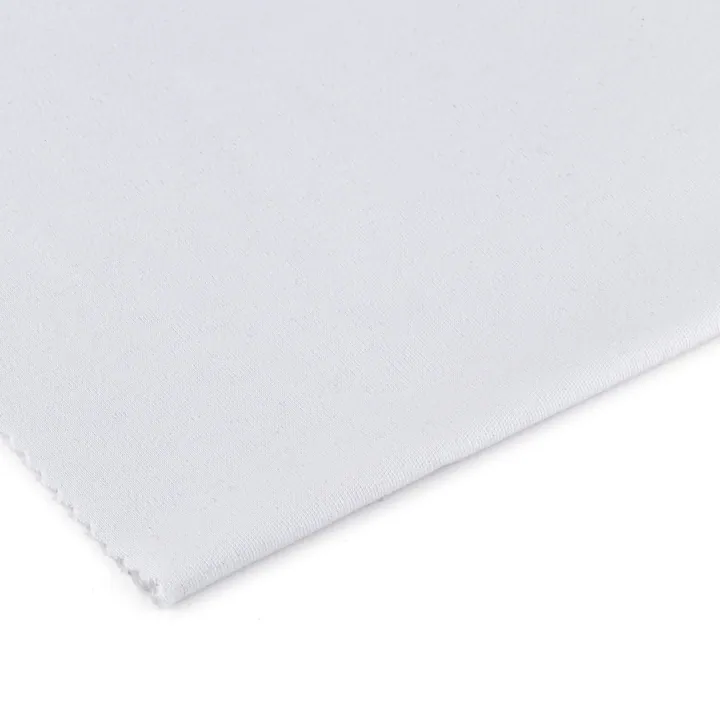

Interlock does not curl at the edges or distort easily, so it is easier to cut and sew than single jersey. It is soft on both sides — which is why it is the favourite for babies and children.
We produce it in optic white, grey melange, dyed and printed, in open-end or combed cotton.
- Babywear
- Bodysuits and pyjamas
- Premium tees
- Underwear
- Girls' dresses
- Prints on white ground
Articles in the 2026 offer
| Ref. | Article | Code | Yarn | Finish | Form |
|---|---|---|---|---|---|
| AT-008 | Interlock, optic white / grey melange | 30IA · 30GI | 30/1 OE | Enzyme + silicone | Tubular |
| AT-009 | Interlock, dyed | 30IC | 30/1 OE | Enzyme + silicone | Tubular |
| AT-010 | Interlock, printed on white | 30IIA | 30/1 OE | Enzyme + silicone + print | Tubular |
| AT-011 | Interlock, printed on colour | 30IIC | 30/1 OE | Enzyme + silicone + print | Tubular |
| AT-021 | Patterned interlock, optic white / grey melange | 30IAR · 30GIR | 30/1 OE | Enzyme + silicone | Tubular |
| AT-035 | Combed interlock, optic white | 40COIA | 40/1 combed | Enzyme + silicone | Tubular |
Range from the 2026 offer. Colours are dyed to the code you pick from the card: minimum 150 kg per article per colour. Stock items are sold with no minimum.
Questions about interlock
What is the difference between single jersey and interlock?
Single jersey is knitted on one needle bed, while interlock is knitted on two, which gives a thicker, firmer fabric that looks the same on both sides. Jersey has V-stitches on the face and a different back, stretches more and curls at the edges. Interlock lies flat when cut, looks smooth on both sides and distorts less.
With the same yarn, interlock is usually heavier and more opaque. Choose jersey for lightness and stretch, interlock for stability and a clean look on both sides.
Open answerRib or interlock: are they the same?
No, they are different structures, although both are made on machines with two needle beds. Rib has visible vertical ridges and high stretch across the width. Interlock is made of two 1x1 ribs knitted into each other, so it has a smooth face on both sides, no visible ribs and less stretch, with a more stable and fuller feel.
They are confused because interlock looks like a stretched rib. Pull a rib and you see the ridges, pull interlock and you do not. Rib suits pieces that must hug the body, interlock suits pieces that must keep their shape.
Open answerWhat is interlock and how is it knitted?
Interlock is a double knit made of two 1x1 ribs knitted into each other so that the stitches on both faces sit exactly behind one another. That is why the fabric looks the same on both sides, smooth and fine. It is made on circular machines with a cylinder and a dial, using long and short needles working alternately.
Being thicker and more compact than jersey, interlock does not curl, cuts cleanly and keeps its shape. It is used for quality t-shirts, children's wear, uniforms and pieces where you want no see-through and little distortion.
Open answerIs interlock the same as double knit?
Not exactly. Interlock is one type of double knit, but "double knit" is a broader term for any knit made on two needle beds with a smooth look on both faces: interlock, ponte, milano, scuba and others. What separates them is the stitch pattern, the yarn and the density.
In international offers "double knit" often just means a fabric that is thicker and more stable than jersey. To avoid surprises, always ask for the exact structure, the weight and a swatch rather than only the trade name.
Open answerWhat is a double-face fabric?
Double-face is a double knit with two different faces, for example two colours, two textures or two yarns, visible on both sides. It is made on machines with two needle beds, controlling which yarn shows on each face. It can be reversible, so the garment can be worn either way.
Because it is made of two layers linked together, the fabric is thicker, more stable and curls very little. It is used for light jackets, sweatshirts and pieces worn on both sides. It costs more than a jersey because it uses more yarn.
Open answerWhat is a jacquard knit?
A jacquard knit has the pattern built directly into the structure, not printed, by selecting individually the needles that form each stitch. It is made on circular jacquard machines with one or two needle beds. With two beds, the fabric is thicker and more stable and can carry several colours.
The pattern repeat is limited by the machine and by the number of colours. It is used for geometric designs, stripes and textures. The cost is higher than jersey, and an order usually requires an approved design.
Open answerArticles where we recommend this fabric
 Starting a clothing brand
How to start a kids' clothing brand: what to know first
Children's clothes look small and simple, but they have the most demanding customer in fashion: a parent who watches safety, fabric and every single wash.
 Polo shirts & uniforms
Tees and polos for clinics and healthcare staff: what to choose
In clinics, a knitted tee complements scrubs or replaces them at reception and in care roles. It has to look clean, feel good on the skin and be easy to wash correctly.
 Kidswear & babywear
OEKO-TEX product class I for babywear: what to ask suppliers
The OEKO-TEX label is often quoted and rarely checked. For a babywear maker, the gap between a valid certificate and one that does not cover your product matters.
 Kidswear & babywear
How to start a kidswear brand: the first steps that matter
A children's clothing brand isn't built on a pretty logo. It is built on a handful of decisions made in the right order: who you sell to, what you make first and how much stock you can afford.
 Kidswear & babywear
How to wash-test kidswear for durability before launch
Children's clothes are washed far more often than adults'. A wash test before launch tells you what parents will discover a month after buying.
 Loungewear, pyjamas & activewear
Printing on pyjama fabric: screen, DTF or all-over print?
On pyjamas, a print has to do more than look good in a photo. It must stay soft, let the fabric breathe and survive frequent, sometimes hot, washes.
220 colours. Pick them right on the product page.
Any fabric in the range can be dyed in any of the 220 colours — or matched to your sample (lab dip). From 150 kg per colour.