
Piqué (lacoste) fabric for polo shirts
A honeycomb-textured knit, breathable and stable in the wash. The classic fabric for polo shirts and uniforms.


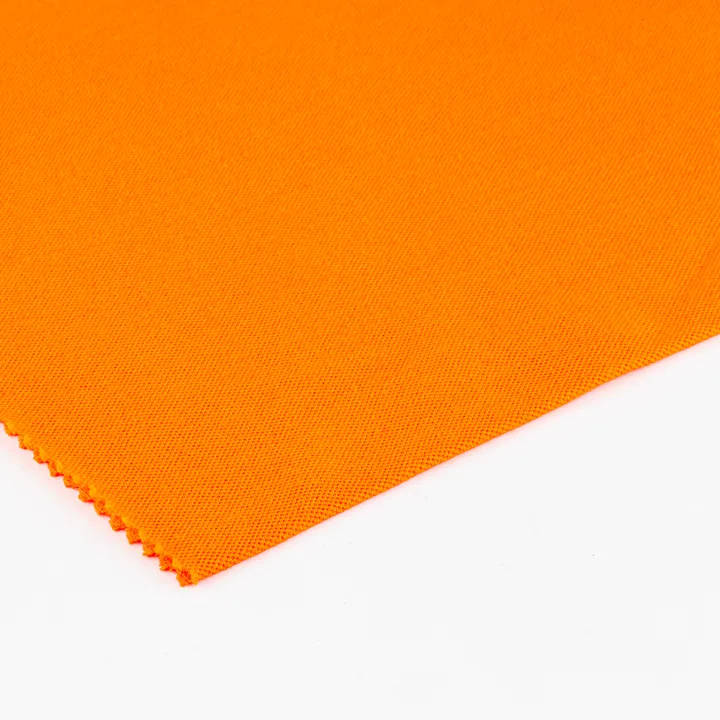


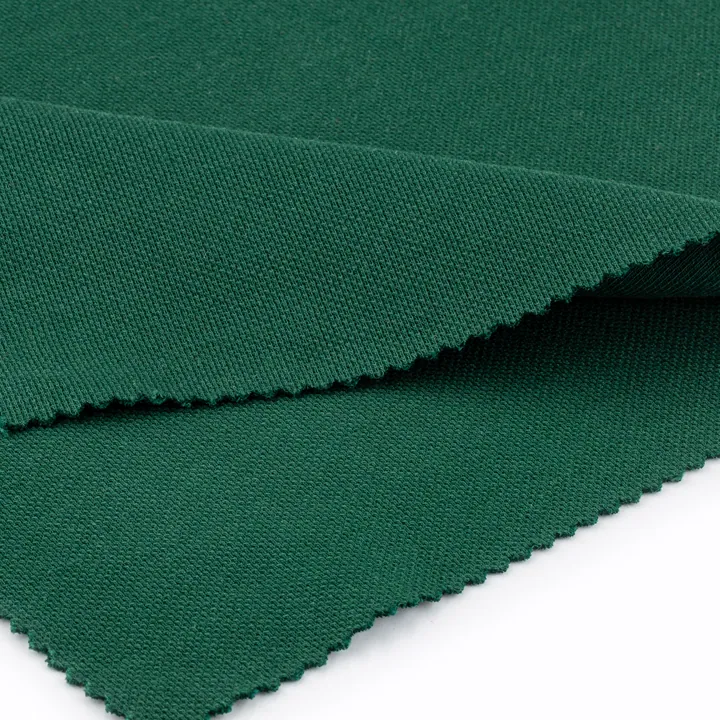
Single piqué has a fine honeycomb and is the standard for polo shirts. Double and American piqué have a bolder texture and hold their shape better; double-face is heavy and identical on both sides — good for light jackets and winter uniforms.
For corporate and school uniforms we keep the same shade from lot to lot: we work to a colour code and check every lot against the approved sample.
- Polo shirts
- Corporate and school uniforms
- Hospitality uniforms
- Club and sports tees
- Logo embroidery
- Light jackets (double-face)
Articles in the 2026 offer
| Ref. | Article | Code | Yarn | Finish | Form |
|---|---|---|---|---|---|
| AT-006 | Piqué, optic white / grey melange | 30LACA · 30LACG | 30/1 OE | Enzyme + silicone | Tubular |
| AT-007 | Piqué, dyed | 30LACC | 30/1 OE | Enzyme + silicone | Tubular |
| AT-029 | Combed piqué, optic white / grey melange | 30COLACA · 30COLACG | 30/1 | Enzyme + silicone | Tubular |
| AT-030 | Combed piqué, dyed | 30COLACC | 30/1 | Enzyme + silicone | Tubular |
Range from the 2026 offer. Colours are dyed to the code you pick from the card: minimum 150 kg per article per colour. Stock items are sold with no minimum.
Questions about piqué
What is pique (lacoste) as a knitted fabric?
Pique, called lacoste in Romania, is a knit with a raised texture of small honeycomb or diamond shapes, created by tuck stitches that hold the yarn without releasing the previous loop. The face shows a visible pattern while the back is smoother. It is thicker and more airy than jersey, with fewer contact points against the skin.
It is mostly used for polo shirts but also for other casual garments. There are several variants, for example single pique and double pique, with different looks and weights.
Open answerSingle pique or double pique: what changes?
Single pique is made on one needle bed, so it is lighter, softer and stretchier, with a finer texture. Double pique is made on two beds, so it is thicker and more stable, with a more pronounced texture and a clean back. Double pique tends to keep its shape better after wear and washing.
For summer polos, single pique is more comfortable and easier to cut. For uniforms and pieces that must look good for a long time, double pique is more suitable. Ask for a swatch, as names vary between mills.
Open answerWhat is American pique?
American pique is a trade name for a pique with a more pronounced texture, a larger and more visible honeycomb or nest effect than classic pique. The term is not standardised: one supplier may use it for one structure, another for a different one. That is why it is not wise to order by name.
What counts is the actual pattern, the weight and the width. Ask for a swatch or a close-up photo and compare it with your requirement. If you want a traditional sporty polo look, also check how large the texture cell is.
Open answerWhat is the difference between pique and waffle knit?
Both have a raised texture, but the structure differs. Pique has a small honeycomb or diamond pattern on the face only, with a smoother back. Waffle forms a grid of deep squares or pockets, visible on both sides or on one, with a much more three-dimensional look, more thickness and a greater ability to trap air.
Pique is the classic choice for polos, waffle for loungewear, pyjamas and thermal pieces. In both, tuck stitches pull the fabric in, so always check the real finished width.
Open answerPique or single jersey for polos: what differs in the structure?
Single jersey consists only of knit stitches, so it has a smooth face and a different back. Pique adds tuck stitches, which create a raised texture and make the fabric thicker and more airy. That is why pique holds its shape better at the neck and shoulders, does not cling to the body and hides small flaws better.
Jersey is lighter, stretchier and easier to cut, but more prone to curling and distortion. For a classic-looking polo choose pique, for a soft-draping fashion polo choose jersey.
Open answerWhat is a waffle knit?
Waffle is a knit with a raised grid texture, like a waffle, created by combining knit, tuck and miss stitches. The pockets trap air, so the fabric is warm, absorbs well and dries quickly. It can have a structured look on one or both faces.
It is used for thermal wear, pyjamas, robes and home items. Being thicker than jersey with a deep texture, it is harder to print. When cutting, the grid direction must be followed so the pattern lines up from one piece to the next.
Open answerArticles where we recommend this fabric
 Starting a clothing brand
How to choose a profitable niche for a new clothing brand
A good niche is not a tiny audience. It is an audience you can find, understand and serve better than the generalist high-street chains can.
 Garment manufacturing
Repeat orders: keeping colour, fit and quality consistent
The first order wins the client; repeat orders keep them. And repeats are usually lost over small differences: a shade, two centimetres, a different label.
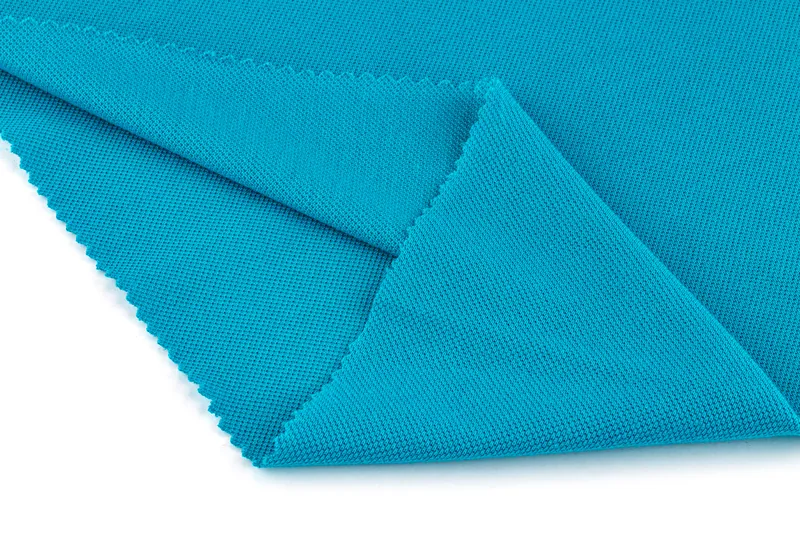 Polo shirts & uniforms
How to calculate the production cost of a polo shirt
Many makers cost only fabric and labour, then wonder why nothing is left over. A complete cost sheet has at least eight lines, and each one matters.
 Polo shirts & uniforms
Restaurant and bar staff uniforms: choosing tees and polos
In hospitality the uniform is part of the guest experience. It has to look right at 11pm after a ten-hour shift, not just in the opening-night photos.
 Kidswear & babywear
Which school-age basics should a kidswear brand make?
Back to school is one of the most predictable selling windows of the year. Brands that have the right basics in the right sizes sell them at full price.
 Quality, compliance & sustainability
How to approve a lab dip and judge colour in a light box
Colour approval feels like a formality until your polos look perfect in the office and wrong in the shop. A few simple rules make all the difference.
220 colours. Pick them right on the product page.
Any fabric in the range can be dyed in any of the 220 colours — or matched to your sample (lab dip). From 150 kg per colour.