

Instagram, TikTok and Facebook are the main channels through which a small kidswear brand finds its first customers. Budgets are usually tight and competition is intense. What makes the difference isn't the number of posts but clarity: who you are talking to, which problems you solve for them and how you show it without needlessly exposing children.
Who you are really talking to
The kidswear buyer isn't one person. There are at least three profiles:
- the everyday parent: wants quality, correct sizing and a reasonable price;
- the detail-focused parent: reads the composition, looks for good fabrics and brands with clear values;
- the gift buyer: grandparents, godparents and friends who want something beautifully packed and easy to choose.
Each profile responds to a different kind of content. Try to speak to all of them in one post and you will convince no one.
Don't forget the channels that don't depend on an algorithm. Local parents' groups on Facebook, an email list of customers who have already bought, and a direct message after an order often bring more repeat sales than a viral post. Social media brings in the new customer; the direct relationship brings them back every time their child moves up a size.
Content themes that work
Build your calendar on 4–5 recurring themes:
- Fabric and making: rolls of knit, cutting, sewing, wash tests. Parents are curious about where their children's clothes come from.
- Complete outfits: how the collection's pieces combine for nursery, school and weekends.
- Size help: how to measure a child, what a double size means, how much growing room a piece has.
- Care: how to wash clothes so they stay soft and don't fade.
- Real customers: photos sent in by parents, with their explicit consent.
Short videos showing a garment turned inside out, a close-up of a seam or a tee laid flat after 20 washes demonstrate quality more convincingly than any studio shot.
Children's images: rules you don't bend
Photos of children sell, but they come with responsibilities:
- get the parents' written consent for each use, stating the channels and the period;
- follow data protection rules and the platforms' policies on minors;
- never publish names, schools, locations or other details that identify a child;
- avoid inappropriate poses and keep the focus on the clothes, not the child.
Many brands choose garment-only content, flat lays or faceless shots. They lose nothing in appeal and make life much simpler.
Working with parent creators
Partnering with parents who have an audience can build trust quickly. A few practical rules:
- choose creators whose followers resemble your customers, not those with the most views;
- send products in the right size and ask for honest opinions;
- make sure paid or gifted posts are clearly labelled as advertising;
- include rules on the child's image in the agreement.
A piece that looks good on screen
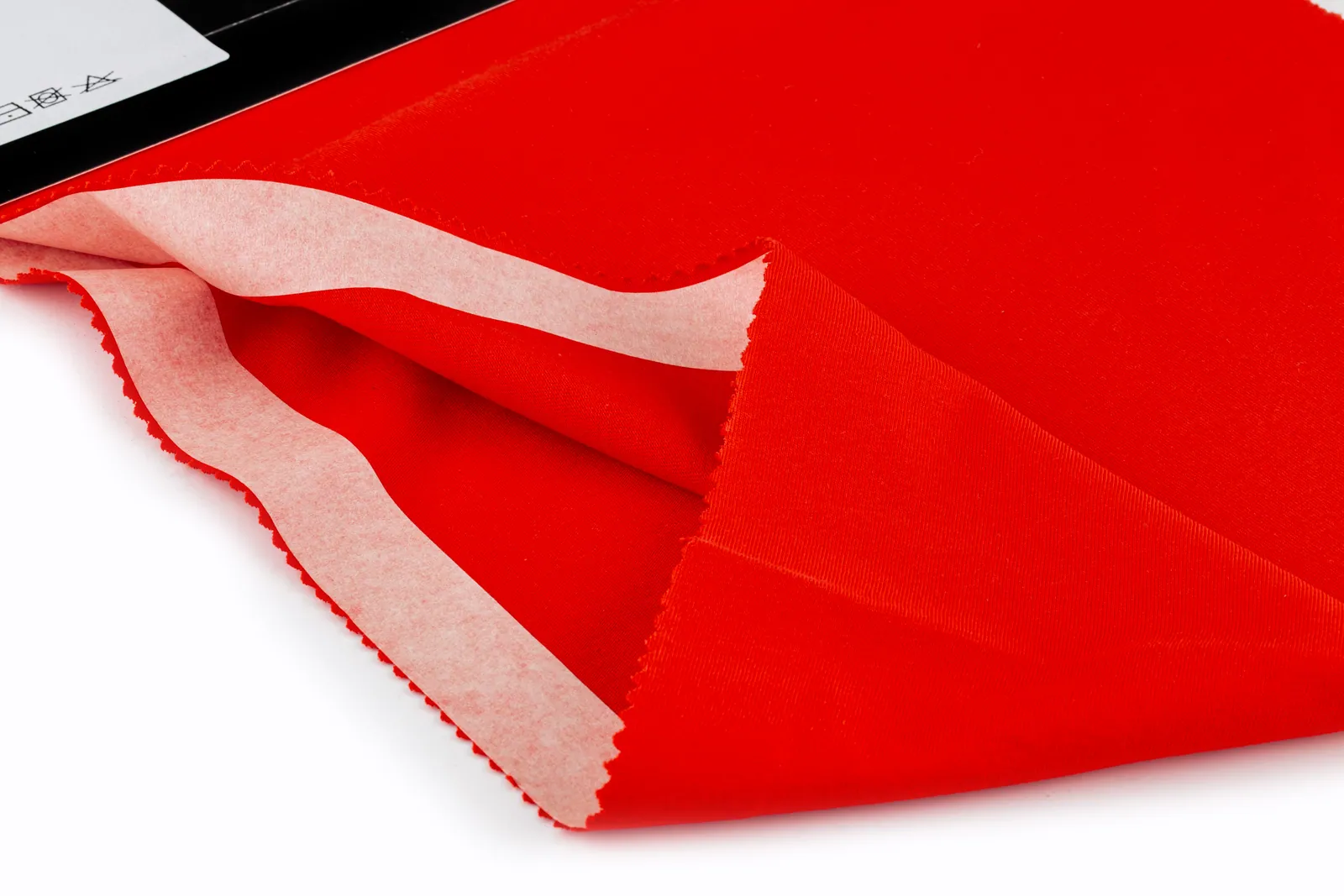
On social feeds, colour is the first thing that stops the scroll. A red kids' tee in a simple outfit with jeans or beige trousers stands out instantly. For a piece like that we would use 170 g red single jersey in 100% combed cotton with an enzyme and silicone finish: the colour is vivid, the fabric is soft on the skin, and the weight suits tees worn in spring and summer. For a coherent collection palette, see the 220-colour card.
Bright colours have to be backed by quality, though. If the tee fades after a few washes, the negative comments will appear on exactly the post that drove the sales. Test colour fastness to washing before the campaign.
Paid ads and measuring results
Start with small budgets and test 2–3 message variants: fabric quality, the complete outfit, a multipack offer. Track cost per order, not just likes. Follow the platforms' policies on products for children and on audience targeting.
A post that brings orders deserves more budget; one with lots of likes and no sales is just a pleasant post. Review results every week and move money to what works. The red jersey ships from stock in Afumați with no minimum, so you can make a small run for the campaign and reorder only if it sells. For other colours, send us a quote request.
Frequently asked questions
Can I use photos customers send me of their children?
Only with the parent's explicit consent, ideally in writing, for use on your channels. Even if the parent has posted the photo publicly, reposting it for commercial purposes needs permission. Avoid details that could identify the child and honour any request to remove it.
What kind of content sells kidswear best?
Content that answers parents' questions: what the fabric looks like close up, how the sizing fits, how it survives washing and how pieces combine. Short, authentic videos with product detail often outperform polished studio photography.
Do creator partnerships need to be labelled?
Yes. Paid posts, posts made in exchange for free products and posts with discount codes must be clearly labelled as advertising, in line with consumer protection rules and platform policies. Put that obligation in your agreement with the creator.


