Many uniform programmes are decided in a single meeting: style, colour and fabric are chosen from a few samples laid on the table. The problems show up after delivery, when hundreds of staff discover that the collar curls, the sleeves are too tight or the shirt is too warm in the shop. A wear trial with a small group of employees, before the big order, is the cheapest insurance against those surprises.
What a wear trial is
It is a period of a few weeks in which a group of employees wear the proposed uniforms in real working conditions, wash them the way they will actually wash them and then give structured feedback. Unlike a simple size fitting, a trial shows how fabric and making behave over time.
Choosing the trial group
A good trial group is small but representative:
- 10 to 20 people for a company of a few hundred;
- every main role: office, field, warehouse, sales;
- a spread of sizes, small to large, men and women;
- a few critical voices who will say openly what they dislike;
- sites with different conditions: air-conditioned, outdoors, warm areas.
What to test
If you are choosing between options, trial them side by side. For example:
- two fabrics for the same style;
- two cuts (unisex and women's);
- two logo methods (embroidery and print);
- two colours, if that decision is still open.
Do not trial too many options at once. Two or three are enough for a clear decision.
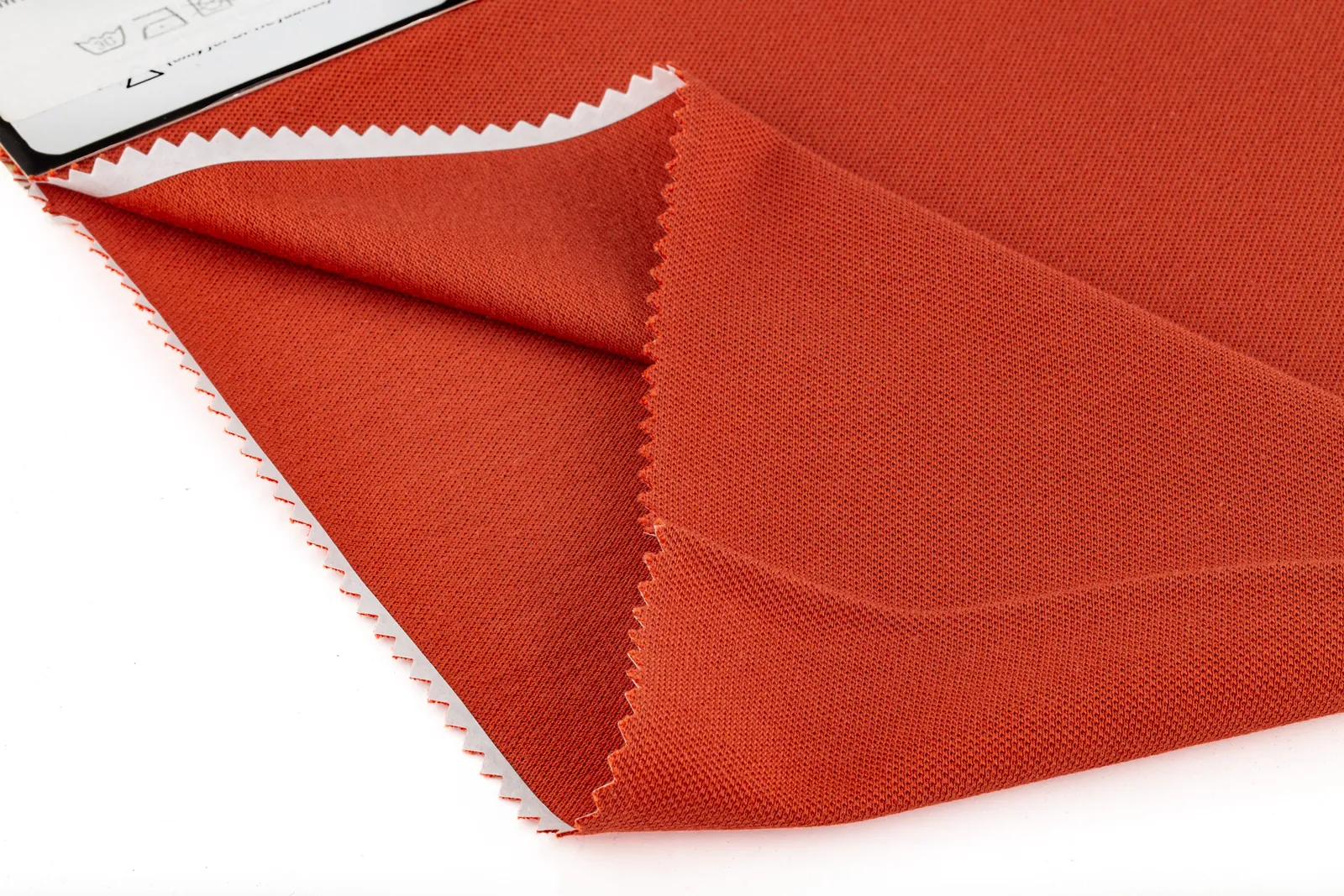
As an example, a company that wants a warm colour instead of the usual navy could trial polos in brick red piqué at 190 g, in 100% combed cotton, available from stock. Because the fabric can be bought by the roll with no minimum, the workshop can make just a few dozen trial shirts. Combed cotton is comfortable on the skin, and the trial shows in practice how well the warm colour holds up when staff wash shirts at home.
How long, and what to measure
Three to six weeks is usually enough to see the first signs of wear. During the trial:
- photograph the shirts at the start, midway and at the end, under the same light;
- measure length and width after the first washes to check shrinkage;
- keep one unworn shirt as a colour reference;
- record the approximate number of wears and washes for each piece.
Staff feedback
A short form with 1 to 5 ratings and a few open questions is more useful than an informal chat. Ask about:
- comfort in heat and cold;
- freedom of movement at the shoulders, arms and waist;
- body and sleeve length;
- how the collar behaves after washing;
- how easy the shirt is to wash and dry;
- how they feel wearing it in front of customers.
Gather managers' comments too: they see how the team looks as a whole, not just each shirt.
What to do with the results
Trial results turn into concrete decisions: keep or change the fabric, adjust the pattern in certain sizes, move the logo, offer the women's cut as a separate option. Record every change in the tech pack before bulk production and approve a final sample that includes all corrections. If the trial exposed a serious fabric problem, such as heavy shrinkage or rapid fading, do not go straight to the big order: run a short second trial with the corrected fabric. A few extra weeks cost far less than hundreds of shirts that need replacing after the first month.
An often overlooked benefit is that trial participants become champions of the new uniform. When the rest of the team receives their shirts, they can explain why the fabric was chosen and how to look after it.
Preparing your trial
A wear trial needs small quantities, so fabric from stock with no minimum order is ideal. You can browse our piqué range or come to our Afumați showroom to pick the options to test. After the trial, the main order can come from stock or be made to order from 150 kg per colour in any of 220 colours.
Frequently asked questions
How many staff should take part in a wear trial?
For most companies, 10 to 20 people are enough, provided they cover every main role, small and large sizes and the different working conditions. Very large companies with many job types may need a slightly bigger group.
What does a wear trial cost?
The main cost is making a few dozen trial shirts and the time to organise it. Against an order of hundreds or thousands of pieces, it is a small sum. Using stock fabric bought with no minimum keeps the cost under control.
What if staff disagree with each other?
Differing opinions are normal. Look for patterns: if most people complain about the same thing, it is a real problem. For individual preferences such as fit, offer two options. Decisions on colour and logo remain the company's.