
A parent writes to say a snap on their child's joggers came off. A customer reports that the drawstring on a kids' hoodie is far longer than seems normal. A retail partner emails you after an inspection. In each case the question is no longer whether the product has a quality defect, but whether it poses a health or safety risk. The distinction matters, because a safety risk triggers clear legal duties.
The General Product Safety Regulation sets out what manufacturers and distributors must do when a product on the market turns out to be dangerous. Exact procedures, time limits and forms can change, so always check the current text and the guidance from the national authority, which in Romania is ANPC. Below is the practical framework.
Step 1: assess the signal quickly
Not every complaint is a safety problem. A split seam on an adult tee is a quality defect. A snap that pulls off a baby bodysuit easily is a choking hazard. Questions that help:
- Who wears the product: adults, children, babies?
- What could happen in the worst case?
- Is it an isolated case, or a problem with the whole lot or the design?
Write everything down: the date, the source, any photos received and your conclusion.
Step 2: stop sales and identify the lots
If there is a real risk, stop selling the affected product immediately, including online and through partners who resell it. Then use your traceability:
- Which production lots contain the defect?
- Which fabric, trims and workshop were used for those lots?
- How many pieces have been sold, how many are in stock and where?
- Who bought them, where you can identify customers?
Without lot codes, the answer to these questions becomes everything we have ever sold in this style.
Step 3: inform authorities and customers
When a product on the market presents a risk, the regulation requires market surveillance authorities to be informed. In the EU, businesses use a dedicated portal for this, the Safety Business Gateway. At the same time, affected consumers must be told: directly where you have their details, and through a clear notice on your website and social channels.
A good recall notice has a clear headline, a product photo, the lot codes, a description of the risk, what the customer should do and what they get in return.
Withdrawal or recall
- Withdrawal means stopping the product in the distribution chain before it reaches consumers.
- Recall means getting back products that consumers already have.
For a recall, the regulation sets out which remedies must be offered to consumers, such as repair, replacement or refund. Check the exact requirements before you publish the notice.
Step 4: root cause and prevention
Once the situation is under control, find the cause: a non-compliant design, a weak trim, a badly set snap press, a fabric swapped without approval. Correct the tech pack, update the risk analysis, brief the workshop and suppliers, and keep every document in the style's file.
Prepare before you need it
A one-page plan written now saves panic later:
- who decides to stop sales;
- where the lot records are;
- how to reach customers and partners quickly;
- a recall notice template;
- contact details for the authority and a legal adviser.
Traceability starts with the fabric
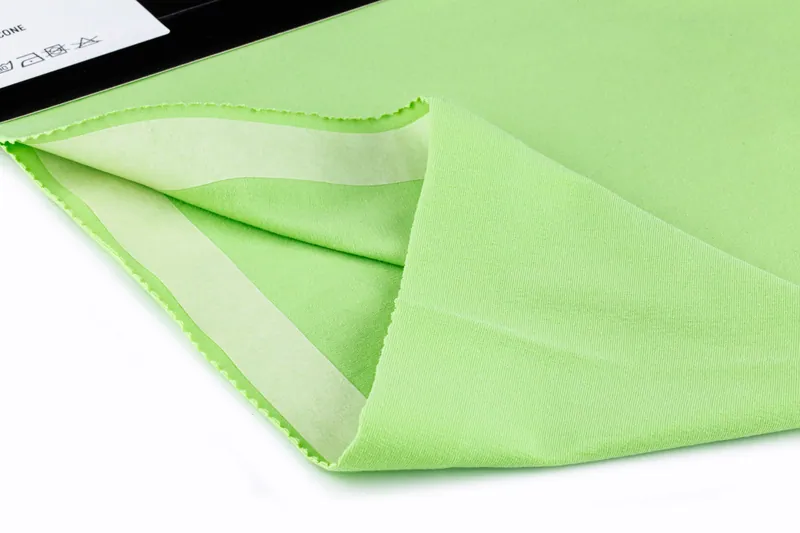
Some safety problems trace back to fabrics and trims, so the link between the fabric lot and the production lot is essential. For children's joggers, for example, our 220 g navy 2-thread fleece in 100% combed cotton is a good fit: soft inside, durable through frequent washing and free of elastane, so its composition is simple to declare. Record the lot from the roll ticket in each order file. If a problem appears, you know immediately which production is affected and which is not.
Other kidswear fabrics are in the french terry and 2-thread family.
Fabrics from stock are sold by the roll with no minimum, and made-to-order colours start at 150 kg per colour per article.
Frequently asked questions
Must I notify authorities after a single complaint?
It depends on the nature of the risk. If the complaint points to a real health or safety risk and the product has reached consumers, the duty to inform can apply even to a single case. When unsure, get quick advice from a legal adviser and document the decision you take.
Who pays for a recall if the defect came from the snap supplier?
Towards consumers and authorities, the brand that placed the product on the market is responsible. You may recover costs from the supplier afterwards, depending on your contract and the evidence you hold. That is why written specifications and compliance documents for every trim matter so much.
Can I just replace products quietly, without a public notice?
If you know exactly who bought the product and can contact all of them, direct communication may be enough. If not, a public notice is needed to reach every buyer. The decision has to be based on the level of risk and on what the regulation requires.