
The band t-shirt is probably the oldest merch item in music. Fans buy it as a souvenir, wear it to the next gig and turn it into walking advertising. For independent bands, merch can make the difference between a tour that loses money and one that covers its costs. That only works if the stock level is right: too few tees means lost sales, too many means cash tied up in boxes that travel from city to city.
Estimating quantity for a tour
There is no universal formula, but there is a sensible way to estimate. Start from the expected audience at each gig and the purchase rate, meaning the share of the audience that buys a tee. If you have figures from previous gigs, use them. If not, start cautiously.
A hypothetical example: an 8-date tour with an average audience of 250. If we assume 8% buy a tee, that gives 8 × 250 × 0.08 = 160 tees. Add a small buffer and post-tour online sales, then decide whether to order everything upfront or restock halfway through the tour. Two smaller runs cost a little more per piece, because screen set-up is paid twice, but they reduce the risk of being left with unsold sizes. For a band on its first tour, that trade-off is usually safer than one large order based on guesswork. Bear in mind the space in the van as well: ten boxes of tees take room that would otherwise go to the gear.
Sizes: your band's audience is not the average
The size curve for merch depends heavily on the genre and the audience. A metal band and an indie pop band have fans with very different profiles. A few rules:
- record sales by size at every gig, even on paper;
- if you also sell a women's fit, track it separately;
- large sizes often sell out first at gigs; do not under-order them;
- keep very small sizes in limited quantities.
After the first tour you will have your own curve, which is worth far more than any general average.
Design and print technique
The classic band tee is black, with a large front print and often the tour dates on the back. For this kind of product:
- screen printing is the standard for runs over a hundred pieces and gives strong colours on black over a white underbase;
- DTF suits short runs, very colourful designs or quick restocks;
- embroidery is used on premium items, such as a small chest logo on a collector's tee.
Tour dates on the back make the tee collectable but tie it to a moment. For restocks and long-term online sales, keep a design without dates as well.
Logistics: stock on the road
Tour merch has its own practical rules:
- pack tees by size in clearly labelled boxes that are easy to count;
- count stock at the start and end of every night;
- display the available sizes at the stand so you do not waste time answering questions;
- keep part of the stock at home or in storage for online orders;
- photograph the tee being worn, for the online shop and social media.
Why the fabric matters for black
Black is the best-selling merch colour and the most demanding. A cheap black tee turns brownish grey after a few washes, until the print looks better than the shirt. Fans wear band tees for years, so colour fastness is part of the product's value.
What we would use for black merch
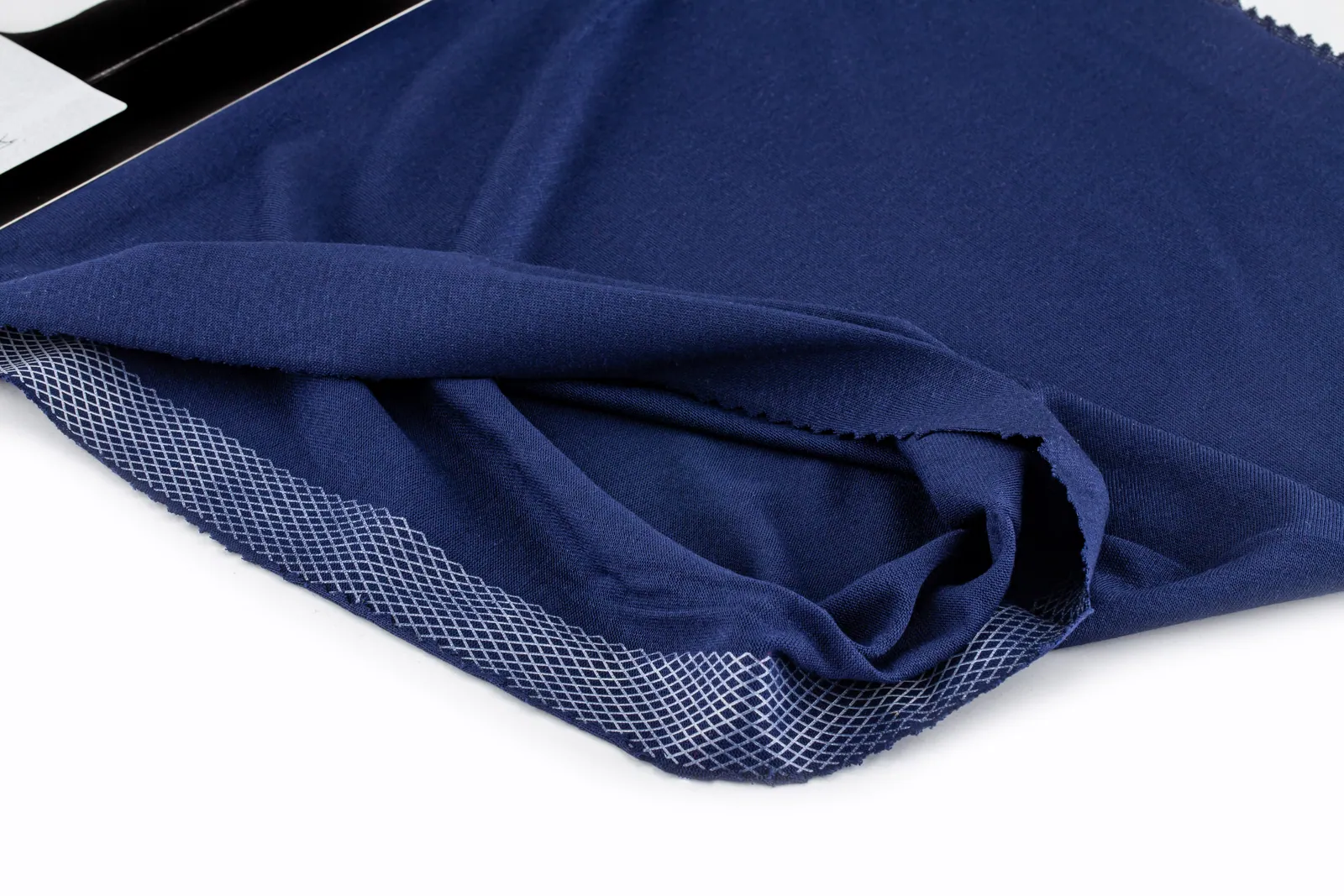
For black band tees, screen printed and worn hard, we would choose our 220 g plated black jersey in combed cotton and polyester. The plated construction puts the cotton on the face of the fabric, where the ink has a good surface, while the polyester adds strength and colour stability. At 220 g/m² the tee has the weight fans associate with quality merch. For white prints, ask your printer for a low-bleed ink because of the polyester content.
The plated black jersey is made to order, from 150 kg per colour, so it suits bands or merch companies planning several tours. For a small first batch, pick a black or dark jersey from our stock list, with no minimum order. For made-to-order production, send us a quote request.
Frequently asked questions
What tee colour sells best at gigs?
Black dominates in many genres, especially rock and metal. For pop or indie bands, light neutrals or colours from the album artwork can do very well. Test a secondary colour in a small quantity before expanding it across the range.
Is it worth selling band tees online too?
Yes, an online shop extends the life of merch after the tour and reaches fans in cities you did not play. Keep part of the stock for online orders and use designs without tour dates for long-term sales.
Can I make a limited-edition band tee?
Yes, a numbered limited edition with a special design or rare colour creates urgency and justifies a higher price. State the number of pieces clearly and stick to it; fans notice when a limited edition is reprinted.