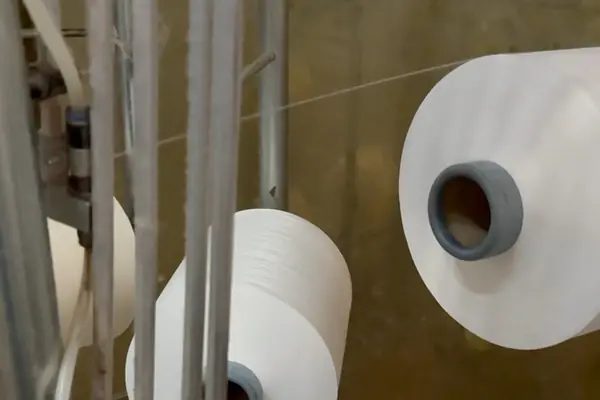
Heavyweight tees sell because they look consistent, drape well and feel like a premium product. They usually mean a thicker single jersey, roughly 200–260 g/m², with well-twisted yarn and a tight knit. Construction matters as much as weight: a heavy tee needs a sturdier rib neckband, stable seams and a slightly roomier cut, otherwise it feels stiff. Ask for a washed sample before the full lot, because thick fabrics often shrink more visibly in length. Judge the fabric by its drape and hand feel, not only by the GSM figure.
Why are heavyweight t-shirts so popular and how do I make them properly?

heavyweightt-shirttrend
Knit structuresWhat is single jersey (glat, suprem) knit fabric?
Single jersey is the simplest circular knit: one set of needles forms a fabric with V-shaped knit stitches on the face and rounded purl-looking loops on the back,…
Knit structuresWhat is the difference between single jersey and interlock?
Single jersey is knitted on one needle bed, while interlock is knitted on two, which gives a thicker, firmer fabric that looks the same on both sides.
Knit structuresWhat is 1x1 rib knit fabric?
1x1 rib is a knit with vertical ridges where one knit stitch alternates with one purl stitch across each row.