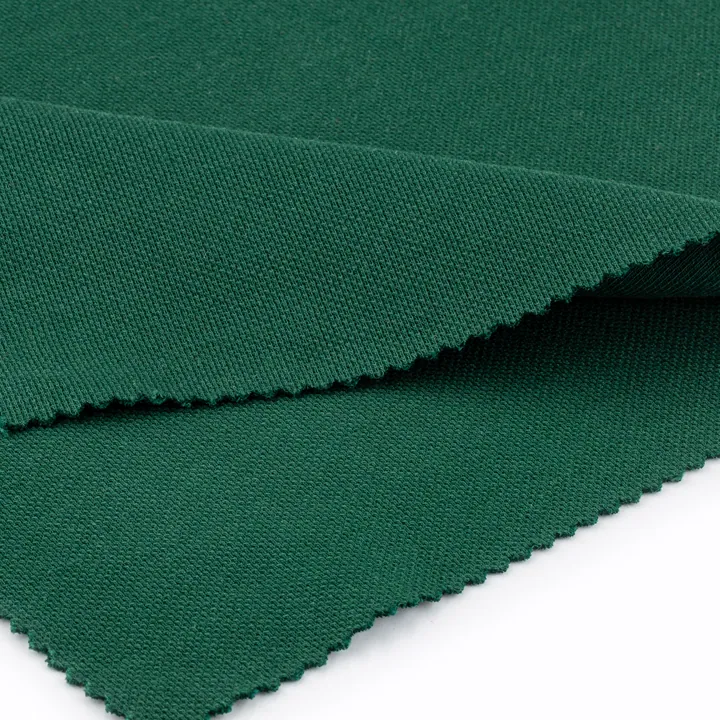
Finished GSM differs from greige GSM: shrinkage in length and width raises it, while stretching on the stenter lowers it. Compacting raises it by a few percent; brushing and shearing remove fibre and reduce it slightly. Softener adds a negligible amount. Buyers measure GSM on finished fabric, with a usual tolerance of about ±5%. Ask the supplier for the finished GSM and the condition under which it was measured (after relaxation, at standard temperature and humidity) and compare lots using the same method.
How does finishing change the GSM (g/m²) of a knit?

gsmfinishingtolerance
The right fabric for each garmentWhat fabric do I choose for leggings and stretch shorts?
For cotton leggings use a single jersey or interlock of 220–280 GSM with 5–10% elastane, so the fabric is opaque and recovers well after stretching.
The right fabric for each garmentWhat material suits gym tops and cotton activewear?
For gym tops and cotton activewear choose a thin combed single jersey of 140–170 GSM that breathes and does not cling excessively.
The right fabric for each garmentWhat fabric do I choose for knitted dresses?
For knitted dresses choose single jersey of 160–220 GSM with elastane, or interlock of 200–260 GSM if you want a firmer drape and a more elegant look.