
Finishing & performance
Enzyme, silicone, brushing, compacting, anti-pilling, functional finishes.
52 articles Finishing & performance
Why does finished knit fabric differ from greige fabric?
Greige fabric, straight off the circular machine, has a different GSM, width and hand from finished fabric because it goes through wet and heat processes that relax…
 Finishing & performance
What are the finishing steps for a knitted fabric, in order?
The exact sequence depends on the article, but a typical tubular knit goes through preparation (cleaning, sometimes singeing or bio-polishing), dyeing, and then…
 Finishing & performance
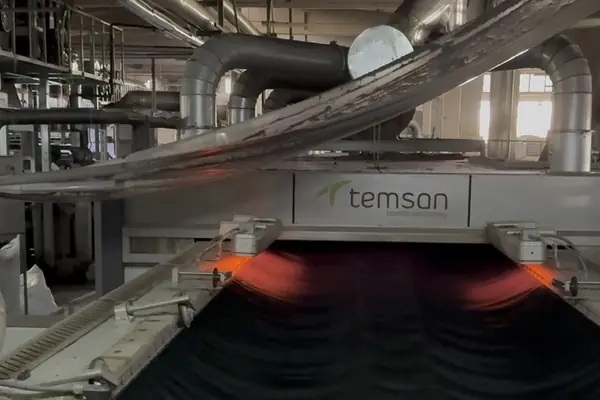
What is singeing on knitted fabric and when is it used?
Singeing passes the fabric quickly over flames or hot plates to burn off loose fibre ends and fuzz from the surface before dyeing.
 Finishing & performance
What is bio-polishing (enzyme finishing) on knitted fabric?
Bio-polishing is an enzyme treatment (cellulase) that breaks down the microfibres sticking out of the cotton surface without seriously attacking the fibre core.
 Finishing & performance
What is the difference between macro and micro silicone softeners?
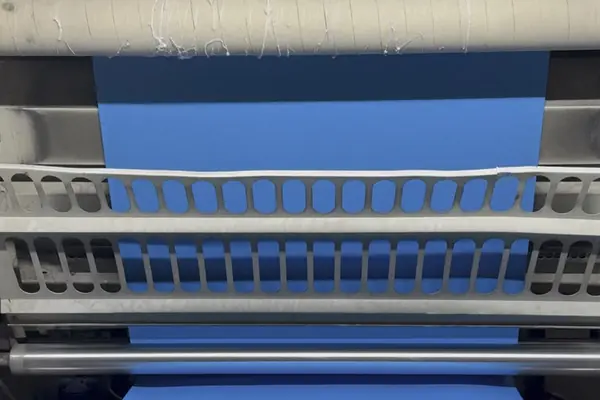
A macro silicone softener has large particles, forms a film on the fibre surface and gives a full, slippery, almost oily hand, but it can leave stains and reduce…
 Finishing & performance
Cationic or silicone softener: what should I know before choosing?
A cationic softener gives a soft, inexpensive hand, but it can slightly yellow light shades, reduces absorbency and washes out relatively quickly.
 Finishing & performance
What is brushing (raising) on knitted fabric and what does it change?
Brushing, or raising, is a mechanical treatment with wire or bristle rollers that lifts fibres from one or both faces of the fabric and creates a fluffy, warm layer.
 Finishing & performance
Brushed on one side or both: what is the difference?
Brushing on one side only, usually the inside, is the standard for hoodies and fleece: the outside stays smooth and printable while the inside becomes warm.
 Finishing & performance
What is a peach finish (peaching) on knitted fabric?
A peach finish is a very fine sanding with abrasive rollers that shortens the surface fibres and gives a velvety, peach-skin hand.
 Finishing & performance
What is carbon brushing and how does it differ from peaching?
Carbon brushing uses brushes with fine carbon filaments or abrasive fibres, instead of sandpaper rollers, to lift and cut the surface fibres very short.
 Finishing & performance
What does shearing mean for knitted fabric?
Shearing cuts the surface fibres to a uniform height with rotating blades, usually after brushing.
 Finishing & performance
What is tubular compacting of knitted fabric?
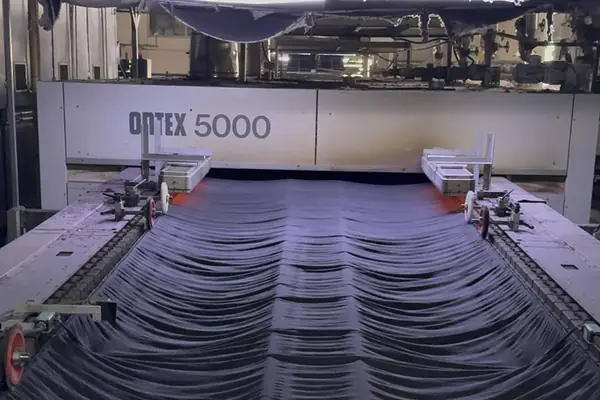
Tubular compacting is a mechanical process in which tubular knit is pushed lengthwise between a heated cylinder and a rubber belt, so the loops are packed together…
 Finishing & performance
Open-width compacting: when is it used and what are its advantages?
Open-width compacting is done after the tube is slit lengthwise and is used for knits with elastane, for fine fabrics, or when strict width control and efficient…
 Finishing & performance
What shrinkage in washing is acceptable for knitted fabric?
For most cotton knits, the shrinkage accepted in trade is roughly 3–5% in length and width after one wash, and some buyers ask for 2–3% or less.
 Finishing & performance
How do I test shrinkage before cutting a full lot?
Cut a square or rectangle from the actual roll, mark 50 cm distances in length and width, wash and dry as the future care label will say, then measure again.
 Finishing & performance
Why does a T-shirt twist after washing (spirality) and can finishing help?
Sideways twisting of seams, called spirality or torque, appears when yarns are overtwisted, when the circular machine has few feeders, or when the tube was set…
 Finishing & performance
Why is knitted fabric with elastane heat-set on a stenter?
Heat-setting stabilises dimensions and stretch: fabric with elastane usually passes on the stenter at about 170–195°C for a few tens of seconds, so width and GSM…
 Finishing & performance
What are the risks of heat-setting too hard?
Setting at too high a temperature or for too long can yellow whites and light shades, weaken the elastane, make the fabric stiff and alter the shade on polyester.
 Finishing & performance
What is mercerising of knitwear and what does it improve?
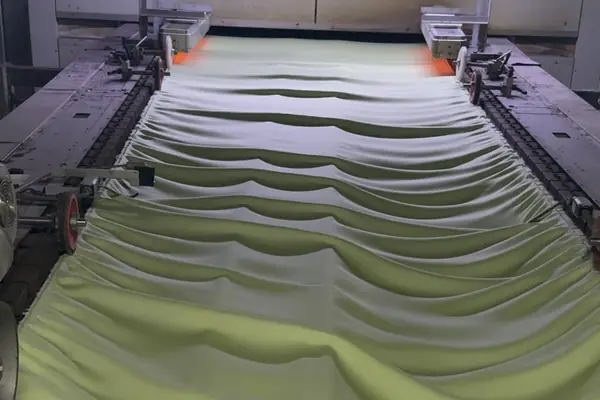
Mercerising is a treatment with concentrated caustic soda in which cotton is held under tension so the fibre swells and becomes rounder.
 Finishing & performance
How does an anti-pilling finish work?
An anti-pilling finish reduces the formation of fuzz balls in three ways: removing protruding fibres (singeing, bio-polishing, shearing), using a combed or compact…
 Finishing & performance
What does pilling grade 4 mean and when is it enough?
Pilling is graded from 1 (severe) to 5 (none).
 Finishing & performance
What is a moisture-wicking finish and how does it work on knits?
Moisture-wicking moves sweat from the skin to the outer surface of the fabric, where it evaporates.
 Finishing & performance
How do you get a quick-dry knitted fabric?
Quick drying comes first from the fibre: polyester and polyamide absorb very little water, so they dry much faster than cotton.
 Finishing & performance
What is an antibacterial finish on knitwear and what does it actually do?
An antibacterial finish limits the growth of bacteria on the fabric and therefore sweat odour.
 Finishing & performance
How long do functional finishes last after washing?
Durability depends on the finish and how it is applied: a cationic softener often disappears after a few washes, whereas a hydrophilic, antibacterial or repellent…
 Finishing & performance
How do cooling finishes work on knitwear?
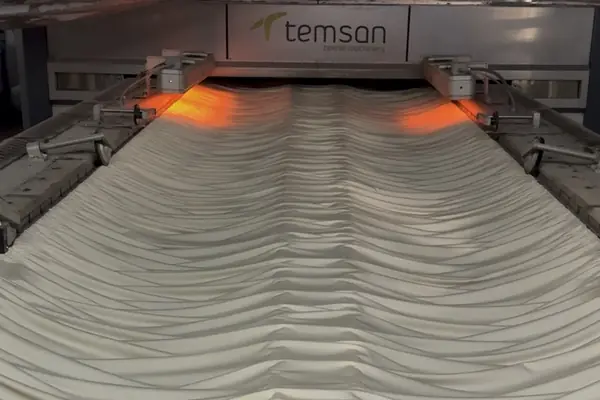
The cooling effect has two sources: structure and finish.
 Finishing & performance
How is a knit made water-repellent and what are the limits?
A water-repellent (DWR) finish makes water form droplets that roll off the surface instead of being absorbed.
 Finishing & performance
What does a PFAS-free water-repellent finish mean and is it as good?
PFAS are per- and polyfluoroalkyl substances, long used to make fabric water- and oil-repellent; they persist in the environment and are increasingly restricted in…
 Finishing & performance
How does a UV-protection finish work and what does UPF mean on knits?
UPF (Ultraviolet Protection Factor) shows how much UV radiation the fabric blocks; UPF 50 means roughly 1/50 passes through.
 Finishing & performance
Can knitted fabrics be flame retardant and how?
Yes, in two ways: through the fibre (modacrylic, aramid, FR polyester or FR viscose, with permanent protection) or through a finish applied to cotton (for example…
 Finishing & performance
How do you get a silky hand feel on knitted fabric?
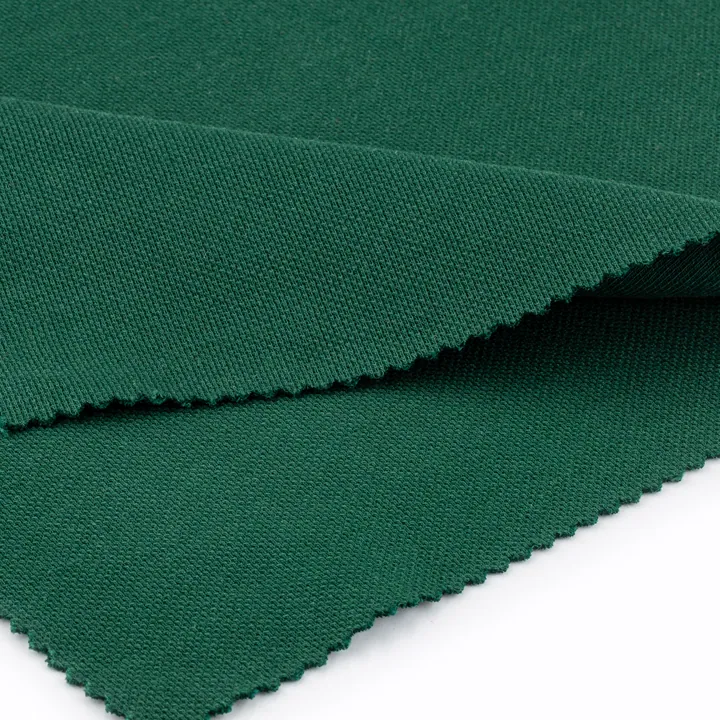
A silky hand comes from the combination of fibre (combed cotton, modal, viscose or microfibre), fine yarn, dense structure and finishing: bio-polishing, micro or…
 Finishing & performance
How do you describe the hand feel of a knit correctly?
Hand feel is described by a few simple criteria: softness (soft or firm), smoothness (smooth, grainy, fuzzy), warmth (warm or cool to the touch), fullness (full or…
 Finishing & performance
How do you get a washed look on knitted fabric?
A washed look is achieved either at fabric level (washing with enzymes, softener and mechanical action in drums) or after garment making (garment wash).
 Finishing & performance
What is the difference between fabric washing and garment washing?
With fabric washing, the process takes place on the roll or tube before cutting: shrinkage is used up there and pattern cutting is more predictable.
 Finishing & performance
What is an acid wash or stone wash effect on knitwear?
Acid wash and stone wash are mechanical and chemical treatments that create a faded, mottled, high-contrast look typical of vintage tees and sweatshirts.
 Finishing & performance
How does finishing change the GSM (g/m²) of a knit?
Finished GSM differs from greige GSM: shrinkage in length and width raises it, while stretching on the stenter lowers it.
 Finishing & performance
How does finishing change the fabric width?
Finished width depends on the method: compacted tubular knit stabilises its width close to that of the rolls, while on the stenter width can be adjusted within…
 Finishing & performance
What should I specify to the mill for a correctly finished knit?
Specify: composition, finished GSM and tolerance, finished width (tubular or open), maximum shrinkage after washing in length and width, finish type (softener,…
 Finishing & performance
What is calendering of knitted fabric and what does it do?
Calendering passes the fabric between heated rollers under pressure to smooth it, reduce thickness and give it a sheen or a compact look.
 Finishing & performance
What is an easy-care (anti-wrinkle) finish on knitwear and what are the risks?
An easy-care finish uses cross-linking resins that reduce creasing and improve dimensional stability, mainly on cotton.
 Finishing & performance
What is an antistatic finish and when is it useful?
An antistatic finish reduces the build-up of static electricity, which makes fabric cling to the body or attract lint and dust.
 Finishing & performance
What is a soil-release finish on knitwear?
A soil-release finish is a hydrophilic finish that lets detergent remove greasy stains more easily, especially on polyester and blends.
 Finishing & performance
How do you get a crisp hand on knitted fabric?
A crisp, dry hand comes from combed or compact yarns, dense structures (pique, interlock), calendering, a resin or starch finish and minimal softener.
 Finishing & performance
Can finishing weaken the knit (over-finishing)?
Yes.
 Finishing & performance
Why does a production lot feel different from the approved sample?
Differences between sample and lot often come from finishing: a laboratory sample is finished on a small quantity with current parameters, while the lot runs on…
 Finishing & performance
Why does a T-shirt get softer after the first wash?
On the first wash some of the sizing and excess finish is removed, the fibres relax, the loops settle and the cotton swells and becomes more supple.
 Finishing & performance
Why should fabric be left to relax before cutting?
Fabric unrolled and cut immediately can still hold tension from the roll and the stenter; after cutting, the pieces shrink or distort.
Finishing & performanceCan snagging be reduced by a finish?
Partly.
Finishing & performanceWhy does new fabric smell and how do you remove the chemical odour?
The smell of new fabric comes from finishing residues (softener, resins, solvents, insufficient rinsing) or from storage conditions such as dampness and tight…
Finishing & performanceWhy does knit fabric edge curl and how can it be reduced?
The edges of single jersey roll toward the back of the fabric because the structure has different tensions on face and back.
Finishing & performanceWhy does the colour shade change after finishing?
The shade can change in finishing: brushing and peaching darken or deepen the colour, bio-polishing may lighten the shade slightly, cationic softener yellows whites…
Finishing & performanceHow do you get the finish of a premium heavyweight oversized T-shirt?
For a heavyweight tee, usually 200–260 g/m², the premium hand comes from combed yarns, dense structure, tubular compacting, bio-polishing and a moderate…
From stock, no minimum order.
Take exactly what you need from our Afumați stock — one roll or a pallet. Ask for the current stock list and get it on WhatsApp or by email.
 0 kg minimum