

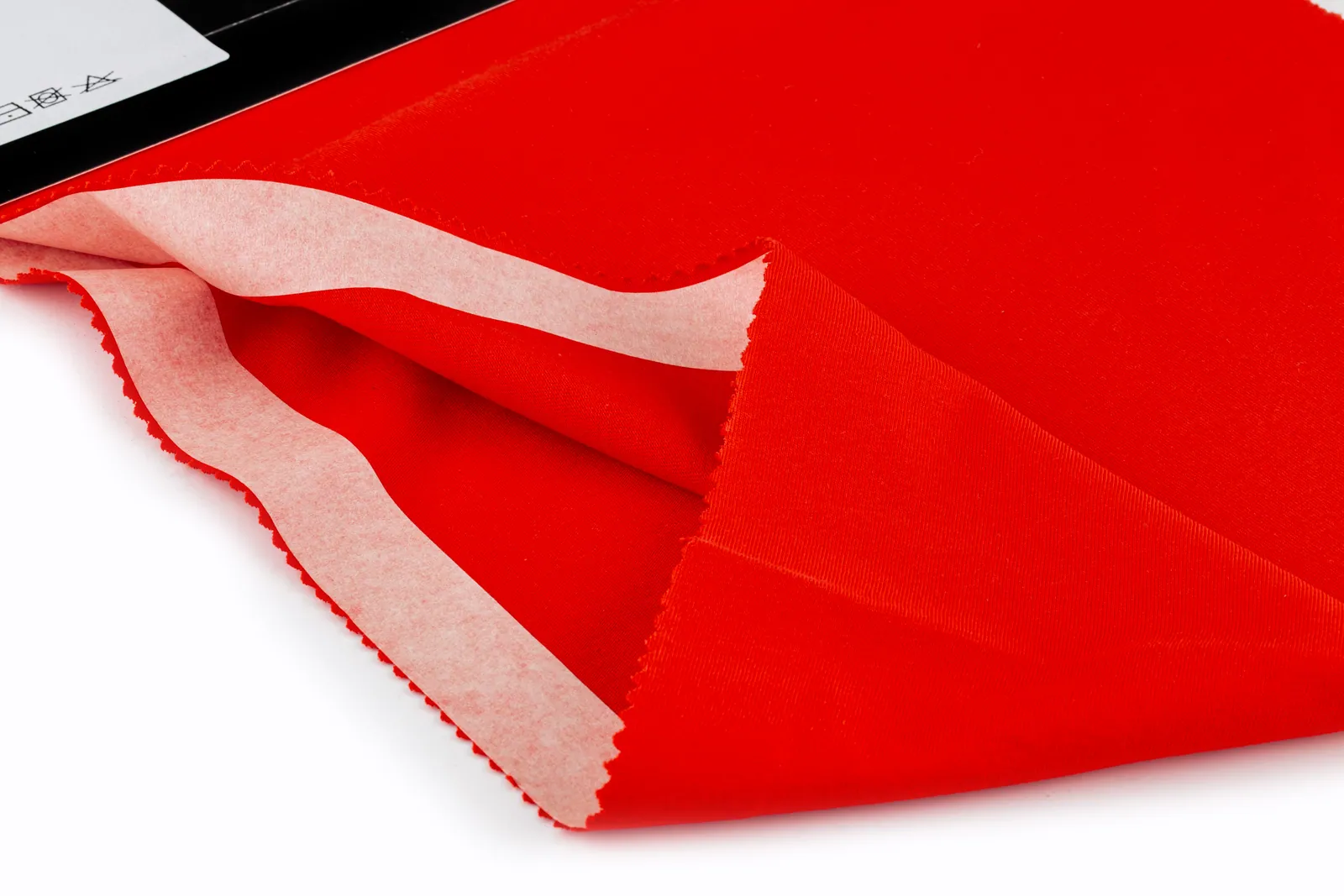
The private label model is simple on paper: a garment workshop makes t-shirts to your specification, and they reach the market under your brand. You need no factory, no sewing machines and no machinists on the payroll. You do need clear decisions and a reliable fabric supplier, because everything that carries your label becomes your responsibility.
Private label, white label or your own brand
The terms are often used loosely, but the differences matter:
- white label: you take the workshop's standard product, the same one it sells to others, and add your own label;
- private label: the product is made for you, with fabric, fit or details you choose;
- own brand with full development: you develop patterns from scratch with a complete tech pack.
For a t-shirt brand starting out, private label is usually the right balance: a differentiated product without the cost of full development.
What you control and what you delegate
As brand owner, you control directly:
- the fabric: composition, weight, colour and finish, bought by you or approved on a sample;
- the product specification: a tech pack with measurements, neckline type, seams and tolerances;
- the visual identity: labels, prints, packaging and swing tags;
- quality control on receipt.
You delegate cutting, sewing, pressing and packing to the workshop. Many brand owners prefer to buy the fabric themselves and supply it to the workshop on a CMT basis, precisely to control quality and dye lot.
Choose the workshop on the strength of its samples, not its promises. Ask for a fit sample in your base size, then a full size set before production. Ask how they check measurements, who is responsible for sewing defects and how quickly they can repeat a run. A workshop that already makes tees for other brands will raise these questions before you do.
The labels on a private label tee
A branded tee usually has several labels, each with its own job:
- the main neck label, woven or printed, with your logo;
- the composition and care label, which is mandatory, with fibre content in line with EU Regulation 1007/2011 and washing symbols;
- the size label;
- the swing tag, with price, product code and the brand story.
Woven labels usually come with minimum quantities from the label maker; printing the label directly inside the neck removes the scratch at the collar and suits premium tees well.
Your obligations as brand owner
Once a product is on the market under your brand, you are treated as its manufacturer in the eyes of the consumer. That means:
- correct labelling of composition and your company's identification details;
- meeting product safety requirements, including those of the General Product Safety Regulation (GPSR) and the substance restrictions in REACH;
- a procedure for complaints and returns;
- protecting your trade mark, for example by registering it nationally or at EU level.
For current detail, check with a legal adviser or your accountant, because requirements change.
The first batch: small but complete
A well-run first private label batch has few styles and few colours, but it is complete: labels, packaging, photography and a size chart. A hypothetical example: two colours × five sizes × 30 pieces per colour = 60 tees, enough to test customer response without tying up much capital. Repeat what sells; drop what does not.
What we would use for a premium private label tee
For a premium black tee that must feel different from an ordinary blank from the very first touch, we would work with our 180 g black single jersey in combed cotton, modal and elastane with a silky-touch finish. The modal adds softness and drape, the elastane helps the tee hold its shape, and the silky finish is the difference customers notice in a shop or when they open the parcel. For a broader range, browse our single jersey family.
The 180 g black jersey is made to order at the group mill, from 150 kg per colour per article, with every lot checked against the approved sample. For your first fit samples you can use a jersey from stock, then request a quote for made-to-order production. You can read about our production capacity on the mill page.
Frequently asked questions
Do I need a registered company to launch private label tees?
Yes, to sell products under your own brand you need a registered legal entity and proper bookkeeping. The right structure and your tax obligations should be discussed with an accountant, as they depend on your volume and sales channels.
Can I put my label on ready-made tees I have bought?
You can, but you then become responsible for the product towards the customer, and the composition label must remain accurate. Some blank manufacturers do not allow their original label to be removed, so check their terms before buying.
What is a tech pack and why do I need one?
A tech pack fully describes the product: measurements by size, tolerances, fabric, seams, labels and packaging. Without it the workshop guesses the details and later batches may come out differently. It is the document you check every delivery against.


