

Before the first production garment is cut, a new style goes through several development stages. Each one costs money, time and fabric. New brands often pay for them out of pocket and never record them, then set prices on production cost alone. If you sell only a few pieces of a style, sampling can be the biggest single cost per piece.
The development stages that cost money
- Base pattern: made by a pattern maker in the base size.
- Proto sample: the first sewn piece, to check shape and construction.
- Fit samples: one or more rounds after pattern corrections.
- Grading: patterns for every size.
- Size set: one piece in each size to check the grading.
- Print or embroidery strike-offs and wash tests on the real fabric.
- Pre-production sample: the approved reference piece for the workshop.
- Sometimes: photo samples and samples for wholesale customers.
A hypothetical sweatshirt budget
Let's assume the development of a french terry sweatshirt:
- base pattern: €150;
- grading across 5 sizes: €80;
- fabric for samples (the portion actually used): €60;
- three proto and fit samples at €30 each: €90;
- a 5-size set at €25 each: €125;
- print strike-off: €40;
- couriers between workshop, pattern maker and you: €35.
Total: €580, rounded to €600. All the figures are hypothetical. Notice that a sample costs far more to sew than a production piece: the workshop stops a line, makes a single garment and adjusts as it goes.
Spreading it per unit
Development cost per unit = total development cost ÷ planned quantity over the style's whole life.
- If you plan 300 pieces: 600 ÷ 300 = €2.00 per piece.
- If you plan 1,500 pieces including repeats: 600 ÷ 1,500 = €0.40 per piece.
The gap is large. That is why core styles that stay in the range for several seasons deserve careful development: their cost per unit falls over time. Seasonal styles made once must recover their sampling from a single run.
Be careful with the quantity you divide by: use a cautious estimate, not an optimistic one. If you spread the cost over 1,500 pieces and sell only 400, the rest of it is never recovered.
Styles that never make it to production
Not every sample becomes a product. If you developed ten styles and launched seven, the cost of the three dropped ones still has to be recovered from the seven launched. The simplest approach is to treat development of dropped styles as a collection overhead and spread it across every launched product.
Cutting sampling cost without risking quality
- Start from tried-and-tested base blocks for T-shirts, hoodies or joggers.
- Make samples in the same fabric as production. A sample in a 'similar' fabric may hang differently, and the correction is repeated at production.
- Test fabric shrinkage before fit samples so you do not correct the pattern twice.
- Limit the number of rounds: record every correction at each fitting, not one at a time.
- Group samples for several styles at one workshop to reduce couriers and set-ups.
Where it goes on the cost sheet
Add a 'development and sampling' line with the amount spread per unit. If the style succeeds and is reordered, recalculate: the line shrinks and the margin grows. It is one of the few costs that gets smaller the more you sell.
Keep a simple development log as well: for each style, record every expense, the date and the stage. After a collection or two you will know what developing a T-shirt, a hoodie or a dress typically costs you, and you can budget the next collection before the first samples begin.
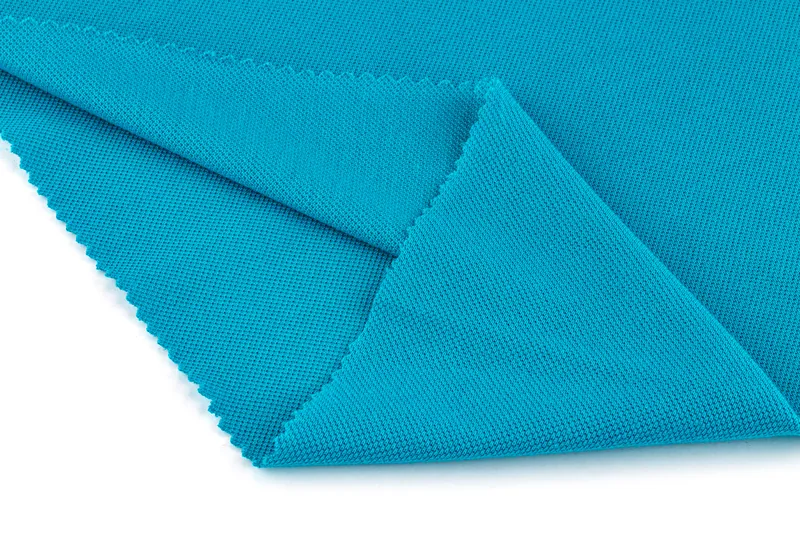
For sampling it is essential to be able to buy a small quantity of the exact article you will use in production. A 210 g pink french terry with elastane, light and soft, suits sweatshirts, co-ord sets and kidswear, and it is in stock, by the roll, with no minimum. Rolls left over from development then go into the first run. See the french terry range or visit the Afumați showroom to choose fabric in person.
The figures in the examples are hypothetical and only illustrate the calculation. They are not Alteks Tricot prices: we quote the price per kg of each article on request, usually the same working day. Ask for a quote
Frequently asked questions
How many sample rounds does a new style usually need?
Often one or two proto samples, sometimes three, followed by the size set and the pre-production sample. The number depends on the style's complexity, the pattern maker's experience and how clear the brief is. Styles built on proven blocks usually need fewer rounds.
Why does a sample cost more than a production piece?
Because the workshop sews a single piece, with machine set-ups, checks and adjustments, and none of the rhythm of a production run. The time for a sample can be several times the standard time for the same garment in production.
What quantity should I spread sampling costs over?
The quantity you realistically expect over the style's whole life, including likely repeats. Use a cautious figure. If the style sells better, recalculate later and the cost per unit falls.