

Setting up a company in Romania has become much simpler in recent years, with online procedures at ONRC, the trade register, and electronic communication with ANAF, the tax authority. For a clothing brand, though, registration is only the beginning. Then come the bank account, invoicing platforms, courier contracts, a payment provider and the information an online shop must display. Below is the logical order of the steps, described in general terms. Fees, deadlines and exact documents change, so check them with ONRC, ANAF or an accountant.
Step 1: the name and availability checks
Check and reserve your company name with ONRC. The company name does not have to match the brand: "Example Textile SRL" can sell under the brand "Example". Separately, check that the brand name is free in the OSIM and EUIPO trademark databases, and that the web domain and social media handles are available.
Step 2: registered office and activities
You need a registered office, which under certain conditions can be your own home. If you will hold stock or run a workshop, check whether you must declare a separate place of business.
Choose CAEN activity codes for your main and secondary activities. For a clothing brand these usually include manufacturing clothing, online retail and possibly wholesale. The CAEN classification has been updated, so choose the codes with your accountant using the version currently in force.
Step 3: registration and tax code
File your application with ONRC, usually online. Once registered, you receive a registration certificate with your unique registration code (CUI). Then:
- agree with your accountant whether to register for VAT from the start or later;
- open an account in ANAF's online portal (SPV);
- check how e-Factura works for invoices you issue to and receive from other businesses.
Step 4: bank, payments and accountant
Open a business bank account and never mix personal money with the brand's. Sign your accountant's contract before your first transactions. If you sell online, choose a card payment provider and check how payouts are reconciled with orders. If you will take cash or card payments in person, for example at fairs or in a showroom, check the rules on electronic fiscal cash registers.
Step 5: the online shop and information duties
An online clothing shop must display, among other things:
- the company's identification details;
- terms and conditions, including delivery and returns;
- information on the right of withdrawal;
- a privacy policy in line with GDPR;
- information on dispute resolution and references to ANPC, the consumer authority, as currently required;
- fibre composition and care instructions for every product.
Platforms such as Shopify or WooCommerce provide templates, but the text must be adapted to Romanian law. A lawyer experienced in e-commerce can save you from complaints.
Step 6: suppliers and first purchases
Only now, with the company registered, do you make your first purchases: fabric, labels, packaging, labour. Every invoice must be in the company's name. Ask suppliers for the fabric's technical data sheet: composition, weight and any certificates. The composition on the data sheet is what you will print on the product label.
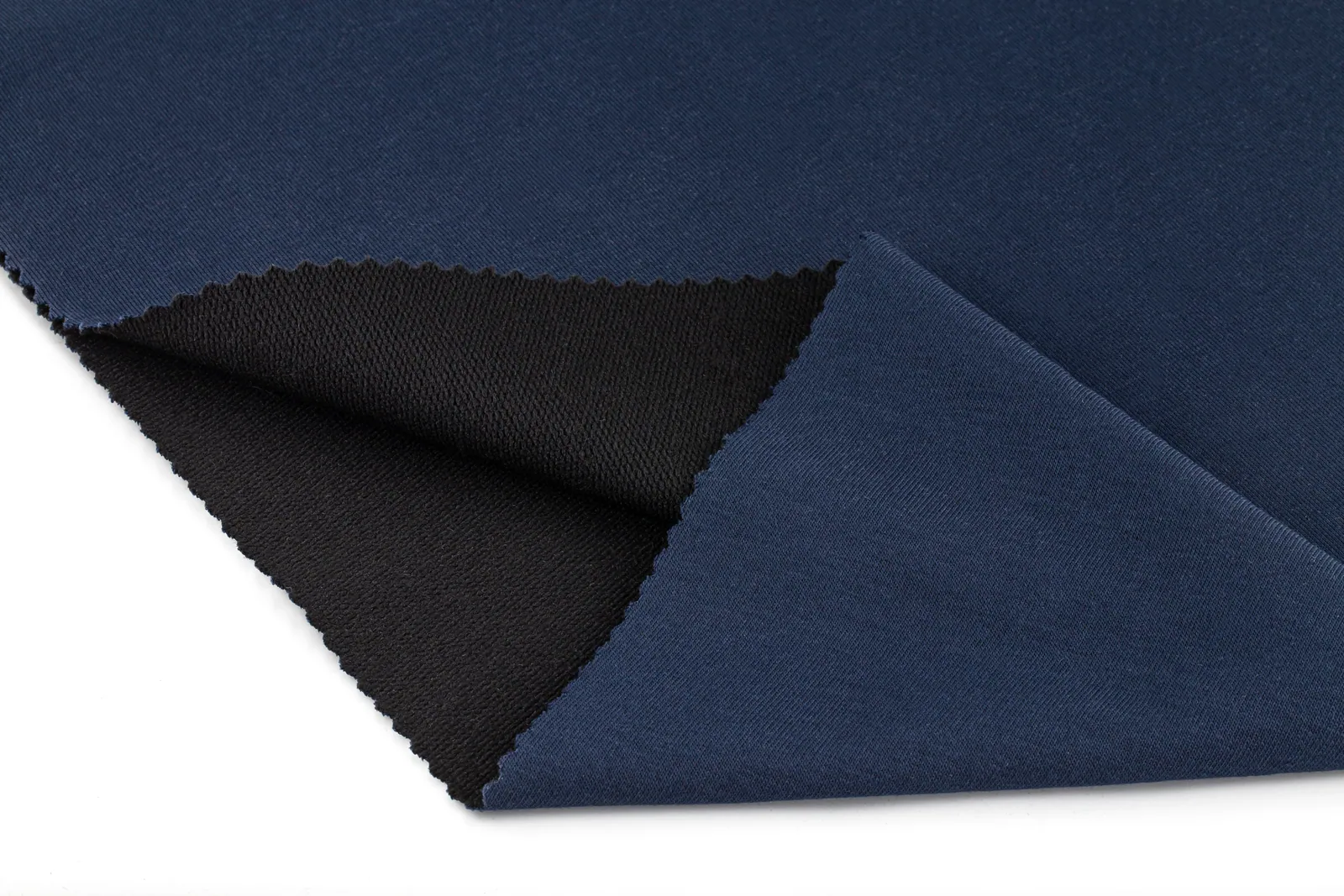
A concrete example: the first purchase for a summer tee brand might be a single roll of lime green single jersey at 160 g in 100% combed cotton. It is a light, cool fabric in a bright colour that suits a summer collection, and a 100% cotton composition is simple and unambiguous on the care label. As a stock fabric it can be bought with no minimum, exactly as much as you need for samples and a first run.
Checklist
- Company name reserved and trademark checked.
- Registered office and, if needed, a place of business.
- CAEN codes chosen with your accountant.
- ONRC registration and tax code.
- SPV and e-Factura set up.
- Bank account, payment provider, accountant's contract.
- Legal pages on the online shop.
- Suppliers invoicing the company and supplying data sheets.
Once the company is ready, ask for our stock list or a price quote in the company's name. If you would rather see the fabrics first, visit our warehouse and showroom in Afumați.
Frequently asked questions
Can I use my home address as the registered office?
In many cases yes, with the owner's consent and, in a block of flats, subject to the conditions in the rules in force. If you will hold a lot of stock, run a workshop or receive customers, however, you may need a separate place of business. Check the current conditions with ONRC or an accountant.
Do I have to register for VAT from the start?
Not necessarily. VAT registration can become mandatory once you pass a certain threshold, or you can opt in from the start. Each choice affects your consumer prices and whether you can reclaim VAT on purchases. The threshold and rules change, so decide with your accountant based on your estimates.
Which documents should I get from my fabric supplier?
An invoice in your company's name and the fabric's technical data sheet, with exact composition, weight and width. If the fabric is certified, for example OEKO-TEX, ask for a copy of the certificate too. The composition on the data sheet is the basis of the label required by EU Regulation 1007/2011.


