
Every workshop that works for brands, event companies or merch agencies gets urgent requests: tees for a festival in ten days, uniforms for an unplanned opening, a fast repeat of a product that sold unexpectedly well. Rush orders can be very profitable. They can also be the surest way to make clients who ordered properly and on time late.
Step one: what urgent means for the client
Before any calculation, clarify:
- the real date the goods must reach their destination, not the date the client would like;
- whether a partial delivery on time, with the rest later, is acceptable;
- whether the product can be simplified: fewer colours, fewer sizes, no individual bags;
- whether the client already has the tech pack, print files and approvals;
- whether they can pay a deposit immediately.
An impossible order often becomes possible once the client accepts a simplification.
Assessing feasibility
A rush order is feasible only if every component is available now. Check, in order:
- Fabric: is it in stock, in the colour and quantity needed? Made-to-order fabric takes weeks, so for rush jobs stock is almost the only option.
- Trims: labels, rib, packaging. Custom woven labels can rarely be had in a few days; offer printed labels or no brand label.
- Decoration: does the print subcontractor have free capacity on those days?
- Sewing capacity: how many free hours do you have without moving other orders?
- Transport: how long delivery takes and whether an express option exists.
If any one of these is missing, do not promise the date.
The impact on other orders
This is the question many people skip. If the line is full, the rush order is not sewn in between others: it pushes other orders back. Look at the master plan and answer honestly:
- which orders move, and by how many days?
- do those orders have buffer before their due date?
- can you work overtime or a Saturday shift, with your staff's agreement and within employment rules?
- can you subcontract part of it?
If accepting the rush job means a loyal client delivers late, the real cost is far higher than the surcharge you collect.
How to price urgency
A rush surcharge is not a penalty on the client; it covers real costs:
- overtime and unplanned shifts;
- express transport for fabric and finished goods;
- rush rates at subcontractors;
- lower line efficiency with sudden style changes;
- the risk you take on.
As an example, let's assume an order of 500 printed tees needs 12 hours of overtime for 10 operators, plus express transport. Calculate the actual extra cost (overtime paid according to employment law, transport, the printer's rush rate), divide it by 500 pieces and add a margin. The result is your per-piece surcharge. Do not use a percentage picked at random.
Stock fabric makes the difference
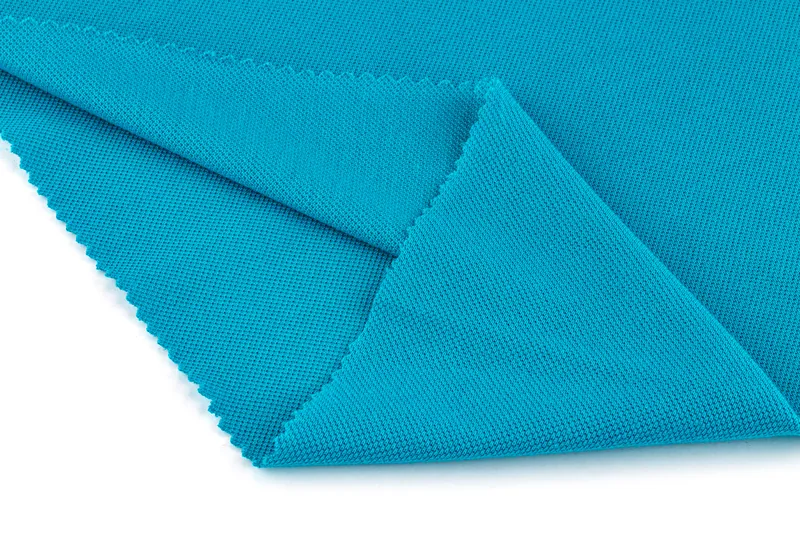
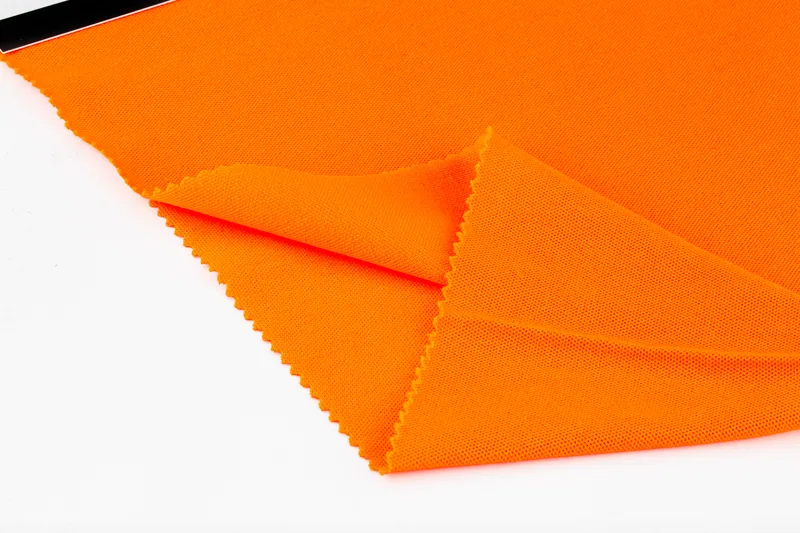
For rush jobs, fabric is chosen by what exists, not by what would be ideal. That is why workshops that often serve events keep a short list of proven qualities that are reliably in stock. For festival, fun-run or promotional tees in bright colours, for example, our lime green 160 g single jersey is light, suited to summer and printing, and such a visible colour is often requested for events. If it is in stock, the fabric can be in your workshop the same week.
Before confirming the date, ask for our current stock list and reserve the rolls. Stock is sold by the roll with no minimum, and you can collect directly from Afumați or have it sent by courier.
Rules so you do not live on rush jobs
- set a maximum capacity for rush work, for example a share of weekly hours;
- ask new clients for full or substantial prepayment on rush orders;
- confirm in writing what has been simplified compared with the original request;
- after every rush job, review: was it worth it, and what did it actually cost?
If clients constantly ask for rush jobs, the problem may be their planning. Offer them an order calendar and, for basic articles, a made-to-order fabric quote placed well in advance.
Frequently asked questions
How big should a rush surcharge be?
There is no standard percentage. Calculate the real extra costs: overtime, express transport, subcontractor rush rates and lost efficiency. Divide by the number of pieces and add a margin for risk. Explain the structure of the surcharge to the client so it is seen as fair.
Can I turn down a rush order from an important client?
Yes, if you cannot deliver it without compromising quality or other orders. A reasoned refusal with an alternative (partial delivery, simplified product, a realistic date) is better than a broken promise. Important clients usually prefer honesty.
Which simplifications do clients accept most often?
Fewer colours and sizes, printed labels instead of woven ones, bulk packing instead of individual bags, and delivery in two batches. Each simplification gains days. Confirm them in writing so there are no complaints after delivery.