
#Production planning
Every The Knit Journal article about production planning, for clothing brands, workshops and entrepreneurs.
 Starting a clothing brand
How many pieces should your first clothing collection have?
Most debut collections are too big, not too small. A simple range plan with numbers on every line keeps your money in the products that actually sell.
 Starting a clothing brand
How much fabric do you need for 100 T-shirts? A step-by-step guide
Get the fabric calculation wrong and you either run short of sizes or leave rolls on the shelf. Here is a full worked example for a run of 100 tees.
 Starting a clothing brand
Minimum order quantities: how a small brand can work with MOQs
A minimum is not a supplier's whim but the real cost of one dye batch or one machine set-up. Here is how to turn it from an obstacle into a plan.
 Starting a clothing brand
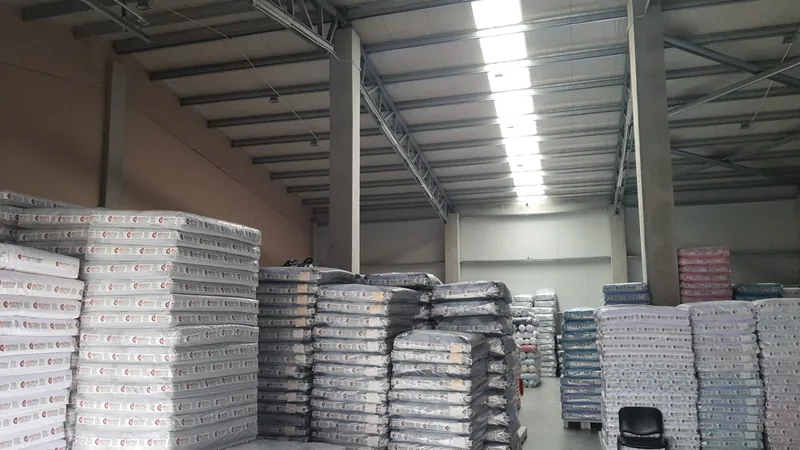
Your first production run step by step: from fabric to stock
The first run is where the plan meets reality. Know the order of the stages and what can go wrong in each, and you will save weeks.
 Starting a clothing brand
How to set the size ratio for your first clothing production run
A badly split size run is the most expensive way to be both sold out and overstocked. A well-thought-out ratio protects the margin of your first collection.
 Starting a clothing brand
Drops or a full collection? How to plan your clothing brand launch
How you release a collection changes how much capital you tie up, how much content you need and how quickly you learn from sales.
 Starting a clothing brand
Scaling to your second collection: what to keep and what to add
Your first collection shows you what customers want. The second is where you turn that data into a stable range and a better cost per piece.
 Starting a clothing brand
How many colours for a first collection? A launch colour strategy
Every extra colour multiplies your stock, not just your choice. A small, coherent palette sells better than a rainbow of thin stock.
 Starting a clothing brand
How to restock bestsellers without shade differences between lots
A customer rebuying a favourite tee expects exactly the same product. A different shade of black can turn a loyal customer into a return.
 Garment manufacturing
How to lay out a small knitwear sewing workshop
A well-placed workshop gains minutes on every garment without buying anything new. Here is how to plan the space from fabric receipt to packing.
 Garment manufacturing
Skill matrix and cross-training for sewing operators
When the only operator who can set plackets is off, the whole polo order stops. A skill matrix shows the risk before it becomes a problem.
 Garment manufacturing
How to calculate standard minutes (SAM) for a T-shirt
Without standard minutes you cannot cost labour, set targets or plan capacity. Here is the method, step by step, on a simple T-shirt.
 Garment manufacturing
Line balancing explained with a hoodie production line
A line is only as fast as its most loaded station. Balancing moves minutes from one station to another until bundles stop piling up.
 Garment manufacturing
How to measure productivity in a garment workshop: key KPIs
We worked hard today is not a metric. A few simple figures recorded daily show exactly where the workshop loses minutes and where it gains them.
 Garment manufacturing
Bundle system or modular flow: which suits a small factory?
The bundle system was built for long runs. Workshops that now make runs of 200 pieces and five styles a month often need something different.
 Garment manufacturing
How many garments a day can your workshop make? Capacity maths
Capacity is not machines multiplied by eight hours. It is what the workshop can realistically deliver after absence, efficiency and its slowest department.
 Garment manufacturing
How to grow a sewing workshop from 5 to 25 operators
A five-person workshop runs on the owner's memory. A 25-person one needs roles, rules and numbers. Getting from one to the other is the riskiest stage.
 Garment manufacturing
Size set and pre-production meeting: a checklist for factories
The last hour of discussion before cutting can save an entire order. The size set and pre-production meeting are where problems cost the least to fix.
 Garment manufacturing
How to build a production plan and time-and-action calendar
Most delays do not start on the sewing line but weeks earlier: an approval that never arrives, a forgotten trim, fabric ordered too late.
 Garment manufacturing
What lead time to promise for a knitwear production order
A delivery date that is too short wins the order and loses the client. Here is how to break lead time into stages and pick a date you can actually meet.
 Garment manufacturing
How to calculate how many kilos of fabric to order for a run
Too little fabric stops the line; too much sits in the warehouse. A proper consumption calculation with realistic losses is one of the best-paid hours in any order.
 Garment manufacturing
Stock fabric or made-to-order: planning fabric lead times
Stock gives you speed; made-to-order gives you the exact colour. Workshops that plan well use both, at the right point in the season.
 Garment manufacturing
How to plan trims and accessories for a hoodie production order
A hoodie order can stall for want of one size label. A trims list that is calculated and ordered on time matters as much as the fabric.
 Garment manufacturing
How to subcontract sewing overflow without losing control
To your client, the partner workshop does not exist: you answer for every piece. Subcontracting only works with written rules and checks on site.
Garment manufacturingRush orders: how to accept, price and plan them safely
The rush order always arrives on a Friday afternoon, for an event on Monday. Before you say yes, check which orders will be late because of it.
 Garment manufacturing
How to manage several brand clients in one garment workshop
A workshop that depends on one client is fragile. One with ten clients and no rules is chaotic. Balance comes from processes, not goodwill.
 Garment manufacturing
Repeat orders: keeping colour, fit and quality consistent
The first order wins the client; repeat orders keep them. And repeats are usually lost over small differences: a shade, two centimetres, a different label.
 T-shirts
How much fabric goes into a t-shirt? Working out kg per tee
Fabric is bought by the kilo, but patterns are measured in centimetres. The link between the two is a simple calculation every workshop should master.
 T-shirts
How a t-shirt is sewn: seams, shoulder tape and hems
A tee has few pieces, but every operation affects how it looks after washing. Here is the sequence used in production and the points where faults creep in.
T-shirtsPromotional t-shirts for companies: how to plan the order
Promotional tees look like the simplest order, yet most problems arise before production: a vague brief, guessed sizes and squeezed timelines.
 T-shirts
Event t-shirts: timelines, size splits and logistics
For an event, the t-shirt has one delivery date that never moves. Organisation matters more here than for any other order.
T-shirtsSeasonal planning calendar for a t-shirt brand
Start making summer tees in May and you reach the market after customers have already bought. The season is won several months in advance.
Hoodies & sweatshirtsWhat GSM should a hoodie be for spring, autumn and winter?
Fabric weight is not just a number on the spec sheet. It decides when a hoodie sells, what it costs and how it feels in the customer's hand.
 Hoodies & sweatshirts
How much fabric does a hoodie need? Consumption per piece
Hoodie fabric is bought by the kilo, but patterns are measured in centimetres. Here is how to link the two so you order exactly what you need.
Hoodies & sweatshirtsHow much fabric for a tracksuit? Consumption per set
A tracksuit is two products that must look like one. Consumption, marker planning and fabric ordering need to be worked out together.
 Hoodies & sweatshirts
How to cut fleece for hoodies without waste or distortion
On hoodies, many faults that look like sewing faults are really cutting faults. Twisted sleeves, shade differences and uneven pieces start on the cutting table.
 Hoodies & sweatshirts
Team hoodies for sports clubs: how to organise the order
A club is not just buying hoodies, it is buying a uniform look for dozens of people with different sizes and names. How you run the order matters as much as the fabric.
 Hoodies & sweatshirts
School and leavers' hoodies: how to run a class-by-class order
Leavers' hoodies and school crest hoodies are a predictable seasonal market. The winners are the suppliers with a clear process, not just a good price.
Hoodies & sweatshirtsWhen to start hoodie production for the autumn–winter peak
Hoodies sell in autumn but are decided in spring. A reverse calendar shows exactly when to sign off samples, order fabric and start cutting.
Hoodies & sweatshirtsTracksuits as sets or separates: how to manage the stock
A tracksuit sold only as a set is easy to list, but it ignores the fact that people wear different sizes on top and bottom. Your selling model shapes your whole stock.
 Hoodies & sweatshirts
Event and festival hoodies: how many to order and in which sizes
At an event there is no restock: what you did not bring you cannot sell, and what is left has to be sold some other way. Getting the quantity right is half of merch success.
 Polo shirts & uniforms
How to cut piqué for polo shirts: spreading, markers and tubular
Most polo defects are born on the cutting table, not at the sewing machine. A disciplined cutting process saves fabric and avoids complaints later on.
 Polo shirts & uniforms
How to sew a piqué polo shirt: machines, needles and stitches
A polo involves around fifteen operations and at least five machine types. The right sequence and settings separate a clean run from one that needs rework.
 Polo shirts & uniforms
Polo shirt quality control: what to check before delivery
One polo with a crooked placket in a box of a hundred can lose you a customer. A structured inspection with a clear checklist catches defects before goods leave.
 Polo shirts & uniforms
How to plan a branded staff t-shirt programme for your company
Staff t-shirts look like the easiest uniform. The difference between a programme that works and one that falls apart in six months lies in planning, not in the logo.
 Polo shirts & uniforms
School uniform production timeline: from spring order to September
The school uniform season is won in March, not in August. Here is how workshops split the spring and summer months so they deliver on time without panic.
Polo shirts & uniformsHow a garment workshop can bid for a uniform tender
Uniform tenders bring big volumes and reliable payment, but also penalties, strict deadlines and inspection on delivery. This is how a workshop assesses one before bidding.
Polo shirts & uniformsStaff uniform size runs: how many of each size should you order?
Uniform orders rarely go wrong on fabric and often go wrong on sizes. A correct size run saves money, time and awkward conversations with staff.
Polo shirts & uniformsHow to plan delivery for a large uniform order in phases
A 3,000-piece uniform order is not delivered in a day. It is planned in waves, by site and by employee, and each wave must be ready before the next one leaves.
 Polo shirts & uniforms
Managing uniform stock for new hires and staff turnover
The initial issue happens once. New starters arrive every month. Without a stock system, every hire becomes an urgent, expensive and slow order.
 Kidswear & babywear
How to plan a seasonal kidswear collection, step by step
Kidswear sells in short, predictable seasons. Plan backwards from launch day to the fabric order and your stock is ready exactly when parents start looking.
 Kidswear & babywear
How to manage kidswear stock across a wide size range
With children's clothing, stock doesn't get stuck by style; it gets stuck by size. Brands that track sales size by size reorder less and sell more.
 Kidswear & babywear
The kidswear sales calendar: Children's Day, school, Christmas
Kidswear sales follow a predictable rhythm tied to school, seasons and holidays. Put your campaigns in the calendar in January and you stop working at the last minute.
Loungewear, pyjamas & activewearWhen to start a Christmas pyjama collection: a backward plan
With holiday pyjamas, a two-week delay can leave a collection unsold until next year. The calendar is built from the end back to the start.
Loungewear, pyjamas & activewearHow to produce matching family pyjamas in one colour lot
A family in matching pyjamas notices straight away if the child's green is not the parents' green. It all comes down to how you plan the dye lot.
Loungewear, pyjamas & activewearClub training kit: how to order team sportswear in bulk
A club kit order looks simple until sizes are missing, the shade looks nothing like the crest and the season starts in three weeks.
Costing, pricing & marginsMarker efficiency: how your cutting layout drives fabric cost
The fabric between the pieces costs exactly as much as the fabric in them. Marker efficiency shows how much of what you bought actually ends up in garments.
 Costing, pricing & margins
Sewing minutes (SAM): how to calculate labour cost per garment
A sewing workshop is really selling minutes. Know how many minutes a garment takes and what a minute costs, and you know what labour should cost.
 Costing, pricing & margins
How to split a production order by size and colour
You can get the total quantity right and still end up with stock: too many smalls, too few larges. The size split is a financial decision, not just a production one.
 Costing, pricing & margins
Open-to-buy budgeting: how much can you buy for next season?
Open-to-buy answers one question: how much more can you spend on product without filling the warehouse and emptying the bank account.
 Costing, pricing & margins
How to forecast quantities for a first collection with no sales history
Your first forecast will be wrong. The aim is not a perfect guess but to be wrong by an amount you can afford, and to find out quickly by how much.
Costing, pricing & marginsHow to replenish bestsellers without stock-outs or overstock
A sold-out bestseller loses sales every day. An over-replenished one becomes dead stock. A simple calculation sits between the two.
 Quality, compliance & sustainability
Dye lot shade differences: how to use shade bands in production
A hoodie with sleeves slightly lighter than the body has no sewing fault at all, yet it comes back as a return. Dye lot control is how you prevent exactly that.
 Quality, compliance & sustainability
Inline quality checks: how to catch sewing defects mid-production
Final inspection tells you whether a lot is good. Inline checks tell you why it is not, and they do it when the defect is in ten pieces rather than three hundred.
 Quality, compliance & sustainability
How to build a product safety file for a garment
A style's technical file is not something you assemble on inspection day. It grows from the first samples and gets updated with every lot, mostly from documents you already receive.
 Quality, compliance & sustainability
EU textile strategy: what it means for small clothing brands
The EU strategy for sustainable and circular textiles is gradually changing the rules of the game. For small brands, the best preparation starts with decisions you can make today.
Selling & marketing in RomaniaHow to keep B2B clothing customers reordering
Your first customer costs a lot of time and effort. The second year with that same customer should cost almost nothing. A reorder system makes the difference.
Selling & marketing in RomaniaWhat minimum order should you set for wholesale buyers?
Set the minimum too high and small buyers walk away. Set it too low and you lose money on every parcel. Getting it right starts from your real costs.
Selling & marketing in RomaniaHow to run a limited drop for a streetwear brand
A limited drop turns an ordinary launch into an event. It only works if the scarcity is real, production is planned well ahead and your site survives the traffic spike.
 Selling & marketing in Romania
A marketing calendar for clothing brands selling in Romania
Successful campaigns are decided three or four months in advance, when the fabric is ordered and the workshop booked. Here is how the trading year looks for a clothing brand in Romania.