
#Tracksuits
Every The Knit Journal article about tracksuits, for clothing brands, workshops and entrepreneurs.
 Starting a clothing brand
How to write a business plan for a clothing brand (with example)
A good business plan for a clothing brand runs to 10–15 pages, not 80. What matters is that the numbers can be checked and that you use the plan every month.
 Starting a clothing brand
Joggers for a debut collection: fabric, fit and cost
Joggers look simple, but they draw the most returns for baggy knees and slipping waistbands. Here is what decides whether yours succeed.
 Garment manufacturing
How many garments a day can your workshop make? Capacity maths
Capacity is not machines multiplied by eight hours. It is what the workshop can realistically deliver after absence, efficiency and its slowest department.
 Garment manufacturing
How to calculate rib length for necklines, cuffs and waistbands
A wavy neckline or a waistband that stretches out within a month is almost always a calculation problem, not a sewing problem. Here is how to set the ratio.
 Garment manufacturing
How to run a fit session and write fit comments for knitwear
A well-run fit session cuts weeks off development. A rushed one produces vague comments, remade samples and an unhappy client.
 Hoodies & sweatshirts
2-thread vs 3-thread fleece: what is the difference?
Fabric names on supplier quotes can read like mill shorthand. Once you see how each is knitted, choosing between 2-thread and 3-thread becomes obvious.
 Hoodies & sweatshirts
Brushed or unbrushed 3-thread fleece: how to choose
The same 3-thread knit can become a plush fleece or a structured diagonal-back fabric. One finishing step makes the difference: brushing.
 Hoodies & sweatshirts
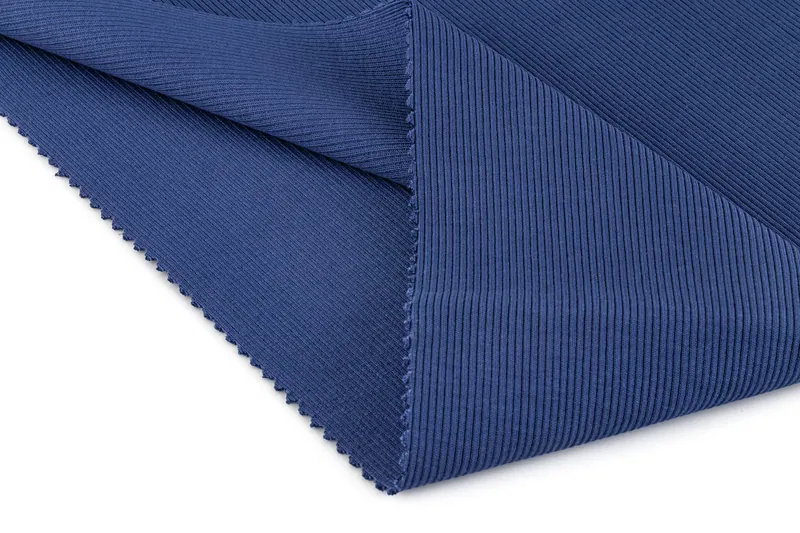
Rib or cascorse for hoodie cuffs and waistbands?
Cuffs and waistbands are the first things that give a cheap hoodie away. Choosing the right rib structure solves half the problem.
 Hoodies & sweatshirts
How to make a zip hoodie: zips, plackets and fabric
A rippling zip ruins the best cut hoodie. The cause is rarely the zip itself, but the mix of fabric, stabilising and the way it is sewn in.
 Hoodies & sweatshirts
How much fabric for a tracksuit? Consumption per set
A tracksuit is two products that must look like one. Consumption, marker planning and fabric ordering need to be worked out together.
Hoodies & sweatshirtsHow to make joggers: fabric, waistband and cuffs
Joggers are the tracksuit piece that wears out fastest and comes back most often. Most problems start at the waistband, the knees and the cuffs.
Hoodies & sweatshirtsHow to design a matching two-piece set in knitted fabric
A good co-ord sells as one idea, not as two pieces put together. Proportions, fabric and colour have to be planned for the set from the start.
Hoodies & sweatshirtsHow to sell tracksuits wholesale to shops and boutiques
A shop is not buying a tracksuit; it is buying a margin and a low stock risk. Your wholesale offer has to be built from its point of view.
 Hoodies & sweatshirts
Tracksuits as sets or separates: how to manage the stock
A tracksuit sold only as a set is easy to list, but it ignores the fact that people wear different sizes on top and bottom. Your selling model shapes your whole stock.
Kidswear & babywearFabric for kids' joggers and tracksuits: terry or fleece?
Children crawl, run and land on their knees. Tracksuit fabric has to survive abrasion, avoid pilling within a month and not be too warm in a heated classroom.
 Kidswear & babywear
How to build a kids' hoodie and tracksuit line for winter
Hoodies and tracksuits drive cold-season sales in kidswear. A well-built line has few styles, the right weights and sets planned from the start.
 Loungewear, pyjamas & activewear
Which fabric for joggers: french terry, fleece or jersey?
Joggers have moved from the gym into everyday wardrobes. The fabric decides whether they still look sharp after a month or start bagging and twisting on the leg.
 Loungewear, pyjamas & activewear
Rib trims for sportswear: cuffs, collars and ankle bands
A cuff that has stretched out after a month marks a cheap garment, even when the body fabric is excellent. Rib trims decide how new a garment looks over time.
 Loungewear, pyjamas & activewear
Winter warm-up tracksuits: which fabric to choose
In winter, athletes spend a lot of time warming up, on the bench or travelling. The tracksuit has to keep them warm without turning into a sauna at the first sprint.
 Costing, pricing & margins
What do rib cuffs, waistbands and necklines add to garment cost?
Cuffs and waistbands weigh little, but leave them off the cost sheet, or cost them as main fabric, and your final figure will be wrong.
 Costing, pricing & margins
How much does it cost to make a tracksuit? A worked costing
The tracksuit is the set where costs pile up fastest: almost a kilo of fabric, a zip, drawcords and more than half an hour of sewing.
 Costing, pricing & margins
How to finance your first production run without running out of cash
A first batch costs more than production. It also costs the months the stock waits to sell while marketing and running costs keep going out.
 Quality, compliance & sustainability
How to prevent pilling on hoodies and joggers before you order
Bobbles on the elbows and under the arms make a new hoodie look old within a month. You can assess the risk right at the fabric selection stage.
 Quality, compliance & sustainability
How to test seam strength on joggers and sweatshirts
On knits, a seam has to be both strong and stretchy. If either is missing, joggers come apart exactly where everyone can see it.