
#Cotton
Every The Knit Journal article about cotton, for clothing brands, workshops and entrepreneurs.
 Starting a clothing brand
How to build a credible sustainable clothing brand from the start
"Eco" on a label convinces nobody any more and can even become a legal problem. Credible sustainability is built from decisions you can prove, not from words.
 Starting a clothing brand
How to test fabric before a bulk order: shrinkage, pilling and colour
Most returns for shrank in the wash or bled colour could have been avoided with an hour of testing on a piece of fabric before you placed the order.
 Starting a clothing brand
Your brand's first hoodie: which fabric and weight to choose
Customers judge a hoodie in the first three seconds: its weight in the hand, the feel inside and the way the hood falls. All three come from the fabric.
 T-shirts
What is single jersey and why is it the standard t-shirt fabric?
Before you choose colours and fits, it pays to understand the fabric almost every t-shirt is made from: its loops, face and back, weight and finishes.
 T-shirts
Combed or carded cotton: which should you choose for t-shirts?
Two tees with the same weight and colour can look completely different after ten washes. Most of the time, the reason lies in how the cotton was spun.
 T-shirts
100% cotton or cotton-polyester t-shirts: which is worth it?
A polyester blend is neither cheap fabric nor a universal fix. It is a tool that solves some problems and creates others, depending on what the tee is for.
 T-shirts
Slub jersey t-shirts: how to make them properly
The irregularities that would count as faults in ordinary jersey are the very reason people buy a slub tee. The difference is that they have to be controlled.
 T-shirts
How to make a heavyweight t-shirt in 230–250 GSM jersey
A heavyweight tee sells on the first second of touch: dense fabric, a neckline that stands up, clean seams. All three are decided before the first cut.
 T-shirts
How to control shrinkage in cotton jersey t-shirts
Cotton shrinkage cannot be removed entirely, but it can be measured, limited and built into the pattern. Disciplined testing makes the difference, not luck.
T-shirtsScreen printing t-shirts: preparing the fabric and choosing ink
Screen printing is still the cheapest technique per piece on long runs, but only when the fabric, ink and curing are chosen together rather than one by one.
 T-shirts
DTG printing on t-shirts: which fabric and what pretreatment
A DTG printer puts ink straight into the fibre, so the result depends almost entirely on how much cotton the tee contains and how well it was pretreated.
 Hoodies & sweatshirts
French terry or brushed fleece: which fabric for hoodies?
On a hanger the two fabrics can look identical. On the body, in the wash and on the cutting table they behave very differently. Here is how to decide.
 Hoodies & sweatshirts
2-thread vs 3-thread fleece: what is the difference?
Fabric names on supplier quotes can read like mill shorthand. Once you see how each is knitted, choosing between 2-thread and 3-thread becomes obvious.
 Hoodies & sweatshirts
Why do sweatshirts pill and how to prevent it?
Bobbles on the elbows and under the arms make a new hoodie look old within a month. They are not bad luck, but the result of fabric decisions.
 Hoodies & sweatshirts
Does sweatshirt fabric need elastane? Pros and cons
A small percentage of elastane can completely change how a hoodie holds its shape. It is not a universal fix, though, and it comes with its own rules.
Hoodies & sweatshirts100% cotton or cotton-polyester fleece for hoodies?
Composition is the first line on a hoodie label and one of the first things a careful customer checks. Both options have genuine advantages.
 Hoodies & sweatshirts
Screen printing hoodies: plastisol, water-based or discharge?
Your ink choice changes how the hoodie feels, how long the print lasts and which fabric colours you can print on. This practical comparison helps you decide.
Hoodies & sweatshirtsGarment-dyed and washed hoodies: how to get the vintage look
The washed, slightly faded look is one of the most wanted in streetwear. There are several ways to get it, and each comes with its own fabric and pattern rules.
 Polo shirts & uniforms
Single or double piqué: which is better for polo shirts?
Both are called piqué on the spec sheet, yet they cut, sew and wear differently. Here is how to pick the right structure before you order the rolls.
Polo shirts & uniformsWhat is American piqué and when should you use it for polos?
The name turns up on plenty of fabric offers, yet few people can describe it precisely. A practical guide to its texture, uses and cutting pitfalls.
 Polo shirts & uniforms
Colourfastness for polos: how to test fabric for frequent washing
A black polo that turns grey after ten washes, or a white collar stained red, is an avoidable complaint. It is all settled before cutting starts.
 Polo shirts & uniforms
How to prevent shrinkage and twisting in piqué polo shirts
A polo that loses a size, or whose side seams swing to the front after one wash, guarantees returns. Both defects can be prevented before cutting.
 Polo shirts & uniforms
100% cotton or cotton-polyester piqué: which blend to choose?
Customers often ask for 100% cotton, yet for some uses a polyester blend wears and washes better. The right choice starts with how the polo will be used.
 Polo shirts & uniforms
Tees and polos for clinics and healthcare staff: what to choose
In clinics, a knitted tee complements scrubs or replaces them at reception and in care roles. It has to look clean, feel good on the skin and be easy to wash correctly.
Polo shirts & uniformsHow long should a uniform polo last? Durability and replacement
A uniform polo does not wear out by the calendar but by the number of wears and washes. Understand that, and you can predict when and how much to replace.
 Kidswear & babywear
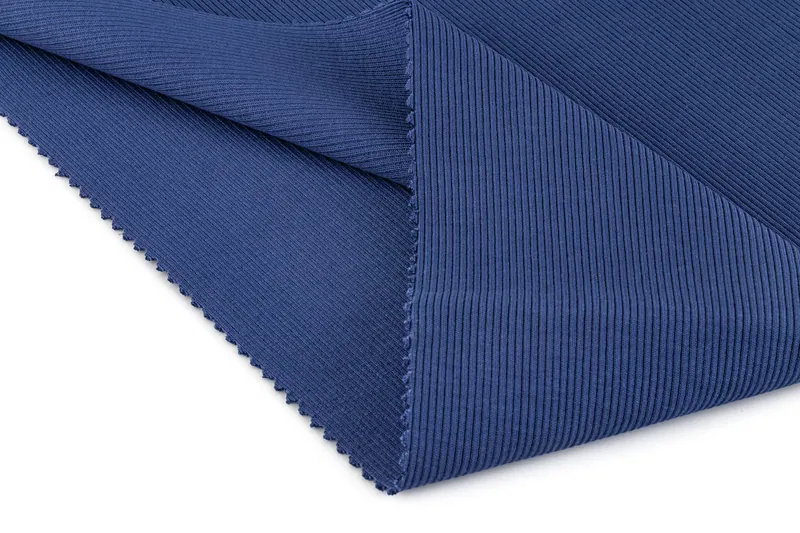
Interlock, jersey or rib: which fabric is best for babywear?
The three basic knits look alike on a shelf but behave very differently on a four-month-old. Here is how to choose by product rather than by habit.
 Kidswear & babywear
What GSM should fabric for baby clothes be?
Too light and baby clothes feel cheap; too heavy and they turn stiff and hot. These are the ranges babywear workshops actually work with.
 Kidswear & babywear
How to get a soft hand feel in babywear: finishes explained
The softness parents feel in a shop does not come from cotton alone. It comes from yarn, knitting and above all the finishes applied after dyeing.
Kidswear & babywear100% cotton or blends: which composition suits children's skin?
100% cotton is every kidswear maker's reflex, but it is not the answer for every product. Age, contact area and how the garment is worn all change the choice.
Kidswear & babywearShrinkage in kidswear fabric: measuring it and building it into patterns
A tee that drops a size in its first wash is not just a complaint; for a child it is a garment that no longer fits. Shrinkage is measured before cutting, not after.
Kidswear & babywearSustainable kidswear: how to position it without greenwashing
Parents care about sustainability, and they also spot empty promises. A children's brand earns trust with claims it can prove, not with green leaves on the label.
Loungewear, pyjamas & activewearWhich knitted fabric is best for pyjamas? A practical comparison
No single fabric suits every pyjama. There is, however, a right choice for each season, customer and retail price point.
Loungewear, pyjamas & activewearModal or cotton jersey: which is better for loungewear?
Premium loungewear shoppers increasingly ask for modal. Should you switch from cotton, or does a blend solve the problem better?
Loungewear, pyjamas & activewearInterlock or single jersey for children's pyjamas?
Parents wash children's pyjamas dozens of times a season. Your fabric choice decides whether the garment still looks right after the twentieth wash.
Loungewear, pyjamas & activewearWomen's knitted briefs and bralettes in rib: a production guide
Cotton rib underwear sets have put comfort ahead of push-up. For a small brand, they are a realistic way into the underwear category.
Loungewear, pyjamas & activewearEnzyme, silicone, peach finish: what makes loungewear feel soft?
Customers decide in three seconds with a hand on the fabric. The finish is often the difference between nice and I want it, but not every finish lasts equally.
Loungewear, pyjamas & activewearHow to test shrinkage on pyjama fabric before bulk cutting
Shrinkage is invisible on the cutting table. It shows up at the customer's home, after the first wash. The test takes a day and a few metres of fabric.
 Loungewear, pyjamas & activewear
Cotton-elastane or polyester: which knit should activewear use?
There is no single sports fabric. The right choice depends on how hard your customer trains and how long they keep the garment on once the workout is over.
Loungewear, pyjamas & activewearWhat fabric should gym and training T-shirts be made from?
A training tee has a hard life: sweat, friction and a wash after every wear. Choose the fabric for its tenth wash, not its first.
Loungewear, pyjamas & activewearSustainable activewear: cotton, synthetics and certifications
Sustainability in sportswear is not solved by a word on a label. It is solved by products that last, well-chosen fabrics and claims you can actually prove.
 Quality, compliance & sustainability
How to make babywear safe: fabric, trims and chemical checks
A baby's skin is thinner, and babies put everything in their mouths. That is why every fabric and trim choice for newborn clothing has to be judged more strictly.
 Quality, compliance & sustainability
Is GOTS organic cotton certification worth it for a small brand?
Organic cotton sounds good in any brand deck. Between wanting to use it and being entitled to promote it lies a full chain of certification that few brands cost out at the start.