
#Choosing fabric
Every The Knit Journal article about choosing fabric, for clothing brands, workshops and entrepreneurs.
 Starting a clothing brand
How many pieces should your first clothing collection have?
Most debut collections are too big, not too small. A simple range plan with numbers on every line keeps your money in the products that actually sell.
 Starting a clothing brand
How to find a knitted fabric supplier for a new clothing brand
Your fabric supplier matters as much as your workshop. A practical guide to supplier types, the right questions and your first orders.
 Starting a clothing brand
Buying fabric by the kilo: converting kg into metres and garments
A price per kilo means nothing until you turn it into metres, then into finished garments. Here is the formula cutting rooms actually use.
 Starting a clothing brand
How much fleece fabric do you need for 100 hoodies?
A hoodie uses three to four times more fabric than a tee, and calculation errors cost accordingly. Here is the complete example for a run of 100.
 Starting a clothing brand
Stock fabric or made-to-order fabric for your first collection?
Stock fabric gives you speed and flexibility; made-to-order gives you control and exclusivity. The right call depends on numbers, not preference.
 Starting a clothing brand
How to test fabric before a bulk order: shrinkage, pilling and colour
Most returns for shrank in the wash or bled colour could have been avoided with an hour of testing on a piece of fabric before you placed the order.
 Starting a clothing brand
Joggers for a debut collection: fabric, fit and cost
Joggers look simple, but they draw the most returns for baggy knees and slipping waistbands. Here is what decides whether yours succeed.
 Starting a clothing brand
Your brand's first hoodie: which fabric and weight to choose
Customers judge a hoodie in the first three seconds: its weight in the hand, the feel inside and the way the hood falls. All three come from the fabric.
 Starting a clothing brand
How to match rib cuffs, waistbands and collars to your main fabric
Stretched cuffs and wavy necklines are the first signs of a cheaply made garment. You prevent them by choosing the right rib, not by sewing more carefully.
 Garment manufacturing
Needles and thread for knits: how to stop holes at the seam
Small holes beside a seam often appear only after washing, when the tee is already with the customer. The cause is almost always the needle or the thread.
 Garment manufacturing
Pattern making for knits: allowing for stretch and shrinkage
The same pattern gives a perfect tee in one fabric and a tight one in another. The difference lies in stretch, shrinkage and the tests you run before cutting.
 T-shirts
What is single jersey and why is it the standard t-shirt fabric?
Before you choose colours and fits, it pays to understand the fabric almost every t-shirt is made from: its loops, face and back, weight and finishes.
 T-shirts
Combed or carded cotton: which should you choose for t-shirts?
Two tees with the same weight and colour can look completely different after ten washes. Most of the time, the reason lies in how the cotton was spun.
 T-shirts
100% cotton or cotton-polyester t-shirts: which is worth it?
A polyester blend is neither cheap fabric nor a universal fix. It is a tool that solves some problems and creates others, depending on what the tee is for.
 T-shirts
Cotton-elastane jersey for t-shirts: when it pays off and when not
A few per cent of elastane turns a loose tee into one that follows the body and keeps its shape. The same elastane also changes the rules in your workshop.
T-shirtsModal blend jersey t-shirts: how to get a premium soft hand
When a customer picks up a premium tee, the first thing they judge is the fabric. Cotton and modal blends are one of the most reliable ways to win that first touch.
 T-shirts
Slub jersey t-shirts: how to make them properly
The irregularities that would count as faults in ordinary jersey are the very reason people buy a slub tee. The difference is that they have to be controlled.
 T-shirts
Grey melange t-shirts: how the fabric is made and what to know
The grey melange tee looks like the simplest product in any range. Behind it is a fabric with its own rules on production, shade and composition.
 T-shirts
What is plated jersey and when should you use it for t-shirts?
Plating is an old knitting technique that solves a modern problem: how to combine the strengths of two fibres without the tee looking like a blend.
T-shirtsViscose jersey t-shirts: drape, cutting and care
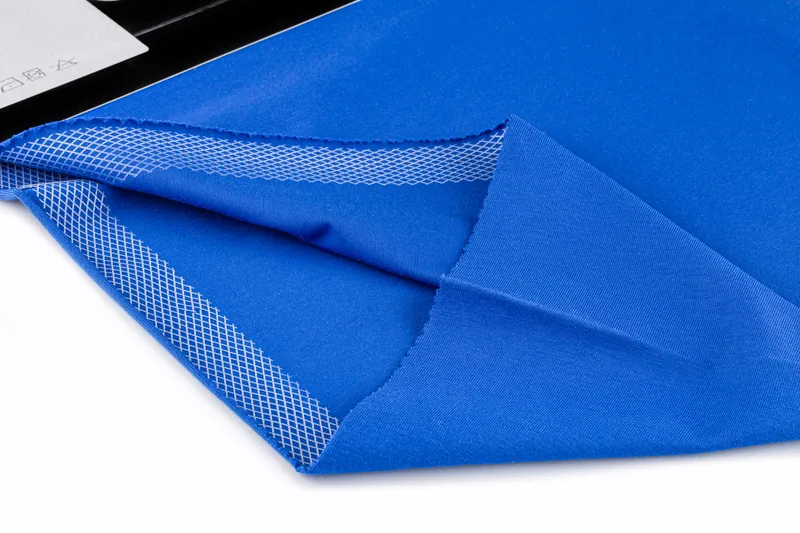
Viscose turns a simple tee into a top that flows over the body. It also makes it the most demanding fabric in the jersey range to cut and to care for.
 T-shirts
What GSM should a t-shirt be? A guide by product type
Weight is the first number every buyer asks for and the one most often misunderstood. Here is what it really tells you about a tee and how to choose it by product.
 T-shirts
Lightweight summer t-shirts at 140–160 GSM: pros and pitfalls
A light tee is the most requested product in July and also the one behind the most complaints. A handful of technical choices make the difference.
 T-shirts
Men's slim fit t-shirt: pattern, fabric and fit
The gap between a slim fit that flatters and one that feels tight comes down to a few well-placed centimetres in the pattern and the right fabric.
T-shirtsWomen's t-shirts: fits, shaping and choosing the jersey
A women's tee is not a men's tee made smaller. Shoulders, bust, length and fabric all need their own decisions, and every fit follows its own logic.
T-shirtsWhy do t-shirt side seams twist? Controlling spirality
The tee looks perfect on the hanger, and three washes later the side seam has wandered towards the front. The problem has a name, clear causes and practical fixes.
T-shirtsWhat makes a basic t-shirt premium? Fabric, finishes and build
Customers never read the spec sheet, but they feel it in the hand, see it at the neck after ten washes and notice it in the seams. Premium is the sum of those details.
T-shirtsWhich t-shirt fabric works best for DTF printing?
A DTF transfer bonds to the surface of the tee rather than soaking into the fibre, so the face, finish and stability of the jersey matter more than most people expect.
 T-shirts
DTG printing on t-shirts: which fabric and what pretreatment
A DTG printer puts ink straight into the fibre, so the result depends almost entirely on how much cotton the tee contains and how well it was pretreated.
T-shirtsHeat transfer vinyl on t-shirts: settings for each fabric
Plotter-cut vinyl is the fastest route to a tee with a name, number or simple logo. How long it lasts depends on how well the vinyl, the press and the fabric are matched.
T-shirtsHow to print on grey melange and poly-cotton t-shirts
Melange looks simple, but it is a blend of fibres that react differently to ink and heat. Understand that and you can print on grey without surprises.
 Hoodies & sweatshirts
French terry or brushed fleece: which fabric for hoodies?
On a hanger the two fabrics can look identical. On the body, in the wash and on the cutting table they behave very differently. Here is how to decide.
 Hoodies & sweatshirts
What GSM should a hoodie be for spring, autumn and winter?
Fabric weight is not just a number on the spec sheet. It decides when a hoodie sells, what it costs and how it feels in the customer's hand.
 Hoodies & sweatshirts
2-thread vs 3-thread fleece: what is the difference?
Fabric names on supplier quotes can read like mill shorthand. Once you see how each is knitted, choosing between 2-thread and 3-thread becomes obvious.
 Hoodies & sweatshirts
Brushed or unbrushed 3-thread fleece: how to choose
The same 3-thread knit can become a plush fleece or a structured diagonal-back fabric. One finishing step makes the difference: brushing.
 Hoodies & sweatshirts
Rib or cascorse for hoodie cuffs and waistbands?
Cuffs and waistbands are the first things that give a cheap hoodie away. Choosing the right rib structure solves half the problem.
 Hoodies & sweatshirts
How to construct a hood: panels, lining and neckline
The hood is the most visible part of a hoodie and the first thing that looks wrong in photos. A well planned construction makes it sit right on the head and on the shoulders.
 Hoodies & sweatshirts
How to make a zip hoodie: zips, plackets and fabric
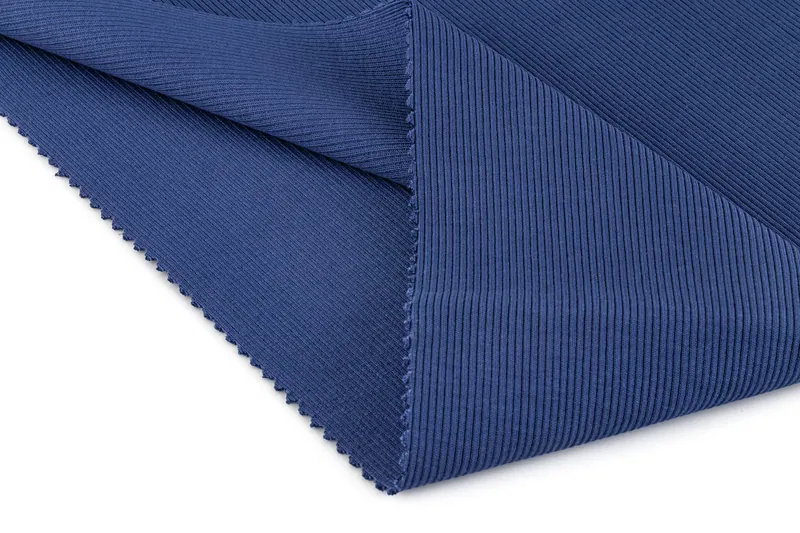
A rippling zip ruins the best cut hoodie. The cause is rarely the zip itself, but the mix of fabric, stabilising and the way it is sewn in.
Hoodies & sweatshirtsHow to make joggers: fabric, waistband and cuffs
Joggers are the tracksuit piece that wears out fastest and comes back most often. Most problems start at the waistband, the knees and the cuffs.
Hoodies & sweatshirtsHow to stop fleece hoodies shrinking after washing
A hoodie that comes out of the wash a size smaller means returns and bad reviews. Shrinkage cannot be eliminated completely, but it can be controlled.
Hoodies & sweatshirtsWhy do sweatshirts pill and how to prevent it?
Bobbles on the elbows and under the arms make a new hoodie look old within a month. They are not bad luck, but the result of fabric decisions.
Hoodies & sweatshirtsHow to make a crewneck sweatshirt: neckline, sleeves, hem
With no hood and no big pocket, a crewneck has nowhere to hide mistakes. The neckline, the shoulders and the hem must be spot on.
Hoodies & sweatshirtsHow to design a matching two-piece set in knitted fabric
A good co-ord sells as one idea, not as two pieces put together. Proportions, fabric and colour have to be planned for the set from the start.
Hoodies & sweatshirtsDoes sweatshirt fabric need elastane? Pros and cons
A small percentage of elastane can completely change how a hoodie holds its shape. It is not a universal fix, though, and it comes with its own rules.
Hoodies & sweatshirts100% cotton or cotton-polyester fleece for hoodies?
Composition is the first line on a hoodie label and one of the first things a careful customer checks. Both options have genuine advantages.
Polo shirts & uniformsSingle or double piqué: which is better for polo shirts?
Both are called piqué on the spec sheet, yet they cut, sew and wear differently. Here is how to pick the right structure before you order the rolls.
Polo shirts & uniformsWhat is American piqué and when should you use it for polos?
The name turns up on plenty of fabric offers, yet few people can describe it precisely. A practical guide to its texture, uses and cutting pitfalls.
 Polo shirts & uniforms
Double-face piqué: what it is and what you can make with it
A thick, stable knit whose inside looks as neat as the outside. It opens up new products, but needs a different pattern, seams and costing.
 Polo shirts & uniforms
What GSM should a quality polo shirt fabric be?
Almost every polo on the market sits between 180 and 250 g/m². What separates them is not just weight, but positioning, season and cost per piece.
Polo shirts & uniformsKnitted, rib or self-fabric collar: how to choose a polo collar
The collar is the first thing a customer notices and the first thing that gives away a cheap polo. The type you pick affects cost, lead time and looks.
 Polo shirts & uniforms
Polo shirt fit: classic, regular or slim, and how to spec each
Slim and regular never mean the same thing at two factories. To get the fit you want, you have to describe it in centimetres, not adjectives.
 Polo shirts & uniforms
How to make a sport polo shirt with polyester and elastane
A sport polo looks like a classic polo but behaves very differently at the cutting table, the machine and the heat press. These are the differences that matter.
Polo shirts & uniforms100% cotton or cotton-polyester piqué: which blend to choose?
Customers often ask for 100% cotton, yet for some uses a polyester blend wears and washes better. The right choice starts with how the polo will be used.
Polo shirts & uniformsStretch piqué with elastane for polos: pros, cons and sewing
A few per cent of elastane turns a stiff polo into one that moves with the body. The same few per cent call for different needles, seams and care with heat.
Polo shirts & uniformsHow to choose fabric for corporate polo shirts for employees
A company polo is not a fashion purchase. What matters is how it copes with daily rotation, how it looks after 40 washes and whether you can reorder it two years from now.
Polo shirts & uniformsSchool uniform polo shirts: which fabric and weight suit children?
A school polo is worn five days a week, at break time, on the playground and at the desk. The fabric has to survive children, the washing machine and parents' expectations.
Polo shirts & uniformsRestaurant and bar staff uniforms: choosing tees and polos
In hospitality the uniform is part of the guest experience. It has to look right at 11pm after a ten-hour shift, not just in the opening-night photos.
 Polo shirts & uniforms
Hotel staff uniforms in knitwear: reception, housekeeping and spa
A hotel has five or six departments sharing the same corridors. The uniform has to tell them apart, survive physical work and still tell one consistent story.
 Polo shirts & uniforms
Kitchen staff t-shirts: which fabric copes with heat and hot washes?
Under a chef's jacket or instead of one, the tee is the layer that sits on the skin for eight to ten hours next to the hob. The wrong choice is felt on the first shift.
 Polo shirts & uniforms
Tees and polos for clinics and healthcare staff: what to choose
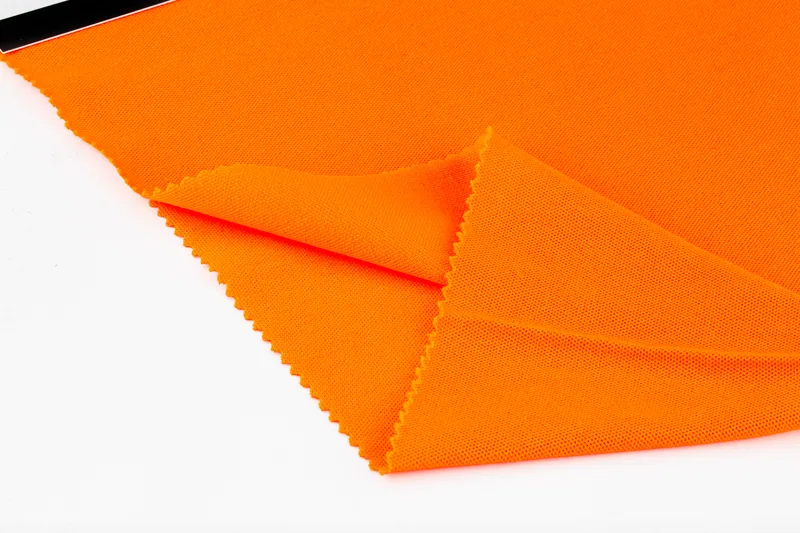
In clinics, a knitted tee complements scrubs or replaces them at reception and in care roles. It has to look clean, feel good on the skin and be easy to wash correctly.
Polo shirts & uniformsPolo uniforms for cleaning and facility staff: a practical guide
Cleaning staff work in clients' offices, malls and hospitals. The uniform is the firm's business card and, at the same time, its hardest-working piece of equipment.
 Polo shirts & uniforms
How to write a fabric specification for a uniform tender
A vague specification attracts cheap bids and weak products. A well-written one, with measurable requirements, protects the buyer and lets serious suppliers compete fairly.
Polo shirts & uniformsIndustrial laundering of knitted uniforms: what fabric survives?
A shirt that looks fine after 50 home washes can fail after 20 industrial cycles. Industrial laundries have their own rules, and the fabric must be chosen for them.
Polo shirts & uniformsWinter uniforms for outdoor and warehouse staff: fleece sweatshirts
In winter a polo is not enough. A branded 3-thread fleece mid-layer keeps people warm under a jacket and turns the summer uniform into a year-round system.
Polo shirts & uniformsCorporate sweatshirts as a uniform layer for offices and shops
In offices and shops the problem is not frost but air conditioning and chilly mornings. A light branded sweatshirt keeps the team consistent when a polo is not enough.
Kidswear & babywearInterlock, jersey or rib: which fabric is best for babywear?
The three basic knits look alike on a shelf but behave very differently on a four-month-old. Here is how to choose by product rather than by habit.
Kidswear & babywearWhat GSM should fabric for baby clothes be?
Too light and baby clothes feel cheap; too heavy and they turn stiff and hot. These are the ranges babywear workshops actually work with.
Kidswear & babywearHow to get a soft hand feel in babywear: finishes explained
The softness parents feel in a shop does not come from cotton alone. It comes from yarn, knitting and above all the finishes applied after dyeing.
Kidswear & babywear100% cotton or blends: which composition suits children's skin?
100% cotton is every kidswear maker's reflex, but it is not the answer for every product. Age, contact area and how the garment is worn all change the choice.
Kidswear & babywearBaby sleepsuits: snaps or zip, feet or footless, and fabric
A sleepsuit goes on and off several times a day, often at night in the dark. Its fastening and fabric decide whether parents buy the next size from you.
 Kidswear & babywear
Neckbands, cuffs and bindings for kidswear: using rib
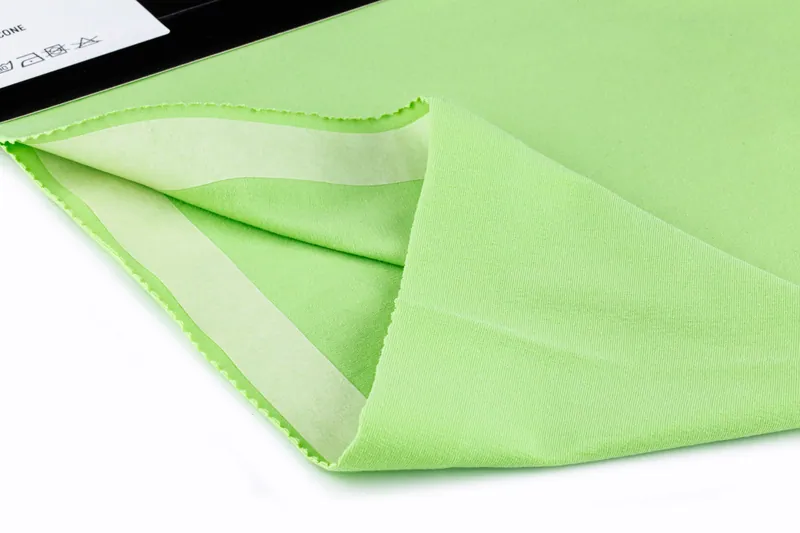
The neckband is the first thing a parent looks at and the first thing to lose shape. The right ratio between rib and neckline is set on a sample, not by eye.
Kidswear & babywearWinter babywear: brushed fleece for pramsuits and overalls
In winter a baby spends long periods still in a pram or in arms. The warm layer has to be soft, quick to put on and must not shed fluff onto the baby's face.
Kidswear & babywearFabric for kids' joggers and tracksuits: terry or fleece?
Children crawl, run and land on their knees. Tracksuit fabric has to survive abrasion, avoid pilling within a month and not be too warm in a heated classroom.
Kidswear & babywearKnitted baby sleeping bags: layers, tog and safety
A sleeping bag replaces the blanket in the cot, so it must keep a baby warm without overheating and must never let the baby slip down inside it.
 Kidswear & babywear
Girls' leggings and dresses: elastane jersey, weight and cut
Leggings that go see-through at the knee and dresses that sag after a month share one cause: fabric chosen for its colour rather than its recovery.
Kidswear & babywearChildren's pyjamas: fabric, fit and flammability
Pyjamas are what a child wears for the most hours, at home near heaters, candles and cookers. Comfort and safety are decided by fabric and fit.
Kidswear & babywearHow to plan a seasonal kidswear collection, step by step
Kidswear sells in short, predictable seasons. Plan backwards from launch day to the fabric order and your stock is ready exactly when parents start looking.
Kidswear & babywearWhich school-age basics should a kidswear brand make?
Back to school is one of the most predictable selling windows of the year. Brands that have the right basics in the right sizes sell them at full price.
Kidswear & babywearHow to expand a babywear brand into 3–12 years kidswear
A babywear brand loses customers at exactly the moment they become loyal: the child grows up. Expanding into 3–12 years keeps them, if you do it in small steps.
Loungewear, pyjamas & activewearWhich knitted fabric is best for pyjamas? A practical comparison
No single fabric suits every pyjama. There is, however, a right choice for each season, customer and retail price point.
Loungewear, pyjamas & activewearModal or cotton jersey: which is better for loungewear?
Premium loungewear shoppers increasingly ask for modal. Should you switch from cotton, or does a blend solve the problem better?
Loungewear, pyjamas & activewearHow to sew summer nightdresses from viscose jersey
Viscose gives a nightdress the fluid drape shoppers want in summer. A few cutting and sewing rules stop it coming out of the wash crooked.
Loungewear, pyjamas & activewearInterlock or single jersey for children's pyjamas?
Parents wash children's pyjamas dozens of times a season. Your fabric choice decides whether the garment still looks right after the twentieth wash.
Loungewear, pyjamas & activewearBrushed fleece pyjamas for winter: weight, warmth and pilling
A winter pyjama has to keep you warm without making you sweat. Weight, fibre blend and how the back is finished decide the balance.
Loungewear, pyjamas & activewearMen's loungewear: which fabrics and fits actually sell?
The men's loungewear segment is smaller than women's but more loyal. A man who finds the right lounge trousers tends to buy them again for years.
Loungewear, pyjamas & activewearEnzyme, silicone, peach finish: what makes loungewear feel soft?
Customers decide in three seconds with a hand on the fabric. The finish is often the difference between nice and I want it, but not every finish lasts equally.
 Loungewear, pyjamas & activewear
Cotton-elastane or polyester: which knit should activewear use?
There is no single sports fabric. The right choice depends on how hard your customer trains and how long they keep the garment on once the workout is over.
Loungewear, pyjamas & activewearWhat fabric is best for leggings? GSM, elastane and squat-proofing
Leggings look like the simplest product in a sports range. In reality they are where a wrong fabric choice shows instantly, at the very first squat.
Loungewear, pyjamas & activewearWhich fabric for joggers: french terry, fleece or jersey?
Joggers have moved from the gym into everyday wardrobes. The fabric decides whether they still look sharp after a month or start bagging and twisting on the leg.
Loungewear, pyjamas & activewearWhat fabric should gym and training T-shirts be made from?
A training tee has a hard life: sweat, friction and a wash after every wear. Choose the fabric for its tenth wash, not its first.
Loungewear, pyjamas & activewearMoisture management in knits: what wicking really means
Moisture-wicking appears on countless labels, yet few people know what lies behind the claim. Understand the mechanism and you choose fabric better and write honest copy.
Loungewear, pyjamas & activewearRib knit sports bras and crop tops for low-impact training
A yoga bra is not a running bra. Understand support levels and you choose the right fabric, and you never promise more than the product can deliver.
Loungewear, pyjamas & activewearWhat fabric works for tennis and padel polo shirts?
The polo shirt began on the tennis court. Today padel and amateur tennis give it a second life, and the fabric has to keep up with fast, twisting movement.
Loungewear, pyjamas & activewearWhich fabric for gym and running shorts?
Shorts look like the simplest sports product, but their uses differ hugely: weight matters for running, toughness for the gym and drape for the street.
Loungewear, pyjamas & activewearWinter warm-up tracksuits: which fabric to choose
In winter, athletes spend a lot of time warming up, on the bench or travelling. The tracksuit has to keep them warm without turning into a sauna at the first sprint.
Costing, pricing & marginsHow many metres in a kilo of knitted fabric? GSM and width maths
Kilos, running metres and square metres are three ways of measuring the same roll. Two figures from the fabric sheet let you move between them in seconds.
 Costing, pricing & margins
What do rib cuffs, waistbands and necklines add to garment cost?
Cuffs and waistbands weigh little, but leave them off the cost sheet, or cost them as main fabric, and your final figure will be wrong.
 Costing, pricing & margins
How fabric weight changes T-shirt cost: 155 vs 180 vs 220 GSM
The weight difference shows on the spec sheet, but it matters on the cost sheet. Here is what a heavier T-shirt really costs and when it is worth it.
 Costing, pricing & margins
How to cost a viscose jersey dress: a worked example
With dresses, the issue is not fabric weight but area. A flared skirt and a fluid fabric change consumption, cutting time and the reject rate.
 Costing, pricing & margins
How to cut garment costs without cutting quality
The cheapest saving rarely comes from thinner fabric. It comes from better decisions: fewer variants, planned volumes and fewer defects.
 Quality, compliance & sustainability
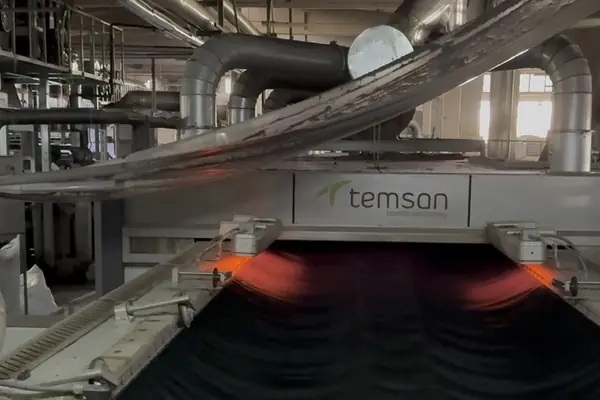
How to inspect knitted fabric rolls on delivery: the 4-point system
A fault spotted on the roll costs you a few minutes. The same fault found on a finished T-shirt costs the garment, the labour and sometimes the customer. Here is the method serious workrooms use.
 Quality, compliance & sustainability
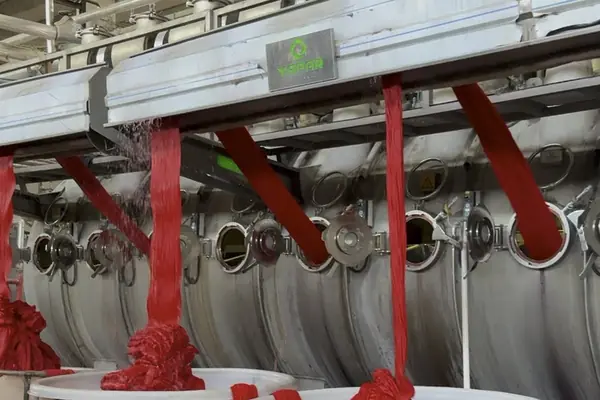
How to check fabric GSM and width when knitted rolls arrive
Knitted fabric is bought by the kilo but used by the square metre. If weight or width drift from spec, your costing quietly falls apart.
 Quality, compliance & sustainability
Why T-shirt side seams twist: spirality in single jersey explained
Spirality is one of the most common complaints on jersey tees. The good news is that you can measure it before production and keep it under control.
 Quality, compliance & sustainability
How to prevent pilling on hoodies and joggers before you order
Bobbles on the elbows and under the arms make a new hoodie look old within a month. You can assess the risk right at the fabric selection stage.
 Quality, compliance & sustainability
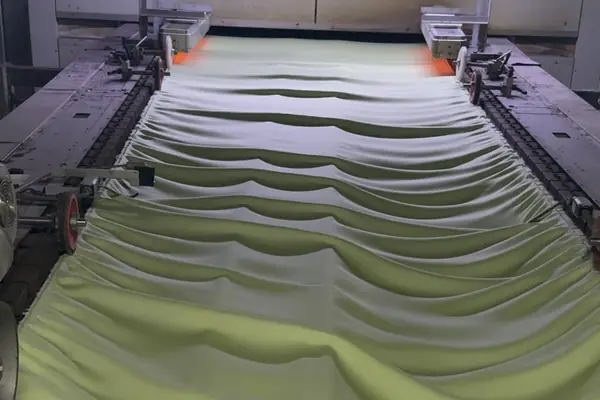
Why rib cuffs and waistbands lose shape and how to test recovery
A hoodie can be made from excellent fleece, but if the cuffs stay stretched after a month, the customer will call it poor quality. Rib recovery is easy to test.
 Quality, compliance & sustainability
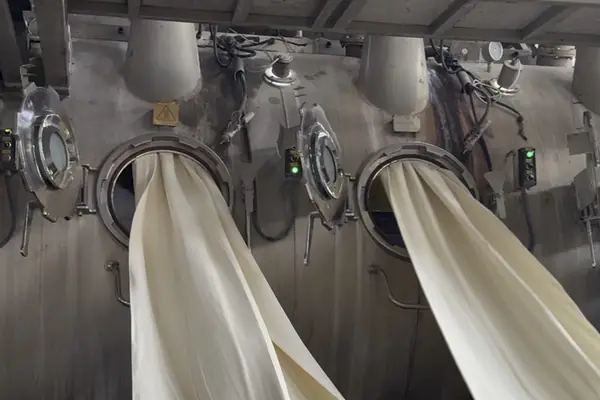
Barré, needle lines and holes in knitted fabric: what to accept
Not every irregularity on a roll is a reason to reject it, but some defects cannot be hidden in any lay plan. Here is how to tell them apart quickly.
 Quality, compliance & sustainability
Quality checks for babywear: what to test before you sell
On babywear, a loose snap or a long thread is not just a cosmetic flaw. Quality control has to be stricter than for adult clothing.
 Quality, compliance & sustainability
How to store knitted fabric rolls to avoid quality problems
Fabric that was perfect on delivery can become unfit for cutting after a few months in a damp corner. Storage is part of quality control too.
 Quality, compliance & sustainability
How to raise a fabric quality claim with your supplier properly
Serious suppliers resolve quality problems, but they need data, not impressions. A well-built claim saves time on both sides.
 Quality, compliance & sustainability
How to write a fibre composition label under EU rules
A composition label looks like a detail, yet it is the first thing an inspector or a careful customer checks. These are the rules that matter and the mistakes we see most often.
 Quality, compliance & sustainability
How to make babywear safe: fabric, trims and chemical checks
A baby's skin is thinner, and babies put everything in their mouths. That is why every fabric and trim choice for newborn clothing has to be judged more strictly.
 Quality, compliance & sustainability
Recycled polyester and recycled cotton: what brands should know
Recycled fibres are one of the most requested topics for new collections. They bring real benefits, along with technical trade-offs and strict rules on how you talk about them.
 Quality, compliance & sustainability
How to design clothes that last longer: durability as sustainability
The most sustainable garment is the one that gets worn for a long time. Durability is not a slogan but a set of technical decisions made before cutting starts.
Selling & marketing in RomaniaWhy customers return clothes and how to cut your return rate
Every return has a cause, and most causes repeat. A brand that tracks them systematically can cut returns without tightening its policy towards customers.