

For a brand selling T-shirts, hoodies and joggers, knitted fabric is usually the largest share of direct product cost and almost everything the customer feels when they touch the garment. Yet many founders choose a supplier in a hurry, from one photo or the first price they receive. It is worth treating the search like a small recruitment process: clear criteria, samples and a trial order.
The types of supplier you will meet
Broadly, you will come across four kinds of supplier:
- Knitting mills that knit, dye and finish the fabric. They control the whole process and can produce colours to order, but work with minimums per colour.
- Wholesale stockists that hold rolls in a warehouse and sell by the kilo, often with no minimum. They are ideal for samples and small runs.
- Agents and intermediaries who connect you with mills abroad. They can help, but they add a link to the communication chain.
- Retail fabric shops, useful for the very first prototypes but usually too expensive and without continuity for production.
For a new brand, the most practical combination is one supplier that offers both stock and made-to-order production. You start with stock rolls and move to your own colours as volumes grow, without changing supplier.
Where to look
Search Google with the terms the trade uses, such as single jersey wholesale, fleece fabric by the kilo or rib fabric supplier. Textile fairs and industry associations are other good sources. Ask the workshops you speak to as well: they know which suppliers deliver stable fabric and which ones cause trouble on the cutting table.
Questions to ask before any order
A serious supplier answers these clearly and in writing:
- What is the composition, weight (g/m²) and width of the article?
- Is it tubular or open width, and what finishes does it have (enzyme, silicone, brushing)?
- What shrinkage should I expect after washing, lengthwise and widthwise?
- Is it stock or made to order? What is the minimum and the lead time?
- Can the same colour be repeated in three months, and how do you control shade differences between lots?
- Is there a technical data sheet and any certification, for example OEKO-TEX, for this article?
- How is it invoiced and delivered: per kilo, per roll, by courier or collected from the warehouse?
Warning signs
Be careful if a supplier cannot state the exact weight, won't send samples, avoids the shrinkage question or promises any colour in any quantity by tomorrow. A price far below the market for something sold as 100% combed cotton is just as suspicious. The difference usually gets paid later, in tees that twist or shrink after the first wash.
Samples and the trial order
Ask for samples of the articles you like and test them: wash a piece at the temperature you will put on your care label, measure it before and after, rub it against a white cloth to check colour transfer and wear a prototype for a few days. Then place a small order, perhaps one or two rolls, and cut your production samples from it. Only then commit to volume.
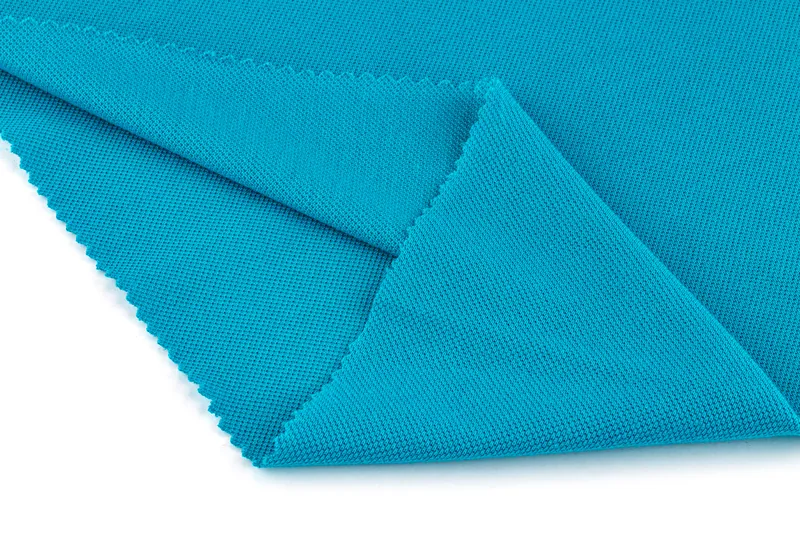
When choosing colour, think about continuity. A strong shade such as emerald green can easily become a brand signature, and then you need a supplier that can reproduce it consistently. Our emerald green single jersey in 160 g, in combed cotton and polyester, is made to order and suits colourful printed tees: the weight is light enough for summer, and the blend helps the colour stay vivid through repeated washing.
What we offer a new brand
Alteks Tricot has a warehouse and showroom in Afumați, near Bucharest, with more than 160 tonnes of knitted fabric in stock, sold by the roll with no minimum. The fabric comes from the group's mill in Kahramanmaraș, where it is knitted, dyed and finished in-house. For your own colours, we make any article in any of the 220 card colours from 150 kg per colour per article, with lab dips for custom shades and every lot checked against the approved sample. You can visit us in Afumați to see the fabrics in person, or send a quote request; we usually reply the same working day.
Frequently asked questions
Should I buy fabric locally or import directly from a mill?
For early collections, a supplier with a local warehouse reduces risk: you see the fabric first, receive samples quickly and buy small quantities. Importing directly from a mill can pay off at large volumes, but it means minimums, freight, long lead times and less leverage when a problem appears.
What documents should I get from a fabric supplier?
An invoice stating the article, composition and quantity, and on request a technical data sheet with weight, width and care advice. If your brand communicates certifications, ask for evidence covering the specific article you bought. You need the composition for the fibre label of the finished garment.
How many fabric suppliers should I have at the start?
One or two are enough for a first collection. Concentrating orders with one supplier gives you shade continuity and a stronger relationship. A second supplier is useful as a backup for critical articles, but test it early rather than in the middle of an urgent production run.