
#Colour
Every The Knit Journal article about colour, for clothing brands, workshops and entrepreneurs.
 Starting a clothing brand
How to build a clothing brand identity: logo, colours and voice
A clothing brand's identity does not live only on screen. It lives on 3 cm labels, small embroideries and the fabric itself, so design it for those places.
 Starting a clothing brand
Stock fabric or made-to-order fabric for your first collection?
Stock fabric gives you speed and flexibility; made-to-order gives you control and exclusivity. The right call depends on numbers, not preference.
 Starting a clothing brand
How many colours for a first collection? A launch colour strategy
Every extra colour multiplies your stock, not just your choice. A small, coherent palette sells better than a rainbow of thin stock.
 Starting a clothing brand
How to match rib cuffs, waistbands and collars to your main fabric
Stretched cuffs and wavy necklines are the first signs of a cheaply made garment. You prevent them by choosing the right rib, not by sewing more carefully.
 Starting a clothing brand
How to restock bestsellers without shade differences between lots
A customer rebuying a favourite tee expects exactly the same product. A different shade of black can turn a loyal customer into a return.
 Garment manufacturing
Lab dips, strike-offs and the golden sample: getting approvals
The costliest claims come from verbal approvals: 'the colour was different', 'the print was meant to be bigger'. Written approvals on physical samples prevent them.
 Garment manufacturing
Stock fabric or made-to-order: planning fabric lead times
Stock gives you speed; made-to-order gives you the exact colour. Workshops that plan well use both, at the right point in the season.
 Garment manufacturing
Repeat orders: keeping colour, fit and quality consistent
The first order wins the client; repeat orders keep them. And repeats are usually lost over small differences: a shade, two centimetres, a different label.
 T-shirts
Grey melange t-shirts: how the fabric is made and what to know
The grey melange tee looks like the simplest product in any range. Behind it is a fabric with its own rules on production, shade and composition.
 T-shirts
T-shirt fabric colour: shade, fastness and lot matching
A great colour on a swatch does not guarantee a tee that looks the same after ten washes or on your second order. Colour has to be specified, tested and checked.
 T-shirts
How to print on grey melange and poly-cotton t-shirts
Melange looks simple, but it is a blend of fibres that react differently to ink and heat. Understand that and you can print on grey without surprises.
 T-shirts
Team and club t-shirts: names, numbers and the right fabric
Club orders come with dozens of different names, numbers and sizes. Without a clear system, one wrong letter ruins a shirt and a client relationship.
 T-shirts
Best-selling t-shirt colours and how to plan your range
A t-shirt brand does not need many colours, it needs the right ones in the right proportions. Here is how to build a palette that sells without filling the warehouse.
 Hoodies & sweatshirts
How to design a matching two-piece set in knitted fabric
A good co-ord sells as one idea, not as two pieces put together. Proportions, fabric and colour have to be planned for the set from the start.
 Hoodies & sweatshirts
How to match rib colour to hoodie body fabric
Cuffs in a slightly different blue or black from the body are a defect you can see from two metres away. Colour matching is planned, not hoped for.
 Hoodies & sweatshirts
Corporate merch hoodies: brief, brand colour and budget
A successful corporate hoodie is still being worn long after the event. To get there, the brief has to talk about the people wearing it, not just the logo.
 Hoodies & sweatshirts
Stock fabric or made-to-order fabric for hoodies: which fits?
Stock gives you speed and flexibility; made-to-order gives you your own colour and volume. In practice most brands use both.
 Hoodies & sweatshirts
Garment-dyed and washed hoodies: how to get the vintage look
The washed, slightly faded look is one of the most wanted in streetwear. There are several ways to get it, and each comes with its own fabric and pattern rules.
 Hoodies & sweatshirts
How many colours should a hoodie range have? Core vs seasonal
Every new colour multiplies your stock by the number of sizes. A clear colour strategy keeps the range fresh without tying up your cash.
 Polo shirts & uniforms
Colourfastness for polos: how to test fabric for frequent washing
A black polo that turns grey after ten washes, or a white collar stained red, is an avoidable complaint. It is all settled before cutting starts.
 Polo shirts & uniforms
Contrast details on polo shirts: tipping, two-tone plackets, piping
Two or three well-chosen details turn a plain polo into a branded product. Too many, or badly matched in colour, make it look cheap.
Polo shirts & uniformsHotel staff uniforms in knitwear: reception, housekeeping and spa
A hotel has five or six departments sharing the same corridors. The uniform has to tell them apart, survive physical work and still tell one consistent story.
Polo shirts & uniformsPolo uniforms for cleaning and facility staff: a practical guide
Cleaning staff work in clients' offices, malls and hospitals. The uniform is the firm's business card and, at the same time, its hardest-working piece of equipment.
 Polo shirts & uniforms
How to keep the same uniform colour across every reorder
Two employees side by side in shirts from different orders, in visibly different shades: the most common complaint in uniform programmes. It can be prevented.
 Polo shirts & uniforms
Matching your brand colour on uniforms: how lab dips work
The colour on your logo does not transfer automatically to a shirt. The lab dip is the step where a brand colour becomes a reproducible dye recipe on your chosen fabric.
Polo shirts & uniformsColour-coding staff uniforms by department or role: how to do it
In a hotel, clinic or large store, customers want to know at once who to ask. A well-planned colour code on uniforms answers that without a word.
 Kidswear & babywear
Colour fastness on children's clothes: saliva, sweat and washing
A fuchsia that stains its white neckband in the first wash or marks a sweaty child's skin is a guaranteed complaint. Colour fastness is checked before cutting.
 Kidswear & babywear
Matching parent-and-child sets: is a mini-me line worth it?
Matching outfits for parents and children look great in photos and sell well at holiday time. But they add an adult size range and a colour problem to solve.
 Kidswear & babywear
How to supply uniforms to kindergartens and private schools
Kindergartens and private schools reorder the same pieces with their logo every year. You win the contract with samples and price, but keep it through organisation.
Kidswear & babywearGender-neutral kidswear: does it sell and how to design it?
A unisex collection means fewer styles, more concentrated stock and clothes that pass from one sibling to the next. But it has to be designed on purpose, not just made 'in grey'.
 Kidswear & babywear
Kidswear brand identity: name, colour palette and packaging
A children's brand talks to parents, not to children. Your name, colours and packaging have to signal trust before they signal fun.
 Loungewear, pyjamas & activewear
How to design co-ord lounge sets that sell as a pair
A well-designed co-ord sells two pieces instead of one. The trick is that the pieces look like one product together yet still work apart.
Loungewear, pyjamas & activewearHow to produce matching family pyjamas in one colour lot
A family in matching pyjamas notices straight away if the child's green is not the parents' green. It all comes down to how you plan the dye lot.
 Loungewear, pyjamas & activewear
How to choose colours for a loungewear collection that sells
Colour is the first thing a customer sees and the last thing many brands think about. A well-built palette sells more with fewer variants.
Loungewear, pyjamas & activewearMoisture management in knits: what wicking really means
Moisture-wicking appears on countless labels, yet few people know what lies behind the claim. Understand the mechanism and you choose fabric better and write honest copy.
Loungewear, pyjamas & activewearHow to design a matching athleisure set that sells
A matching set raises average order value and makes marketing simple. It only works, though, if the pieces match perfectly in shade, drape and hand feel.
 Loungewear, pyjamas & activewear
Club training kit: how to order team sportswear in bulk
A club kit order looks simple until sizes are missing, the shade looks nothing like the crest and the season starts in three weeks.
 Loungewear, pyjamas & activewear
Rib trims for sportswear: cuffs, collars and ankle bands
A cuff that has stretched out after a month marks a cheap garment, even when the body fabric is excellent. Rib trims decide how new a garment looks over time.
Loungewear, pyjamas & activewearColour in activewear: palettes, neons and sweat fastness
Colour sells a sports garment before the customer touches the fabric. Colour is also what makes it look old if it fades from sweat or washing.
 Quality, compliance & sustainability
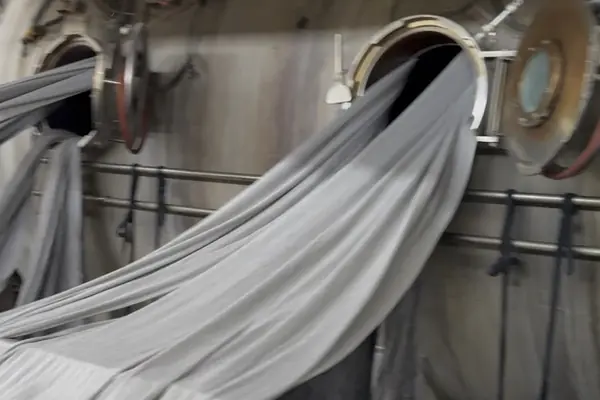
Dye lot shade differences: how to use shade bands in production
A hoodie with sleeves slightly lighter than the body has no sewing fault at all, yet it comes back as a return. Dye lot control is how you prevent exactly that.
 Quality, compliance & sustainability
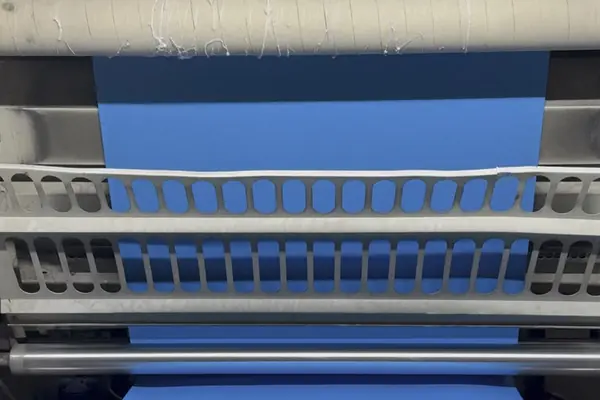
How to approve a lab dip and judge colour in a light box
Colour approval feels like a formality until your polos look perfect in the office and wrong in the shop. A few simple rules make all the difference.
 Quality, compliance & sustainability
Colourfastness to washing and rubbing: testing dark knitted fabrics
A black tee that marks a pale sofa or turns grey after ten washes loses you the customer. Colourfastness testing predicts exactly those situations.
 Quality, compliance & sustainability
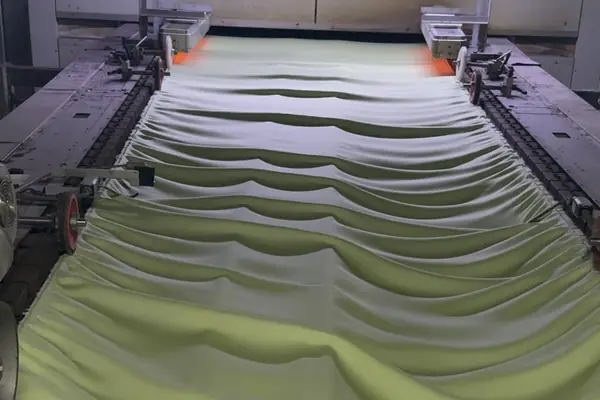
Colourfastness to light, sweat and chlorine for uniforms and sportswear
A yellow work tee that turns pale across the shoulders after one summer was not washed wrongly. It was chosen without a lightfastness test.
 Quality, compliance & sustainability
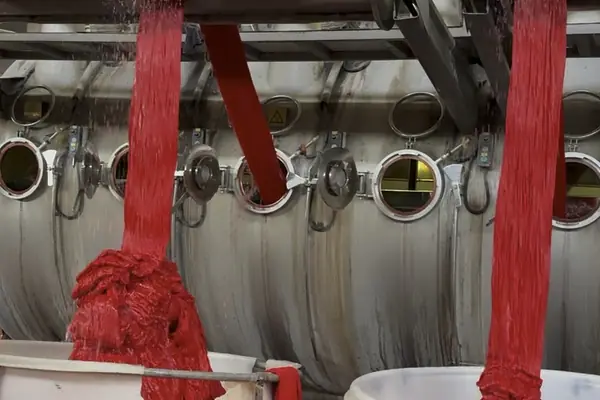
Barré, needle lines and holes in knitted fabric: what to accept
Not every irregularity on a roll is a reason to reject it, but some defects cannot be hidden in any lay plan. Here is how to tell them apart quickly.
 Quality, compliance & sustainability
REACH for clothing brands: which chemicals are restricted?
REACH sounds like a topic for the chemical industry. In reality every dyed T-shirt, every print and every metal snap falls under it.
Selling & marketing in RomaniaHow to sell branded clothing and merch to companies
Companies buy logo tees and hoodies all year, but rarely on impulse. Know the calendar and the people behind the decision and you win the orders.
Selling & marketing in RomaniaHow to sell uniforms to hotels and restaurants
In hospitality, the uniform is part of the guest experience. A supplier who understands that and delivers before the season becomes a long-term partner.
Selling & marketing in RomaniaHow to show true garment colour in your product photos
Royal blue that turns purple, green that looks grey: colour gaps between screen and parcel cost you returns. Most of them can be prevented with a simple routine.