
#Pricing
Every The Knit Journal article about pricing, for clothing brands, workshops and entrepreneurs.
 Starting a clothing brand
Clothing brand positioning: how to stand out from day one
Positioning is the place your brand holds in the customer's mind. If you do not choose it yourself, the market chooses it for you, usually at the lowest price.
 Starting a clothing brand
Clothing brand break-even: how many pieces do you need to sell?
Break-even tells you how many pieces you must sell each month to avoid losing money. It is the simplest calculation in the business, and the most often skipped.
 Starting a clothing brand
How to do market research for a clothing brand in Romania
You do not need a research agency. You need two weeks, a spreadsheet and the discipline to write down what you see, not what you hope to see.
 Starting a clothing brand
How to cost a branded T-shirt: a full worked example
Many founders count only fabric and sewing and discover their real margin after the first season. Here is the complete cost sheet, line by line.
 Garment manufacturing
How to quote a CMT price per garment for knitted polo shirts
A CMT price pulled from thin air looks competitive until the first order loses money. Here is the minute-based method that workshops which last actually use.
 Garment manufacturing
Rush orders: how to accept, price and plan them safely
The rush order always arrives on a Friday afternoon, for an event on Monday. Before you say yes, check which orders will be late because of it.
 T-shirts
How to price a t-shirt for retail: costs and margin
You do not set the price of a tee by looking at what others charge. You build it from the bottom up, from real costs, and then test it against the market.
 T-shirts
How to quote a custom t-shirt order for a business client
A good quote is more than a price. It is a clear document that says what the client gets, when and on what terms, so there are no arguments on delivery day.
 Hoodies & sweatshirts
What makes a hoodie premium and how to position it
Premium is not a word to print on a swing tag but a set of decisions customers can feel in their hands. Here is what matters and how to communicate it.
 Hoodies & sweatshirts
How to sell tracksuits wholesale to shops and boutiques
A shop is not buying a tracksuit; it is buying a margin and a low stock risk. Your wholesale offer has to be built from its point of view.
 Hoodies & sweatshirts
How to calculate the selling price of a hoodie
A hoodie's price is not cost times two. Forget returns, fees and advertising and you can sell plenty while earning very little.
 Polo shirts & uniforms
What GSM should a quality polo shirt fabric be?
Almost every polo on the market sits between 180 and 250 g/m². What separates them is not just weight, but positioning, season and cost per piece.
 Polo shirts & uniforms
How to calculate the production cost of a polo shirt
Many makers cost only fabric and labour, then wonder why nothing is left over. A complete cost sheet has at least eight lines, and each one matters.
Kidswear & babywearHow to create baby gift sets that actually sell
Baby gift sets are usually bought by someone who isn't the parent, often in a hurry. The product has to answer their questions before they ask them.
 Kidswear & babywear
How to price kidswear: what parents will actually pay
Parents buy often and compare a lot. The right kidswear price starts from real cost, but ends at what your brand can justify to a very attentive buyer.
Kidswear & babywearHow to get your kidswear stocked in shops and boutiques
A children's shop doesn't buy a brand; it buys reliable sell-through. Present your collection from the buyer's side: what sells, at what margin and how fast it can be restocked.
Kidswear & babywearHow to sell kidswear on eMAG and other marketplaces
Marketplaces bring traffic a small brand could never buy on its own. In return they demand flawless product data, carefully calculated prices and error-free logistics.
 Loungewear, pyjamas & activewear
How to design co-ord lounge sets that sell as a pair
A well-designed co-ord sells two pieces instead of one. The trick is that the pieces look like one product together yet still work apart.
 Loungewear, pyjamas & activewear
How to design a matching athleisure set that sells
A matching set raises average order value and makes marketing simple. It only works, though, if the pieces match perfectly in shade, drape and hand feel.
 Loungewear, pyjamas & activewear
Costing leggings and a top: fabric consumption worked example
Fabric is sold by the kilo, patterns are planned in metres and customers pay per piece. A proper costing links all three units without nasty surprises.
 Costing, pricing & margins
Wholesale vs retail price: how to set both for a clothing brand
One production cost, three prices: for stockists, for your own web shop and for the end customer. Here is how to link them without undercutting your own retailers.
 Costing, pricing & margins
Margin vs markup: the difference that can cost a clothing brand money
The two percentages are calculated on different bases. Mixing them up happens in quotes, negotiations and sales, and it is paid for out of profit.
 Costing, pricing & margins
Cost-plus or value-based pricing: how to price a hoodie
Cost tells you the price you must never go below. The customer tells you how high you can go. The right price lives in between.
 Costing, pricing & margins
How to price a uniform contract for a corporate client
A uniform contract is not one order but a relationship lasting years. Your price has to cover what happens after the first delivery too.
 Costing, pricing & margins
Quantity price breaks for promotional T-shirts and merch
Merch buyers always ask what it costs if they take more. The answer should come from a deliberate price grid, not improvisation.
 Costing, pricing & margins
How much discount can a clothing brand give without losing money?
A 20% discount looks small on a banner. On your profit and loss it can mean selling two-thirds more just to stand still.
 Costing, pricing & margins
End-of-season markdowns: how to plan a clearance that protects margin
A clearance does not have to be a panic in February. Planned properly, it is a normal stage of the season with its own budget and calendar.
Costing, pricing & marginsDead stock in clothing: how to prevent it and how to clear it
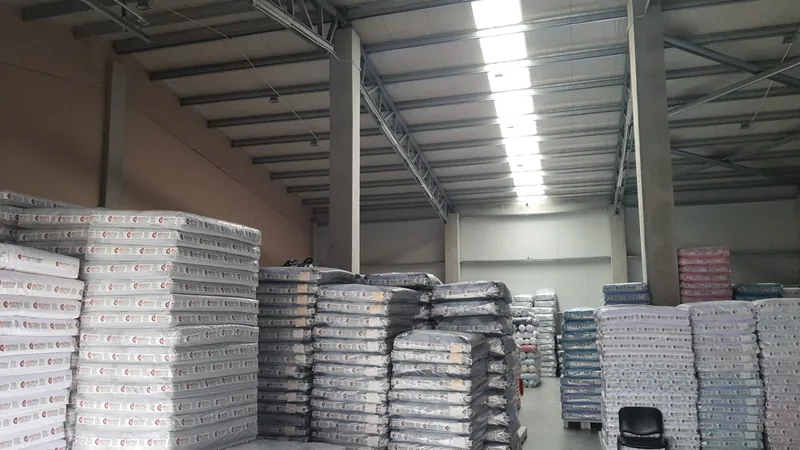
Stock that no longer sells is not just goods in boxes. It is locked-up capital, occupied space and a postponed decision that costs you every month.
Costing, pricing & marginsHow to read the profitability of a collection after the season
Turnover shows how much you sold. A style-by-style review shows what made you money and what only cost you time, space and capital.
 Costing, pricing & margins
Sell-through rate: how to calculate it and act on it mid-season
One percentage, worked out weekly for each style, tells you early what needs replenishing and what needs a push before it becomes a problem.
 Costing, pricing & margins
How to price clothing for eMAG and other marketplaces
On a marketplace, the price shown is not the money you keep. Commission, logistics, returns and ads sit in between, and they are all charged on the selling price.
 Costing, pricing & margins
Free shipping and returns: how to build them into online prices
Free shipping is not free, and returns are not an exception. Both are predictable costs that belong in your price before you launch.
 Costing, pricing & margins
How to protect your margin from currency swings and price rises in quotes
Months can pass between quote and delivery. If the exchange rate or cotton prices move in that time, someone pays the difference. The contract decides who.
Costing, pricing & marginsSmall orders: how to set your own minimums and small-run surcharges
Small orders bring in new clients but take as much time as big ones. A properly calculated minimum and a transparent surcharge make them pay.
Costing, pricing & marginsHow to raise prices with existing B2B clients without losing them
A price that has not moved in three years is not loyalty; it is margin that has quietly melted away. A well-prepared increase is accepted more often than you think.
Selling & marketing in RomaniaConsignment or wholesale: which terms to offer boutiques?
How you sell to shops decides who carries the risk of unsold stock and when the money reaches your account. Here is how to choose the right model.
Selling & marketing in RomaniaHow to build a wholesale price list for a clothing brand
A badly built wholesale price list can lose you money on every large order. We start from cost and end with a document you can send to buyers.
Selling & marketing in RomaniaB2B payment terms in clothing: how to avoid bad debt
One large unpaid invoice can stop a workshop faster than a slow season. Here is how to sell on credit without putting your business at risk.
Selling & marketing in RomaniaHow to quote a corporate T-shirt order step by step
A good corporate quote is more than a unit price. It is a correct calculation plus clearly written terms, so you do not lose money at delivery.
Selling & marketing in RomaniaHow to sell clothing on eMAG: a guide for small apparel brands
A marketplace brings traffic a new brand simply does not have, but it charges for it in commission, price competition and strict rules. Here is how to go in prepared.
Selling & marketing in RomaniaFacebook and Instagram ads for a small clothing brand
Paid ads can switch on sales for a new brand within days, and burn the budget just as fast. The difference is the maths you do before your first campaign.
 Selling & marketing in Romania
What does it really cost to sell a T-shirt online? Full maths
Many founders only cost production and then wonder where the money went. Online, the costs that come after sewing are often bigger than the T-shirt itself.