

Many new activewear brands set prices by looking at competitors and only discover after the first run that their margin is far lower than they thought. The cause is nearly always the same: fabric consumption was estimated by eye, and small costs such as labels, cutting waste and packaging were left out. Here is how to cost a leggings-and-top set properly.
Step 1: convert kilos into metres
Wholesale knit fabric is usually sold by the kilogram. Patterns and cutting markers, however, work in linear metres. Weight and width connect the two:
weight of one linear metre = width in metres × weight in kg/m²
For example, a 230 gsm fabric that is 185 cm wide weighs about 1.85 × 0.23 = 0.43 kg per linear metre. If you know the price per kg, multiply it by 0.43 to get the price per metre.
Always check the real usable width without selvedges, and whether the fabric comes open-width or tubular. Weight and width can shift slightly after finishing, so ask for the values on the article's spec sheet.
Step 2: consumption per garment
Real consumption comes from the marker, the layout of all pattern pieces across the fabric width. For first estimates, let's assume these indicative values for a medium size:
- full-length women's leggings: about 0.7 linear metres, so around 0.30 kg;
- fitted short-sleeve top: about 0.35 linear metres, so around 0.15 kg.
A set therefore uses roughly 0.45 kg of fabric. These figures already include normal cutting waste. On a marker with all sizes together, waste can fall; on very small runs it can rise.
Step 3: fabric cost per set
If P is the price per kg on your quote, the fabric cost per set is 0.45 × P. For a run of 200 sets, total demand is about 90 kg, plus a 3–5% allowance for faults and samples, so around 95 kg. A quantity like that can be bought from stock by the roll.
Step 4: the other direct costs
Besides fabric, an activewear set carries direct costs that new brands often forget:
- cutting and sewing labour for two garments;
- waistband elastic or banding, where used;
- thread, including textured thread for stretch seams;
- composition and brand labels;
- individual packaging and possibly a shipping box;
- logo printing or embroidery;
- transport of fabric and finished goods.
Ask the workshop to quote labour per style, and list every cost separately, per piece.
Step 5: from cost to price
Let's assume, as a hypothetical example, that once everything is added up the direct cost of a set comes to 100 lei. On top of this you have to cover overheads: marketing, photography, payment fees, marketplace commissions, returns and unsold stock. In online clothing retail, many brands work with a selling price at least two to three times the direct cost precisely to cover these expenses.
If you also sell wholesale to shops, the trade price must leave them a margin too. Work out the trade price first, then check that you still keep a healthy margin. Taxes and the applicable VAT should be checked with an accountant, because the rules change.
Example: a yoga set in a natural shade
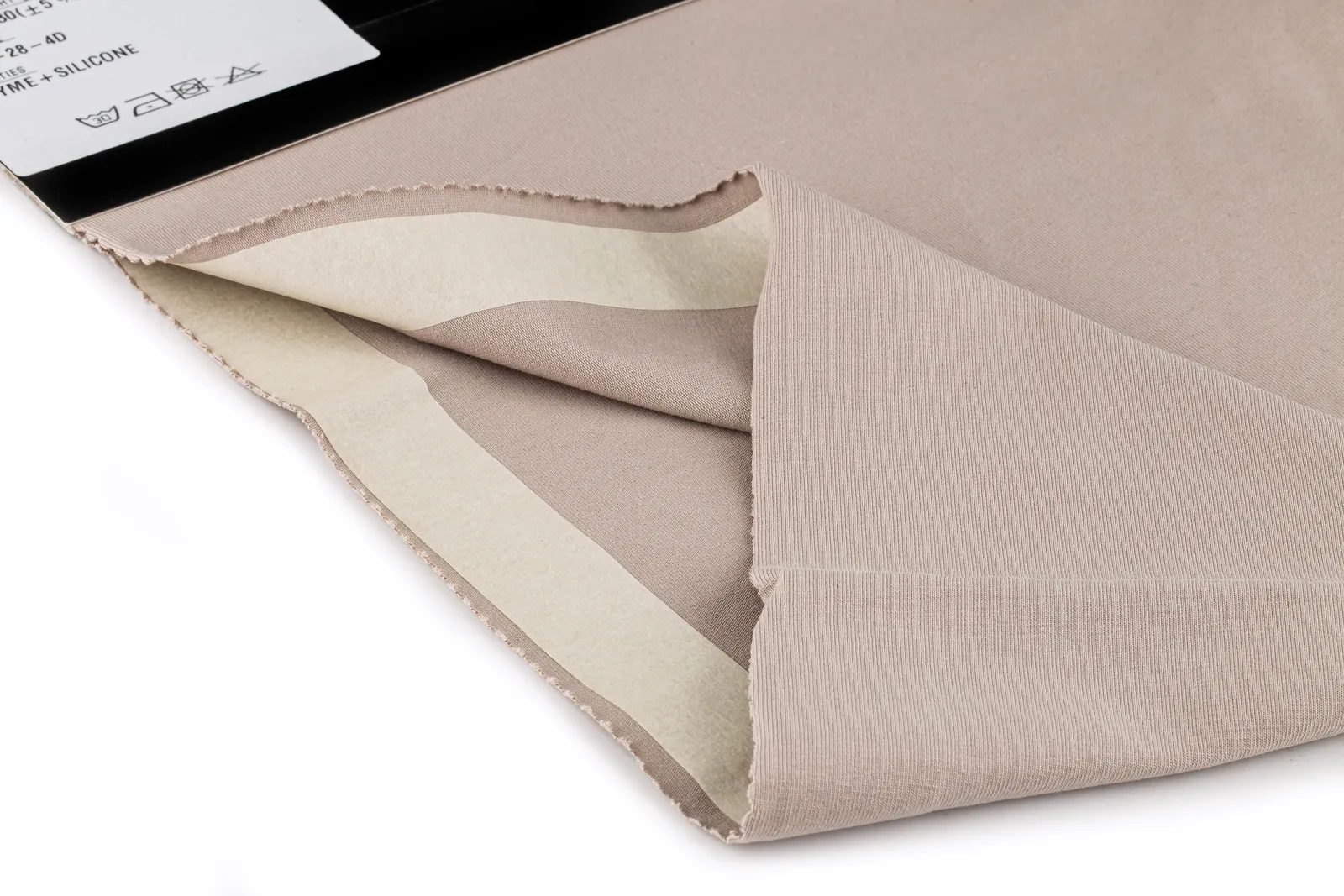
For a leggings-and-top set in a natural shade we would use a sand beige 230 gsm combed cotton-elastane single jersey. Using the same article for both pieces means you buy one fabric, match colour perfectly and keep the costing simple. At 230 gsm it gives the leggings opacity, and the elastane gives recovery. For a version with a layering top, add an article from the french terry family and redo the costing for three pieces.
How to get a quote
To put real numbers into your costing, send a quote request with the article and estimated quantity; prices are given per kg. For a first run, the fabric can come from available stock with no minimum order. For your own colours, the article is made to order in 220 colours from 150 kg per colour.
The figures in the examples are hypothetical and only illustrate the calculation. They are not Alteks Tricot prices: we quote the price per kg of each article on request, usually the same working day. Ask for a quote
Frequently asked questions
How do I convert a price per kg into a price per metre?
Multiply the price per kg by the weight of one linear metre. You get that weight from usable width in metres multiplied by weight in kg/m². For example, 1.85 m × 0.23 kg/m² gives roughly 0.43 kg per linear metre.
How much cutting waste should I allow for?
On fitted garments with many small pieces, waste can be significant. For first estimates, add a few percent on top of the net consumption from the pattern. You will know the real figure after the first full marker with every size in the run laid together.
Why is my real cost higher than my estimate?
Usually because of small costs that were ignored: thread, labels, packaging, transport, samples, faults and returns. Each seems negligible, but together they can change the margin a lot. Keep a per-piece cost sheet and update it after every run.


