

Screen printing is still the most efficient method for medium and large runs of printed hoodies. Once the screens are made, each extra piece costs little, and colours are bright and consistent. The question that matters is not whether to screen print, but which ink to use. Plastisol, water-based and discharge inks give very different results on the same hoodie.
Plastisol: versatile and predictable
Plastisol is the most widely used ink in textile screen printing. It does not dry in the screen, it only cures with heat, and printers control it very well. Its advantages:
- good coverage on dark colours with a white underbase;
- accurate colours that are easy to match to a brand reference;
- works on cotton, blends and polyester fabrics, using low-bleed inks where needed;
- allows special effects such as puff, metallic and reflective.
The main drawback is the hand. Plastisol sits on top of the fibre like a film. On a small logo that hardly matters; on a big back print the hoodie becomes stiffer and less breathable.
Water-based inks: a soft hand
Water-based inks soak into the fibre instead of sitting on it. The result is a print you can barely feel, with a slightly washed look that premium streetwear brands love. They do require:
- a fabric with a high cotton content on the face to absorb the ink;
- a printer used to them, as they dry quickly in the screen;
- correct curing, or colours fade in the wash.
On dark fabric, standard water-based inks do not cover well. That is where discharge comes in.
Discharge: light colours on dark fabric, with no film
Discharge ink contains an agent that removes the dye from the cotton fibre in the printed area, while added pigment colours the new area. You can get white or a light colour on a dark hoodie with a soft hand. The conditions are strict:
- it works on cellulose fibres dyed with dischargeable dyes; polyester does not discharge;
- the result depends on the dyestuff used on the fabric, so the same ink can give a clean white on one lot and a beige on another;
- a test on the actual fabric lot is essential.
For that reason, discharge has to be planned with both your fabric supplier and your printer, not decided on the last day.
Matching the fabric to the ink
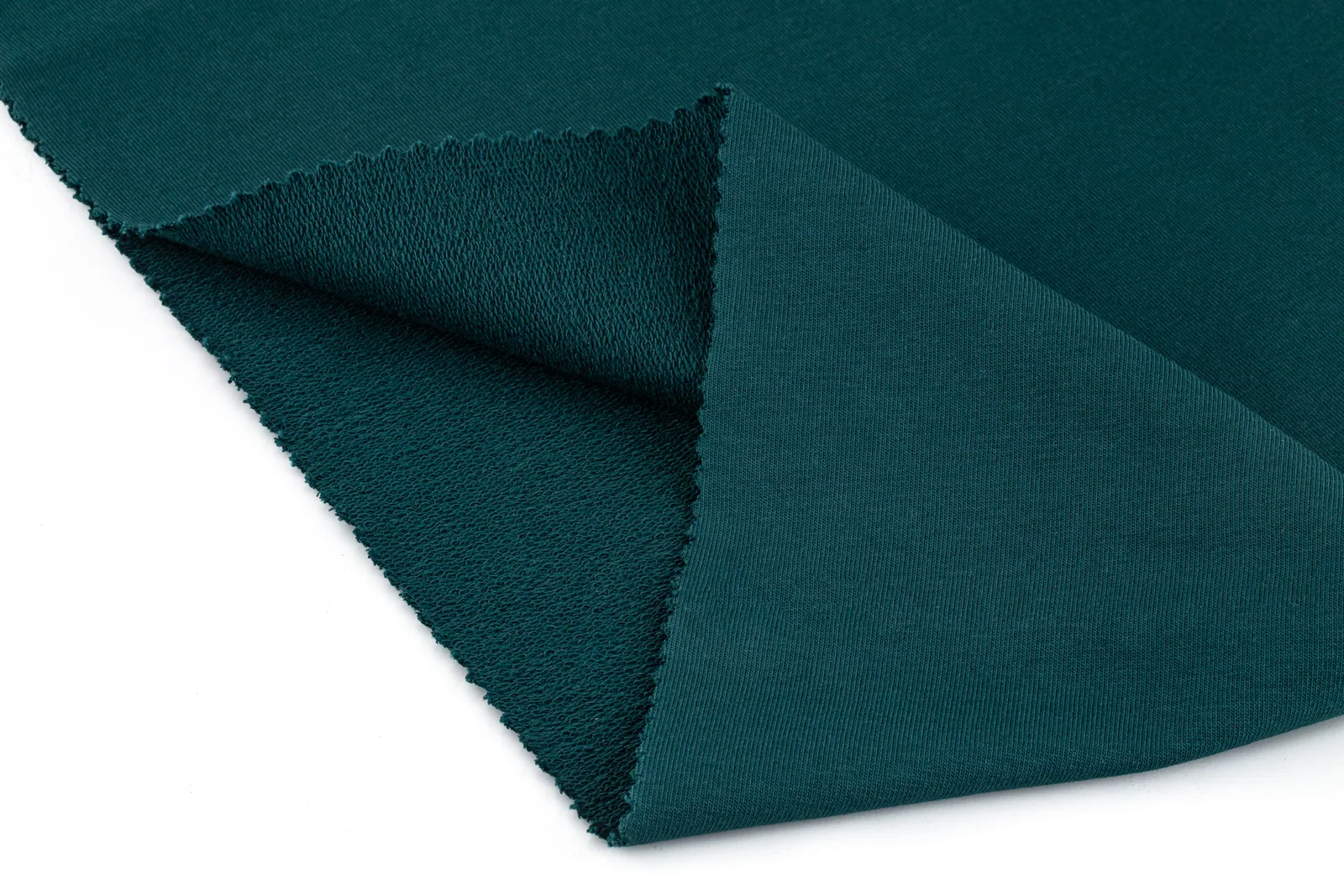
For plastisol, almost any stable hoodie fabric will do. For water-based and discharge, choose a fabric that is mainly cotton. A good example is our petrol green french terry, 250 g, combed cotton with elastane and no polyester. The cotton face takes water-based inks well, and the dark ground is a sensible candidate for discharge tests. At 250 g/m² it makes a transitional hoodie with enough body for large back prints. The rest of the french terry family covers weights from 210 to 280 g/m².
What to ask your printer
Before ordering, clarify:
- Which ink they recommend for your artwork and garment colour, and why.
- How many screens are needed and what set-up costs.
- Whether they will strike off on your fabric before the run.
- What wash test they have done on that combination.
- What tolerance they accept on placement and shade between pieces.
Common mistakes
- A large solid plastisol print on a soft hoodie, which turns stiff.
- Discharge promised to a client without a test on the fabric lot.
- Water-based ink on a polyester-rich blend, giving dull colours.
- Sign-off on a hand-printed sample, followed by production on an automatic press with a different ink deposit.
Getting the fabric
For ink trials and small runs, you can buy by the roll from our stock in Afumați with no minimum order. If you need a particular shade for a collection, the article can be made to order in any of the 220 card colours, from 150 kg per colour. Tell us which print method you are planning in a quote request and we will suggest the right article.
Frequently asked questions
Which ink lasts longest in the wash?
All three can last very well if cured properly. Plastisol is the most forgiving of process variation, while water-based and discharge inks need more experience from the printer. Real durability is confirmed by test washes on the production fabric.
Can a cotton and polyester hoodie be discharge printed?
Only the cotton part discharges, so on blends the result is weaker and sometimes patchy. For discharge, choose a mainly cotton fabric and always test on the real lot, because the dyestuff used in dyeing directly affects the outcome.
Can plastisol and water-based inks be mixed in one design?
Some printers do combine them, for example a water-based base with plastisol details, but the process gets more complex and needs extra strike-offs. For a first order it is safer to choose one ink system for the whole design.


