One of the first questions a new brand asks is how many kilos of fabric to order for 200 or 500 hoodies. You cannot guess the answer or copy it from another product. It is calculated from pattern area, marker efficiency, fabric weight and fabric width.
The three units: m², kg and running metres
Knitted fabrics are usually sold by the kilo. Patterns are measured in centimetres. The link is:
- area (m²) of the pattern pieces, plus marker waste;
- weight (g/m²) turns area into kilos;
- usable width (cm) turns area into running metres of roll.
The basic formulas:
- Consumption in kg = gross area (m²) × weight (g/m²) / 1000.
- Consumption in running metres = gross area (m²) / usable width (m).
- Weight of one running metre = usable width (m) × weight (g/m²) / 1000.
Step 1: net area of the pieces
Add up the area of every piece cut from the body fabric, seam allowances included. For a classic size M hoodie with a two-panel hood and kangaroo pocket, a typical estimate is:
- front: about 0.45 m²;
- back: about 0.45 m²;
- two sleeves: about 0.55 m²;
- hood, two panels, single layer: about 0.22 m²;
- kangaroo pocket: about 0.06 m².
Net total: about 1.73 m². Cuffs and waistband are cut from rib, so calculate them separately.
Step 2: marker efficiency
Pieces never cover the fabric width perfectly. Gaps remain between them, and those gaps are waste. Marker efficiency tells you how much of the fabric ends up in pieces. For hoodies, 78 to 85% is normal for manual multi-size markers; CAD markers push towards the upper end.
Gross area = net area / efficiency. At 80%: 1.73 / 0.80 ≈ 2.16 m² per hoodie.
Step 3: kilos and running metres
Let's assume a 250 g/m² brushed fleece with a usable width of 185 cm:
- consumption in kg: 2.16 × 250 / 1000 = 0.54 kg per hoodie;
- consumption in running metres: 2.16 / 1.85 ≈ 1.17 m per hoodie;
- weight of one running metre: 1.85 × 250 / 1000 ≈ 0.46 kg.
Step 4: production allowances
On top of the calculated figure, add:
- 2 to 3% for roll ends, faults and joins;
- 1 to 2% for relaxation shrinkage and small width deviations;
- the pieces for samples and control, such as pre-production and counter samples.
For a run of 300 hoodies: 0.54 × 300 = 162 kg, plus 4% = roughly 168 kg of body fabric.
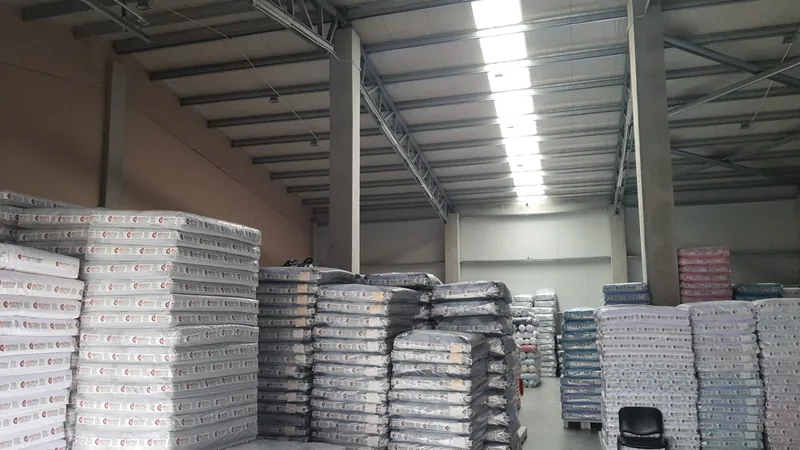
In a single colour, that quantity passes the 150 kg threshold from which fabric can be produced in the colour you choose. That is useful to know when you plan the volume of a drop.
What changes consumption
- Fit: an oversized hoodie can use 20 to 30% more.
- Lined hood: adds a second hood layer, in self fabric or jersey.
- Sizes: XXL uses noticeably more than S, so calculate on the weighted average size of the order.
- Weight: the same pattern at 340 g/m² weighs 36% more than at 250 g/m².
- Width: a narrower fabric can lower marker efficiency if large pieces no longer fit two across.
An example with a real fabric
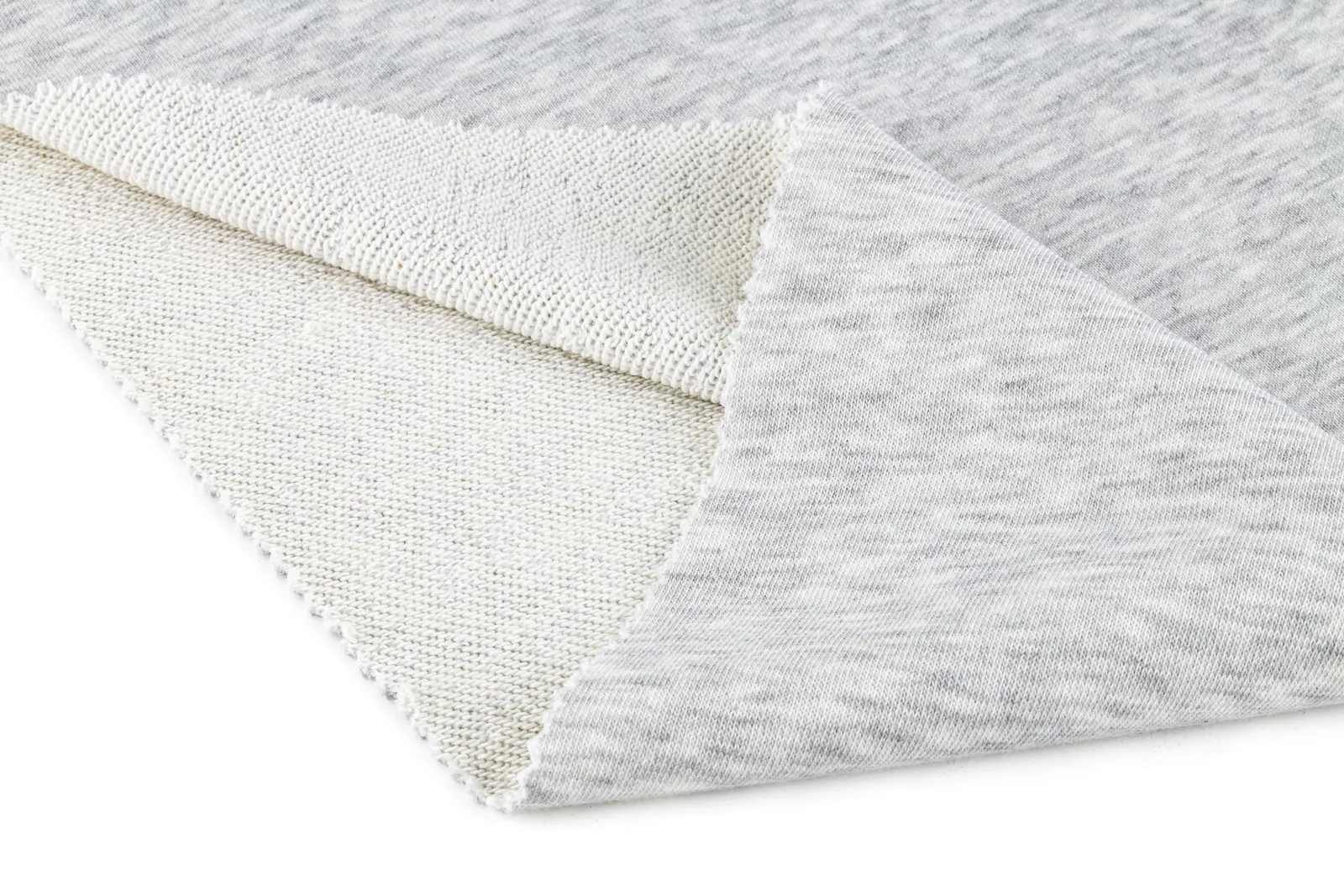
For a transitional hoodie we would start from sage green brushed 3-thread fleece at 250 g/m²: its relatively light weight for a 3-thread keeps consumption around 0.5 to 0.55 kg per piece, while the brushed pile gives the warmth and softness customers expect from fleece. The 185 cm width allows efficient markers for sleeves and hoods.
How to order correctly
Calculate consumption on the average size, ask your cutting room for the real marker once the pattern is final, then order fabric. For samples you can take a roll from our stock list with no minimum. For production, send an enquiry with the number of pieces, sizes and colour, and we will confirm the quantity in kilos and the price per kilo.
Frequently asked questions
What does an adult hoodie weigh on average?
It depends on weight and fit. A regular hoodie in 300 g/m² fleece usually weighs around 0.5 to 0.7 kg finished. Fabric consumption is higher than the finished weight because of cutting waste.
How do I find out my marker efficiency?
Ask your cutting room or CAD operator for a marker at the real fabric width and your size mix. Efficiency is the ratio between the area of the pieces and the total fabric area used.
Should I calculate on size M or on all sizes?
The most accurate method uses the real size mix. If you do not have it, calculate on M and add a few percent when the order has many large sizes, because XL and XXL use noticeably more.