
The tech pack is the document that turns a product idea into a polo shirt that can be reproduced. It tells the workroom which fabric to use, how to cut, how to sew and what to check. For a polo, which has more components and details than a basic tee, a vague tech pack almost guarantees remade samples and differences between orders. Here is the structure of a complete tech pack and the most common mistakes.
Identification, drawing and materials
1. Product identification
The first page holds the basics: style code, name, season, tech pack version and date. Every change gets a new version, and the workroom always works from the latest approved one. Add the name of the contact person who can answer technical questions.
2. The technical drawing
The flat drawing, front and back, shows every detail: collar shape, placket length and button count, slits, drop tail, visible stitching, and the position of the logo and labels. Include enlarged details for critical areas such as the placket base and collar points, with topstitching distances in millimetres.
3. Fabric and trims (bill of materials)
The bill of materials must be complete:
- main fabric: supplier, article code, structure (single, double or American piqué), composition, weight, width (tubular or open), finish and colour, with the card reference or approved lab dip;
- collar and cuffs: flat-knit or rib, with dimensions and colours;
- interlining for the placket and, where relevant, the collar;
- buttons: material, ligne size, colour, number of holes;
- thread: type, count and colour for each seam;
- neck tape, labels and packaging.
Attach physical swatches of fabric and trims to the reference sample; descriptions alone are not enough for colour.
Measurements, construction and branding
4. Graded measurements with tolerances
The chart lists every measuring point for every size, with an exact description of how it is measured and the accepted tolerance. Common polo points: half chest, length from shoulder, shoulder width, sleeve length and width, sleeve opening, half hem, placket length, collar height and length, slit length and front-to-back drop. Measurements refer to the finished garment, not the pattern.
5. Construction and seams
For each area, state the seam type:
- shoulders and sides: four-thread overlock, with shoulder tape;
- hems: twin-needle coverstitch, with depth in millimetres;
- placket: topstitched at the set distance, base closed with a box stitch;
- slits: finishing type and reinforcements;
- stitch density, for example stitches per centimetre.
Also specify the placket convention, men's or women's, and the buttonhole orientation.
6. Branding
For embroidery or print, specify the technique, the position measured from fixed points (for example from the shoulder point and centre front), the size per garment size, thread or ink colours with codes, and the approved artwork file. Attach a photo of the approved embroidered or printed sample.
Labels, sample and quality requirements
7. Labelling and packing
Give the position and content of labels: size, composition in line with EU Regulation 1007/2011, care instructions and manufacturer details. Specify folding, bag type, pieces per carton and carton markings. Check the applicable labelling requirements with a specialist, because they can change.
8. Approved sample and quality requirements
The tech pack ends with a reference to the approved sample, kept sealed, and the quality requirements: accepted shrinkage, colourfastness and the AQL level for inspection. That way everyone judges production by the same criteria.
Common mistakes
- Navy piqué with no article code, weight or colour reference.
- Measurements without tolerances or a measuring method.
- Logo position described in words rather than centimetres.
- Changes passed on by phone rather than as new tech pack versions.
- No specification for the collar, even though it is the most visible detail.
An example of a well-specified fabric
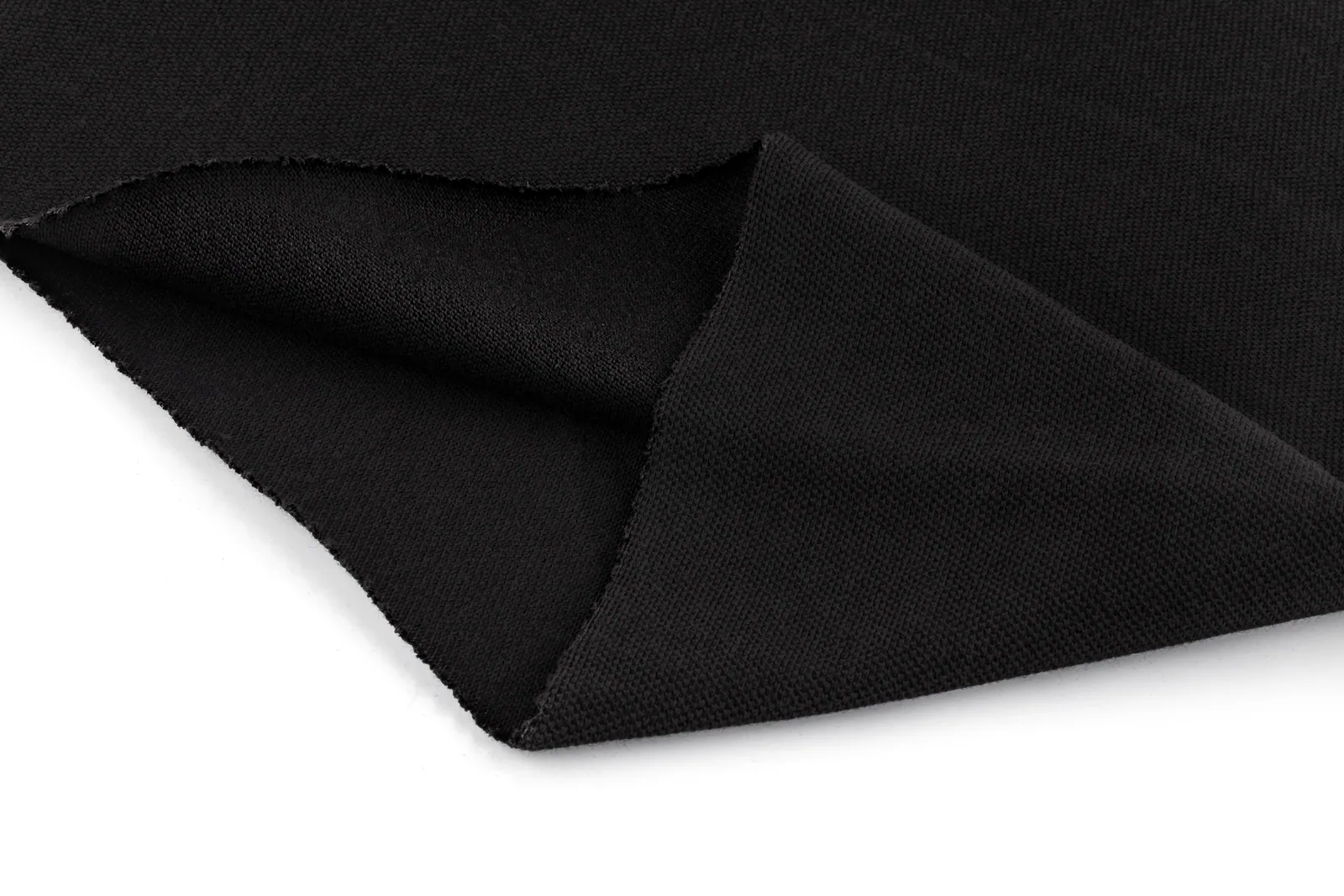
In the fabric section of the tech pack, record every detail of the chosen article. For a company polo, for example, the double piqué in petrol melange, 200 g would be specified by code, double structure, combed cotton and polyester composition, 200 g/m², 92 cm width, and enzyme and silicone finish. It is made to order from 150 kg per colour, and every lot is checked against the approved sample. For the fabric's technical sheet and samples, send an enquiry; if you would rather talk details through in person, visit the Afumați showroom.
Frequently asked questions
Do I need a tech pack for a small polo order?
Yes, even for a hundred pieces. A simple tech pack with a drawing, fabric, measurements and logo position prevents most misunderstandings. For repeat orders, the same document lets you get the same product again, even if you move to a different workroom.
In what format should I send the tech pack?
A PDF with numbered pages and a version number is safest, because it cannot be changed by accident. The measurement chart can also be shared as a spreadsheet. Whatever the format, send the approved physical sample and swatches of the materials alongside it.
Who approves changes to the tech pack?
Agree from the start on a single person who approves changes, usually the product manager. Each change goes into a new, dated version that is sent to everyone involved. That way the workroom never works from an old version or from verbal instructions.