

Not every clothing brand has to sell to consumers. A less visible but often steadier model is the B2B brand: custom tees, polos and sweatshirts for companies, restaurants, hotels, schools, clubs and events. Orders are bigger, clients come back every year and marketing costs less. In return you must hit firm deadlines, exact colours and expectations of consistency from one order to the next.
Who the clients are
- Small and medium-sized businesses: team tees and polos, trade fairs, internal events.
- Hospitality: uniforms for restaurants, cafés and hotels that are washed often and must look neat.
- Schools and nurseries: tees and sweatshirts with the crest, every autumn.
- Sports clubs and associations: kit for members and supporters.
- Event organisers: large quantities, short deadlines, one-off orders.
Pick one or two segments to start. A brand that speaks specifically to restaurants convinces more easily than one promising "custom clothing for anyone".
The core range: few styles, many colours
A B2B brand does not need seasonal collections. It needs a stable catalogue of four to six items that can be reordered at any time, identical:
- a classic single jersey tee;
- a piqué polo;
- a crew-neck sweatshirt and a hoodie;
- perhaps a technical tee or a cold-weather piece.
Each item should come in the usual corporate colours (white, black, navy, grey, red) and, at volume, in the client's exact colour. Decoration, meaning embroidery, screen printing or DTF, is what makes the product unique.
The sales process, step by step
- The enquiry: the client tells you which items, how many, what for and by when.
- The quote: price per piece by quantity, decoration included, lead time and payment terms.
- Sample and logo approval: a physical piece or a mock-up, approved in writing.
- The size list: ask for it by name or by size rather than guessing the split.
- The deposit: usually a percentage on confirmation, the balance on delivery.
- Production and delivery, with a correct invoice, including through e-Factura.
Keep the client's written consent to use their logo on the products. It is their trademark, and you apply it only at their request.
An example: polos for a restaurant group
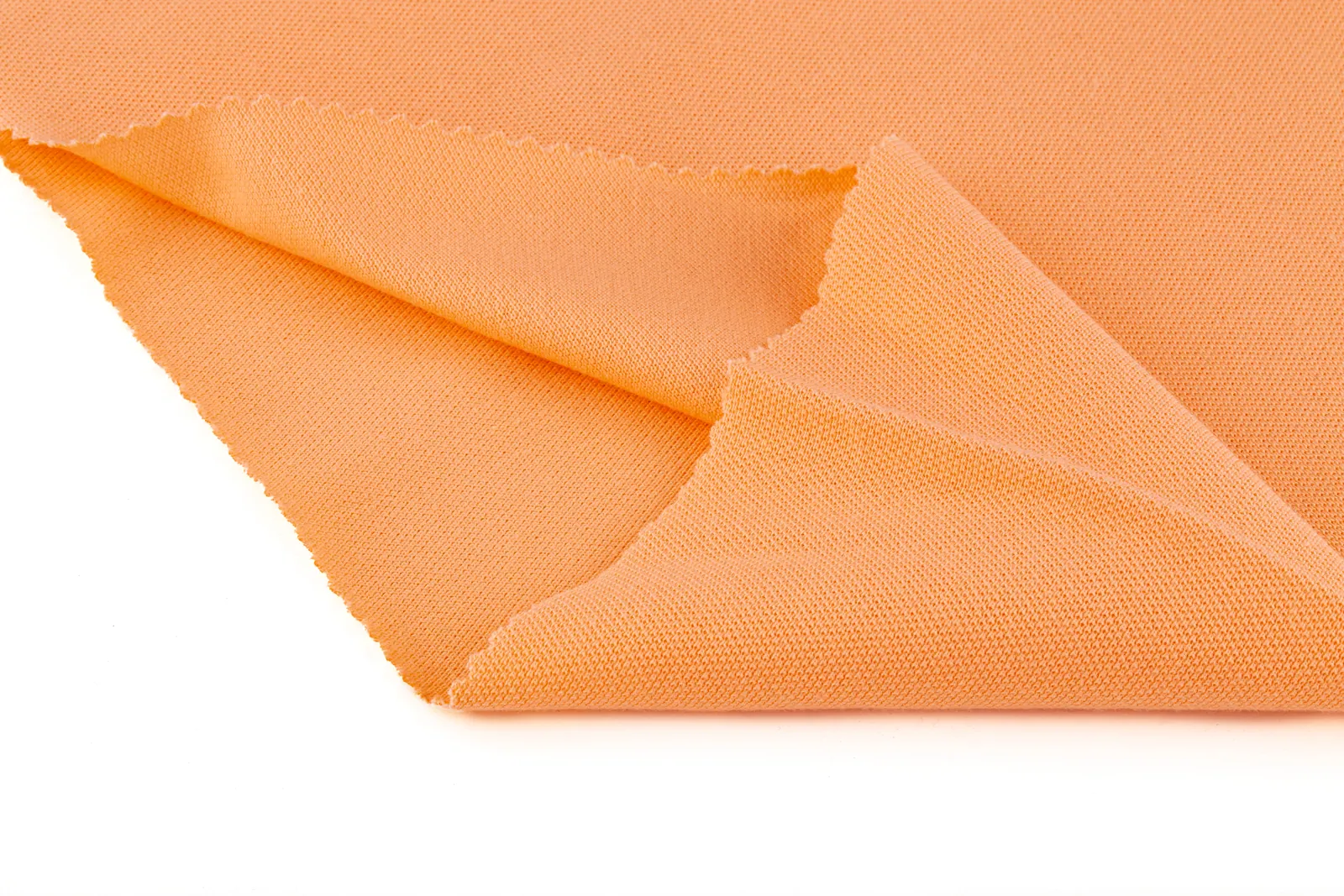
Let's assume a group of three restaurants asks for 120 polo shirts with the logo embroidered on the chest for front-of-house staff. The staff wear them daily, wash them often and are on their feet all day. An anthracite melange single piqué at 190 g is a practical choice for this order: the piqué structure breathes well, the combed cotton and polyester blend stands up to frequent washing, and the anthracite melange hides small stains and shade differences, which is very useful in a restaurant. A polo uses roughly 0.28–0.32 kg of fabric including waste, so the order needs about 35 to 40 kg, or two rolls from stock. Collars and cuffs use a matching rib, and you will find other colours in our piqué range.
A hypothetical costing for the order: if the polo sells at 85 lei excluding VAT and the direct cost including embroidery is 52 lei, the gross margin is 33 lei per piece, or 3,960 lei on the order, with no advertising cost. A 40% deposit covers the fabric and part of the labour.
How to find clients
- Your local network: business associations, suppliers to your chosen segment, networking events.
- Direct contact with a clear offer and a physical sample, not just a PDF catalogue.
- A website showing real work, with clients' permission, and a simple quote form.
- Referrals: in B2B, one happy client often brings two or three new ones.
The specific risks
- Late payment: a deposit on confirmation and clear terms in the contract.
- A different colour on the second order: work with fabrics that are always available and keep a master sample.
- Unrealistic deadlines: confirm workshop capacity before accepting the order.
- Wrong sizes: ask for the exact list and include a few spare pieces.
For quick orders from stock, ask for our stock list; for exact corporate colours, made-to-order production starts at 150 kg per colour and can be discussed through a quote request.
The figures in the examples are hypothetical and only illustrate the calculation. They are not Alteks Tricot prices: we quote the price per kg of each article on request, usually the same working day. Ask for a quote
Frequently asked questions
Why is a B2B brand steadier than a retail one?
Orders are larger, often partly paid in advance, and satisfied clients return every year for new staff, events or replacements. The cost of winning a client is spread over hundreds of pieces rather than one. In exchange, deadlines and consistency requirements are stricter than in retail.
What minimum quantity should I ask business clients for?
It depends on decoration and fabric. Embroidery and screen printing have fixed set-up costs, so below a few dozen pieces the price per piece rises sharply. Many B2B suppliers set price breaks, for example at 20, 50 and 100 pieces, to encourage larger orders without turning small ones away.
How do I make sure a repeat order matches the first?
Use the same fabric article, ideally one that is always available, keep a master sample approved by the client and record every specification: fabric code, colour, embroidery thread, logo position and size. For a client's exact colours, ask for a lab dip and compare each new lot against the approved sample.


